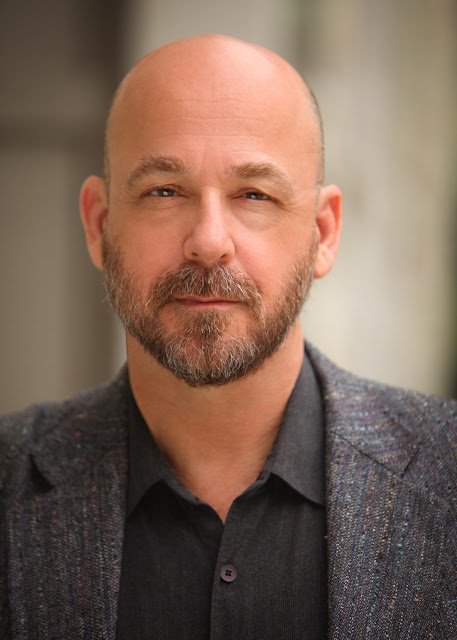
Like so many of his dubbing colleagues, Adam Frank was a Westerner in his early 20s when he found himself in Hong Kong at a time when the English-language dubbing industry was experiencing a boom. Numerous productions from all over Asia came to Hong Kong for their English versions, and a relatively small crew of men and women living abroad there were hired by various dubbing outfits to make it all happen. In October 2026, Adam Frank answered Brett Homenick’s questions about his life before and after he set foot in a dubbing studio, as well as his memories of giving voice in the English-speaking world to so many international productions.
Brett Homenick: Please tell us when and where you were born.
Adam Frank: [I was born in] Tucson, Arizona, [on] November 29, 1961.
BH: What were your hobbies as a kid?
AF: Around the age of 10, I got heavily into baseball. I played little league, then a little high school ball and was a huge fan of the Dodgers — those great Dodger teams of the 1970s. Lots of swearing when they lost and lots of cheering when they won.
In high school, I started taking drama classes and realized I was an actor. For a couple of years during high school, I was also seriously into fencing. Growing up in Tucson, my family also did a ton of hiking and backpacking in the national forests and parks around Tucson.
BH: When did you become interested in Asia?
AF: For some reason, sometime in my junior or senior year of high school, I started getting interested in Zen Buddhism and Daoist philosophy. I think I picked up a book that had belonged to my mother, Zen Flesh, Zen Bones, though I can’t say for sure that’s when I first read that book. I know I watched David Carradine in Kung Fu (1972-75), like a lot of other people in my generation, and that sparked an interest, but it wasn’t really until the summer after I graduated from high school that I got really interested in Asian culture and philosophy, and that happened through a sudden, unexpected interest in martial arts. I started studying tai chi from a guy named Mike Phillips that summer.
BH: Did you go to college?
AF: Yes, I graduated with a degree in theater in 1984, from the University of Arizona, then went back much later in life for an MA in international affairs from the American University, then did my PhD in anthropology at the University of Texas at Austin.
BH: Why did you move to Hong Kong?
AF: Right after college, I started working as a VISTA [Volunteers in Service to America] volunteer in Tucson. I met a woman from Hong Kong at that time. We became very close, and I went out there to see her after I finished up my VISTA stint in 1986. I ended up staying for three years, never once returning to the U.S. during that time.
BH: What was the adjustment period like when you were getting used to life in Hong Kong?
AF: Well, it was interesting. My girlfriend’s family had a large apartment with a spare room in Causeway Bay, and her mother let me use one of the rooms, so I never lived in a hotel or hostel or apartment of my own until I moved out of there several months later. My girlfriend introduced me to life in Hong Kong, shared with me many of the things she most loved about Hong Kong, and basically made me part of the family.
Looking back, it was real act of love and generosity that I didn’t appreciate at the time, being a dumb and uncultured 23-year-old. The biggest obstacle I encountered was making money. As you know, that period was a huge boom time for Hong Kong, so there were lots of opportunities to teach English, amongst the many other ways to make money there.
I ended up teaching at a secretarial school for a time, but that didn’t work out. About the time I lost that job, I began to get front-of-camera work as an extra in Godfrey Ho’s films. I had some other great extra gigs, too, including Legacy of Rage (1986), with Brandon Lee, for D&B [Films Company], and Project A Part II (1987), with Jackie Chan, for Golden Harvest. I also worked as a stand-in for Jean-Claude Van Damme in Bloodsport (1988).
A guy named George recruited a lot of the extras from among foreign travelers staying in this notoriously seedy collection of hostels called Chungking Mansions. I believe I connected with George through an ad in the Hongkong Standard or the South China Morning Post. Most of the other front-of-camera work was on Godfrey Ho’s Richard Harrison ninja films. I had small speaking roles in several of those. Though, as you know from Godfrey Ho’s cut-and-splice method, it’s hard to say which titles I filmed and which ones I actually ended up in. I also occasionally got to dub films I appeared in, but that was never for sure.
BH: How and when did you get started in dubbing?
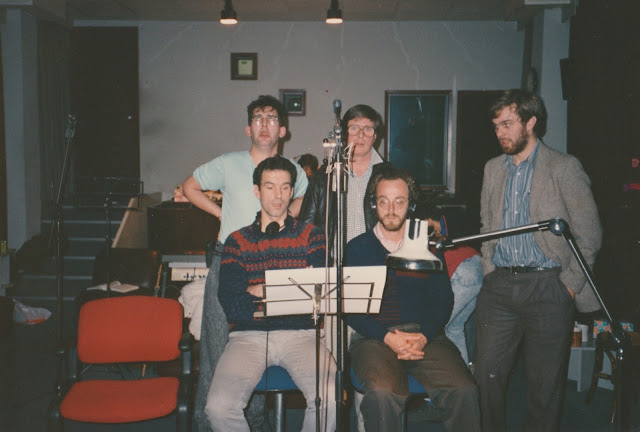
AF: It would have been sometime in 1986 and probably through contacts I made through the extra work. A lot of the guys working in films as extras were martial artists who had come to study in Hong Kong and, at least at first, lived in Chungking Mansions. Most of the guys I knew ended up as extras in Bloodsport.
I must have heard about the dubbing opportunities through them, but I can’t recall who connected me to my first dubbing job. I do remember that I started at the lowest rung with a guy named Pedro. While I never had any major issues with Pedro, he had a reputation for promising but not delivering on pay, and there was very little quality control.
I’d call that the C-team. Many of the folks who dubbed with Pedro were just passing through town and maybe did it once or twice. Quite a few others stuck with it and later got jobs with Rik and Ina Thomas and with Stephen So and his wife, Mae, at IFD.
BH: In the beginning, how was the process of dubbing explained to you, and how were you trained to do it?
AF: The first jobs with Pedro — and I may actually have started with someone else but can’t recall — did not involve anything you’d call training. It was more a matter of having grown up watching Black Belt Theater on TV in Tucson and mimicking the dubbing with my pals in high school — that combined with actually being trained as an actor and being comfortable with the acting part of the job.
As I recall, the more experienced folks just told me how the process worked — looping, starting and finishing on the start and finish of the mouth movement, the way crowd scenes worked, etc. I remember the other dubbers were very generous about this. Some folks seemed to feel like the job was a chore, but most seemed to feel like it was a fun way to make a few bucks.
BH: What were the facilities like for Pedro’s dubbing outfit?
AF: I have only a vague recollection of coming into a space that had no buffer zone. Basically, you walked through the door, and you were in the dubbing studio, though I don’t remember whether this created a noise issue or not. I don’t remember having to stop because of outside noise.
BH: What else do you recall about working for Pedro?
AF: Nothing much more than what I’ve already mentioned. I do recall that no one seemed to quite take Pedro seriously, and this seemed to bother him, whereas everyone took Rik and Ina, and Stephen and Mae, and Ann Mather seriously. I think folks just didn’t really trust Pedro much. As I said, I don’t recall having any trouble with him but do remember others telling me they had not been paid for their work in the past.
BH: How did you become connected with IFD?
AF: I don’t remember exactly when, but at some point, perhaps on one of the ninja films, we found out IFD was starting its own dubbing team, that they were going to do it in-house. I remember being there with Stephen and Mae from the beginning. They were a young Hong Kong Chinese couple, so in some ways we felt a little more comfortable around them, and they were very efficient, professional, and respectful of the dubbers.
I think they were themselves learning how to run a team at first. Because of the material we were dubbing and the relative lack of experience of the team, we were basically the B-team with Stephen and Mae, though keep in mind that the A-team, B-team, etc., were just general terms we sometimes used, not any sort of official designation. It was more a comment on pay rate than anything else, and, the more experienced you got, the more likely you were to get the higher-paying gigs with Rik or Annie.
Anyway, as time went on, Stephen and Mae got really good at what they did, and there wasn’t much difference in quality between the A- and B-teams. It was more about the material being dubbed than the quality of the dubbing.
BH: What are your memories of working with Godfrey Ho?
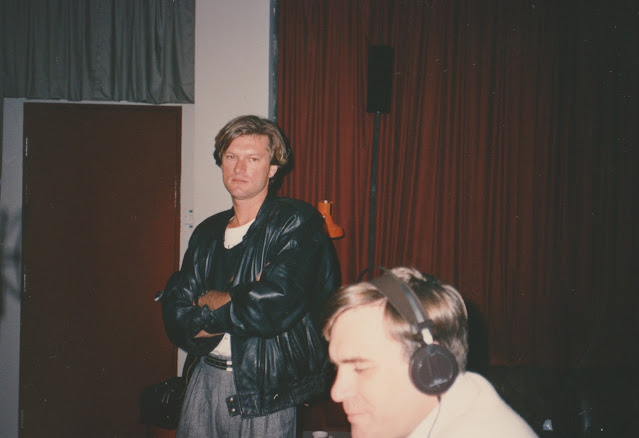
AF: I have extremely fond memories of working on Godfrey Ho’s films. First, while budgets were tight and filming pretty rushed, which made Godfrey kind of anxious as a director, the sets were always fun and professional. Godfrey moved very quickly. It was unusual to do more than a couple of takes on anything, and that was more likely to happen in heavy stunt scenes.
I spent a fair amount of time talking to Richard Harrison between takes, and he was always full of stories about working during the tail end of Hollywood’s contract-player era, then working in Italy. He wasn’t real thrilled about the quality of what we were doing on the ninja movies. I mean, you didn’t have to see the dailies or final cut to know these were incredibly hokey films. We ninjas wore red-, gold-, and blue-sequined ninja uniforms, and we wore headbands that actually had the word “ninja” written right on the headband, just in case you couldn’t figure it out from the rest of the suit.
On the other hand, the stunt team — the guys doing multiple backflips in these scenes — were often graduates of Jackie Chan’s stunt school, which was the top stunt school in Hong Kong at that time. I believe [it was] run by Stanley Tong. So these guys were seriously good with the acrobatics and all manner of weapons.
Even though the foreigners did martial arts, we couldn’t hold a candle to those guys, so they would always serve as our stunt doubles. The one exception was a guy from Northern Europe — Peter, I think — who was a gymnast. He could do a lot of the acrobatics but still not quite up to the level of the Jackie Chan guys.
Anyway, these movies were just a blast to work on, and, even though they were silly, you couldn’t help but feel you were lucky to be working on them. What we could never figure out — and this went for the dubbing, too — is why they would not make at least one intentional parody of the whole thing.
I think Godfrey was genuinely oblivious to how much people were making fun of the films, which is too bad. He had the training and skills to make a parody that would have been an international hit. It just wasn’t his thing, but I wouldn’t be surprised if Stephen Chow was inspired by Godfrey Ho when he actually did make a parody, Shaolin Soccer (2001).
BH: Which movies did you make with him, and what did you play?
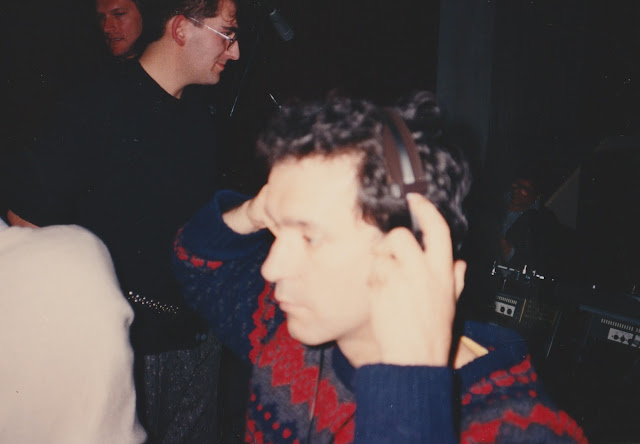
AF: The ones I definitely made with him are Ninja Kill (1987), Ninja Commandments (1987), and The Power of Ninjitsu (1988). I might have ended up in others. I dubbed several, including myself at least once.
BH: Please talk about working with Stephen So and his wife, Mae.
AF: Nothing more to add to what I already mentioned. They were great to work with and kind of became friends with me and my girlfriend. Very good people.
BH: How did you get selected to write dubbing scripts at IFD?
AF: I might have worked on half a dozen dubbing scripts. I believe Martin Pachy introduced me to the dubbing script gigs and basically showed me how to do it.
BH: Please describe the process of writing a dubbing script.
AF: At least for the script work I did, I would receive a roughed-out translation and/or re-write of a screenplay. It [was] often turned into English by someone who was not a native speaker, so initially I would fix the English. The next task was to match the English to the lips, which I did through a VCR set-up.
We would just basically go one line at a time until we got it close. Having dubbing experience made the job infinitely easier because you knew whether something could be fixed in the dubbing, in which case you didn’t sweat over it. Honestly, it wasn’t my favorite job. Since the scripts were already roughed out, there just wasn’t any creativity involved, but I do remember the pay was pretty good.
BH: Do you remember some of the dubbing scripts you wrote?
AF: Not one!
BH: In 1996, IFD producer Tomas Tang died in a fire in the Garley Building in Hong Kong. This incident has spawned its share of rumors. What’s your take on this situation?
AF: I never knew Thomas Tang and didn’t know about the fire in the Garley Building until I googled Godfrey several years ago.
BH: What led to your involvement with Omni Productions and Rik Thomas?
AF: Again, I can’t [say] for sure what specifically led me to Rik’s dubbing team. It must have been someone who worked with both Stephen So and Rik [who] referred me to Rik. I seem to recall a tryout day, and I did fine, so now I was on the A-team.
BH: I’m general, what was Rik Thomas like, and what are your recollections of working with him?
AF: Rik was one of the many interesting folks who ended up in colonial Hong Kong. I remember Rik talking occasionally about his time in the Special Air Service, and either Rik or someone else later said it was the Rhodesian Special Air Service.
Rik and Ina went about the dubbing very professionally. We dubbed at nice facilities in Clear Water Bay or at Shaw Brothers, so it was kind of like being on the Warner Bros. lot in Burbank because you knew so many classic kung fu movies had come through Shaw Brothers.
As I recall, Rik could be a little short with some of his regulars sometimes, but Ina was never impatient. You kind of felt like he really needed Ina there to keep some lurking trigger point in check, so, to some degree, things were sometimes not as relaxed as at IFD, but it was still a fun crew and a very skilled crew.
We frequently nailed things in a single take with that crew. I got along with Rik well. Once I started my full-time teaching gig in late 1986 or early 1987 in one of the Vietnamese refugee camps, Rik always found ways to fit me in for weekend gigs, which I appreciated.
BH: [Rik’s] wife, Ina, was also heavily involved with the company. Please share your memories of her.
AF: Ina was quiet, patient, and professional. I remember she also had a dry sense of humor that would pop out on occasion. She and Rik seemed to have a very close relationship. They seemed like a great team. I never got to know either of them as friends, but from the outside it looked like it worked. And they often got quality gigs — often not, too.
For example, I remember dubbing a John Woo film with Rik and Ina, a Chow Yun Fat vehicle, and Chow Yun Fat and the Cantonese dubbing team were in the studio right next door dubbing the same film. Pretty cool. Anyway, you kind of felt like Ina was the glue that held the whole thing together.
BH: To the best of your memory, did you ever dub a Godzilla or Japanese monster movie?
AF: Japanese animation and [the NHK TV drama] Oshin (1983-84) but never a Godzilla or monster movie that I can recall.
BH: Who were the other voice actors you worked with at Omni Productions?
AF: The B-team folks included a bunch of martial artists and backpackers. A Canadian Thai boxing guy named Kevin McHugh, who introduced me to a rooftop kung fu gym right out of a movie. Another very nice Canadian guy named Geoff — or Jeff. Martin Pachy. A British guy named Paul and a couple of Americans. Scott Smith became a regular and went on to writing and, I think, ran some dubbing, too.
Stuart Smith was a regular IFD dubber, as well as front-of-camera actor. There was a guy named Fred Frank — no relation — who ended up writing for the newspapers, and a friend from the States, an actor named Jessica Lefkow. I think Jess ended up doing more dubbing after I left.
The A-team consisted of Simon Broad from New Zealand, Mike Swift, who I believe grew up in Hong Kong and was fluent in Cantonese, a guy named Pierre. A bunch of TV and radio folks, including a bunch of folks whose last names I can’t remember now — John, Warren, Chris, and a woman named Seppy [spelled phonetically], who was also pretty active in the local theater scene.
Mike was a serious cricketer, and Simon was my informal style advisor for a time — very informal — when I became the spokesperson for a human rights organization I formed with a number of other refugee camp workers. I had no idea how to dress, and everyone in Hong Kong was really well dressed at that time. Simon helped me out. It was a fun crew, a mix of folks who were actually making a pretty good living dubbing full time, like Mike and Simon, and others for whom it was more of an occasional gig.
BH: Did you write any dubbing scripts for Omni Productions?
AF: I don’t recall writing any scripts for Omni.
BH: When did you dub for Omni?
AF: I would say 1987-89.
BH: What were the hours like there?
AF: Sometimes long days, maybe eight to 12 hours, and other times we’d have shorter gigs of just a few hours. Because we’d sometimes do more than one project at a time, days could be long.
BH: Do you remember how you began working for Annie Mather?
AF: I worked with Annie maybe half a dozen times, mostly animation and several days on Oshin, which was an incredibly popular Japanese soap opera that spanned the main character’s entire life. Some of the A-team folks who worked with Rik also worked with Annie, so I either contacted her through them or she contacted me. Can’t remember which.
BH: What were the differences between her and Rik Thomas?
AF: I only worked with Annie a few times. I remember that Annie seemed to be under a lot of time pressure and quality pressure, especially with Oshin. It was a big deal, so that gig was a little more serious. We were also doing digital dubbing with Annie, so precision counted — and could be achieved.
BH: I’ve heard that there may have been something of a rivalry between Rik Thomas and Annie Mather.
AF: I vaguely remember but never experienced any of that firsthand.
BH: What are the differences between A-, B-, and C- dubbing teams?
AF: A, B, C, etc., were really unofficial designations. The differences were in quality, experience, and pay!
BH: Do you have any other notable memories that we haven’t yet covered in this interview?
AF: I think I’ve covered most of them. Having grown up watching dubbed Hong Kong movies, I never imagined I would be one of the dubbers, so, even if I was having a bad day — and there were quite a few during those three years — I always realized I was pretty lucky and that this would be a great memory someday, and it is!
BH: Do you still dub?
AF: Yes, on occasion. I was an actor before moving to Hong Kong and have remained an actor since then and a member of both SAG-AFTRA and Actors Equity, so, even though I’ve been teaching at a university for more than twenty years, I’ve managed to keep skin in the game and have occasionally needed to do ADR for front-of-camera roles. So very little, but, even when I have to do the ADR for a line or two, it brings back memories of Hong Kong. But no regular dubbing since then.
BH: Please tell us more about your involvement with human rights organizations in Hong Kong.
AF: About six months after I arrived in Hong Kong, I got a full-time job teaching for International Social Service’s school in [the] Chi Ma Wan refugee camp on Lantau Island. That job really became the center of my life, as it was both intellectually and emotionally challenging, and I became very close to my co-workers, my students, and their families.
On or about June 16, 1988, the Hong Kong government decided any Vietnamese refugee boats coming into Hong Kong waters after midnight would be considered illegal, and its occupants would be considered illegal immigrants. Many families were split that night, as large numbers of boats were entering Hong Kong waters, and families frequently divided themselves among several boats to ensure that at least some of the family members would survive the crossing. Storms and pirates were the main dangers.
As a result of this policy, camp conditions became very harsh, and the entire population of Chi Ma Wan was moved to a factory building in Tsuen Wan. Conditions were miserable across all the camps, and a number of workers from several camps decided to form an advocacy organization called Refugee Concern Hong Kong. We met in Hong Kong Oxfam’s office.
I served as the organization’s first official spokesperson and did a few media interviews in that capacity. Our main tasks were to produce reports on human rights issues, advocate for specific individuals, and pressure the Hong Kong and British governments to change the policy — or at least to behave humanely.
I had some background in this sort of advocacy work because I served as a VISTA volunteer in Arizona for 18 months before coming to Hong Kong. I continued refugee advocacy work on a volunteer basis after returning to the States and have continued to be involved in human rights issues off and on for most of my life.
BH: Why did you decide to stop dubbing in Hong Kong and return to the States?
AF: I was actually dubbing full-time again my last several months in Hong Kong because I got fired from my job by our new school principal, who thought we had no business engaging in human rights activities. So it’s not so much that I quit dubbing as that I got burned out on the refugee work.
I had been at it for a couple of years without ever going back to the States. I also had a bad breakup and felt it was time to recharge back home, so I went back to Tucson in the spring of 1989. I considered returning to Hong Kong to become the first executive director of Refugee Concern Hong Kong but decided against it for personal reasons.
BH: What have you been doing since the heyday of your dubbing career?
AF: After I got back from Hong Kong, I went back to Tucson and worked with a theater company some college friends had founded, the Tucson Art Theatre — “Art” was our pinata dinosaur. During that time, I got a couple of parts on an ABC TV series called [The] Young Riders (1989-92), but, given the choice of moving to L.A. or going back to school, I chose to go back to school.
I’ve taught in the Schedler Honors College at the University of Central Arkansas for the past 22 years and will retire in May 2027 from that job. I was very fortunate in that my university established a professional summer Shakespeare company about 15 years ago, and I was a company member with Arkansas Shakespeare for seven years.
I also did a TV show with Dennis Hopper that filmed in Shanghai called Flatland (2002) when I was doing my PhD fieldwork there, and I worked in theater and film in L.A. for about six months in 2014. I occasionally do short films in Arkansas but will be re-establishing my acting career after I retire in May.
We’ve got a great network of union members and filmmakers in Central Arkansas, so I’ll probably continue here as my base. The bigger adventure, however, has been raising a beautiful daughter, who just graduated from Pomona College and is currently on a Fulbright Fellowship in Mexico City. She gets a lot from both me and her mom, who works for Save the Children in Chiang Mai. That’s all she wrote!

