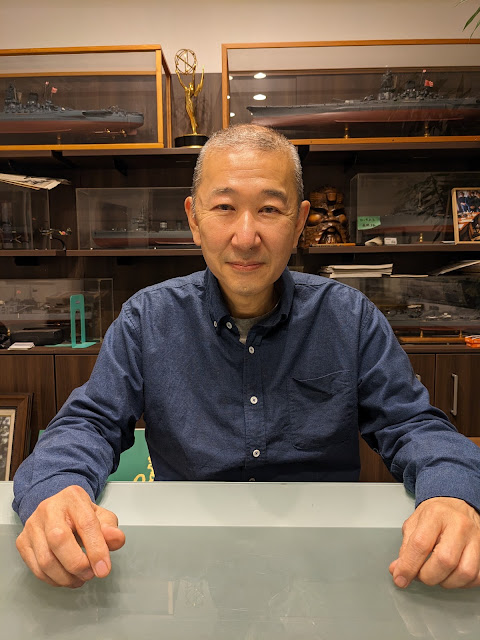
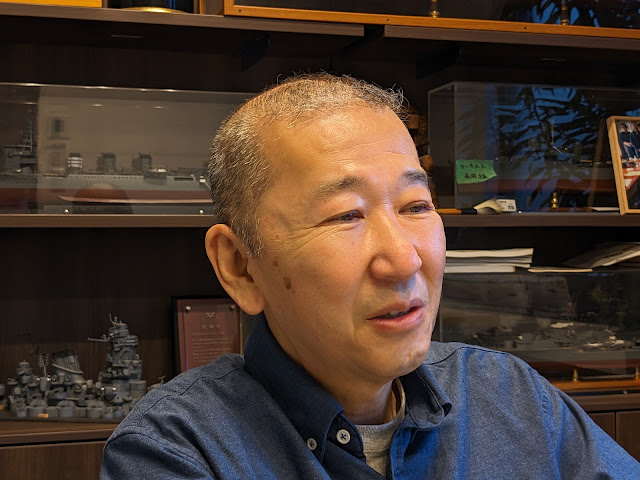
Very few tokusatsu careers run the gamut from Godzilla vs. Megalon (1973) to Shin Kamen Rider (2023), but Kazuaki Sekiyama’s work in special effects spans more than 50 years and has touched just about all the genre’s most successful franchises. As a pyrotechnician, Mr. Sekiyama has handled explosions for various Godzilla, Gamera, Ultraman, and Kamen Rider productions, bringing his unique special-effects expertise to all corners of Japanese entertainment. In May 2023, Kazuaki Sekiyama answered Brett Homenick’s questions about his life and career in a wide-ranging interview translated by Maho Harada.
Brett Homenick: To begin, when and where were you born?
Kazuaki Sekiyama: Do you know Shizuoka Prefecture? It’s where Mt. Fuji is. I was born there, in Yaizu City. I have a deep connection with Godzilla. I was born in 1954, which is the same year as Godzilla. And Yaizu is a port town known for deep-sea fishing, which is when boats go very far to catch fish. The boat that was exposed to radiation in the hydrogen bomb testing at Bikini Atoll, which became the inspiration for Godzilla (1954), was from Yaizu.
One week before I was born, that boat came back to Yaizu, and there was a big commotion. I was born amid that big commotion, on March 18, 1954. In Yaizu, there was radioactive tuna from the U.S.’s hydrogen bomb testing at Bikini Atoll. Several people who returned died – maybe one or two. I was born in the middle of this chaos in Yaizu.
BH: Let’s talk about your childhood. What kind of hobbies and interests did you have?
KS: My father ran a movie theater in Yaizu. From when I was three years old, I watched movies every day. I saw the same movie day in, day out. [draws something on paper] This was my room, and this was the movie theater. I just walked over and watched movies.
BH: What movies did you see?
KS: Kaiju movies, tokusatsu movies, war movies. And I loved Toho movies. I was a child, but I watched the Company President series. Do you know them?
BH: With Mr. [Hisaya] Morishige.
KS: Yes, Mr. Morishige. And the Station Front series.
BH: With Frankie Sakai.
KS: Yes, that’s right. What else? The Young Guy [series with] Yuzo Kayama. I watched everything from those movies to Kihachi Okamoto. Do you know who he is?
BH: The director.
KS: Yes, the director. From Kihachi Okamoto’s war movies to Tatsuya Mihashi’s International Secret Police [films], all I did was watch Toho movies every day. In a year, I probably watched movies 360 days. So, naturally, all I thought about was movies. And, among the movies I watched, I was interested in tokusatsu.
Nowadays, life-size heroes like Kamen Rider don’t grow in size – they’re the same size as humans. Nowadays, those types of [super]hero movies are also called tokusatsu. But, in those days, tokusatsu referred to miniature work [movies using miniatures]. At the time, I watched movies like The Last War (1961) and Gorath (1962). What else was there?
BH: Atragon (1963).
KS: Atragon, King Kong vs. Godzilla (1962), Mothra vs. Godzilla (1964), Monster Zero (1965), Ghidrah the Three-Headed Monster (1964) … I loved all those tokusatsu movies. When I became older, I wanted to be a pyrotechnician working with miniatures.
Watching movies was my hobby. And I was interested in war movies. War movies may not be that interesting for adults, but they were fascinating for children. Have you seen Attack Squadron (1963)?
BH: Yes.
KS: With Yuzo Kayama, Makoto Sato, Yosuke Natsuki, and Toshiro Mifune. I loved movies like that. As a hobby, I loved toy guns, miniature tanks, and fighter jets. Those were my hobbies when I was a child.
I was always watching movies. I started watching tokusatsu movies from 1957 or 1958. It only took me one minute to walk from my room to the screen. That’s the environment I grew up in. I watched my favorite scenes over and over, every day. If I was in my room, I would hear the music, and I would walk over.
BH: What is the first movie you saw?
KS: The first movie I remember is The Mysterians (1957) and Rodan (1956) and Varan the Unbelievable (1958). Those were the first movies I saw. I hadn’t seen Godzilla yet. My first Godzilla movie was King Kong vs. Godzilla. When I was in elementary school, they showed Godzilla on a TV program on NHK. I think it was between 1963 and 1965.
They showed Godzilla on TV, on NHK, just once. That was the first time I saw Godzilla. But, for children, King Kong vs. Godzilla was more interesting. I saw King Kong vs. Godzilla, then Mothra vs. Godzilla, then Ghidrah the Three-Headed Monster, then Monster Zero, then…
BH: [Godzilla vs.] the Sea Monster (1966)?
KS: Sea Monster was a bit … (laughs) You could tell that they were running out of money, and tokusatsu was gradually declining. With Destroy All Monsters (1968), it came back a little bit. Those are the Godzilla movies I saw.
BH: [What about] Gamera?
KS: Gamera the Giant Monster (1965), after that was [Gamera vs.] Barugon (1966), then Gyaos (1967), Jiger (1970) … and Viras (1968). I saw those movies, but they weren’t as good as the Toho movies.
If you watch them now, they’re not bad. But they’re not as impressive as Toho’s tokusatsu. Even as a child, I understood that very well. Toho was much more impressive.
BH: Did you go to college?
KS: I went to vocational school. I graduated from high school and went to vocational school. Because my family ran a movie theater, a Toho salesperson would come to our home to sell films. They were doing business with my father. The salesperson would say, “Next month, play this movie from this day to this day.”
I asked my father if he could arrange a visit to Toho. I wanted to see a tokusatsu shoot, so I asked him to introduce me. My father arranged a visit through the Toho salesman and told me to go to Toho on a particular date in June. He said, “I’ve arranged for you to watch a tokusatsu shoot, so ask for this person, and he’ll take you to the shoot.”
I went to Toho in June 1972 and watched a shoot for Ultraman Ace (1972-73). And I got them to offer me a part-time job. There are so many jobs in tokusatsu – lighting, camera, artwork. I wanted to do pyrotechnics, so I went to see Tadaaki Watanabe and asked him to give me a job and got the job. Tadaaki Watanabe was the chief [leader], and Osamu Kume worked under him. Then there was me.
BH: What was Mr. Watanabe like?
KS: Mr. Watanabe was very slow-paced. I learned directly from Mr. Kume. I worked very hard, but he would yell, “Sekiyama! What the hell are you doing?” (laughs) Mr. Watanabe would come by and say [speaking very slowly], “Do your best.” For the longest time, it was just the three of us – Tadaaki Watanabe, Osamu Kume, and me. The three of us worked on Ultraman Ace.
BH: Until when?
KS: We worked on Ultraman Ace for a long time. While we were working on Ultraman Ace, we also worked on Godzilla vs. Megalon (1973). Mr. Watanabe went to work on Megalon and was no longer working on Ultraman Ace. So it was just the two of us – Osamu Kume and Kazuaki Sekiyama – working on Ultraman Ace. Tadaaki Watanabe worked on Godzilla vs. Megalon for about a month. We had another assistant come in.
When we had a break on Ultraman Ace and had nothing to do, I was told to come help with Megalon because they were very busy. So I worked on Megalon, then went back to work on Ace. Once Megalon was done, the three of us – Mr. Watanabe, Mr. Kume, and I – worked on Ultraman Ace. Then there was Ultraman Taro (1973-74), so Mr. Watanabe went to work on Ultraman Taro. So Mr. Kume and I worked on Ace.
There was a second kaiju boom, and there was a [TV series] called Zone Fighter (1973). Mr. Watanabe worked on Ultraman Taro, Mr. Kume worked on Zone Fighter, and I worked on Ultraman Ace. I was 18 years old when I worked on Ultraman Ace.
BH: You were so young.
KS: Yes, I was very young. Once Ultraman Ace was done, I went to help with Taro. Tadaaki Watanabe and I worked on Ultraman Taro. I don’t know how long we worked on that [TV series]. There was a kaiju in Taro called Enmargo. We did about four [episodes] for Taro. When we finished Taro at Toho, I went to work on Zone Fighter. The two of us – Osamu Kume and I – worked on Zone Fighter. Have you seen it?
BH: Yes, I know it.
KS: For Zone Fighter, the [tokusatsu] directors were people like Shokei [Teruyoshi] Nakano, Yoshio Tabuchi, and Koichi Kawakita. We did two seasons of Zone Fighter. When we finished Zone Fighter, we worked on Submersion of Japan (1973).
BH: The TV show or the movie?
KS: The movie Submersion of Japan [with] Shokei Nakano. For this movie, Tadaaki Watanabe was the chief, Osamu Kume, me, and there were two assistants under me. Until then, I was the most junior. But, for Submersion of Japan, I finally had two new assistants, so there were five of us. Tadaaki Watanabe, Osamu Kume, Kazuaki Sekiyama, Masahiro Iwashimizu, Chuji Matsumoto – the five of us worked on Submersion of Japan.
BH: Please describe your work on Ultraman Ace.
KS: In general, my job was working with explosives. Nowadays, they call it special effects. But, at the time in 1972, our job was called pyrotechnics, not special effects. We worked with explosives. And we also used fog machines to create white gas. That was for Ultraman Ace.
BH: You also worked on Godzilla vs. Megalon. Please tell us about your work.
KS: I only worked on this movie for a week. I only went to help when there was a lot of work, like when Megalon goes [makes a sound effect] and explosives go off. When Megalon’s drill comes out from the ground, that was me. I did the [makes a sound effect]. That was Megalon.
We attached a rotating drill for Megalon to an electric drill. It turns like this [makes a sound effect]. Another person and I did that. Our heads were covered in mud. I only helped out on Megalon for about a week.
BH: I think this was the first time you worked with director Teruyoshi Nakano. What was he like on Megalon?
KS: I never spoke to director Nakano during Megalon. I saw him and thought, “That’s Shokei Nakano from Battle of Okinawa (1971)!” But I never spoke to him directly. I don’t think Mr. Nakano knew who I was at the time. He only saw me as a part-timer helping with pyrotechnics.
I only started speaking to Mr. Nakano from Zone Fighter. He would say, “Sekiyama, I want an explosion to go off here.” It was only from Zone Fighter onward that I spoke with Mr. Nakano. During Megalon, I was just impressed by how tall he was and his scary glasses. Do you know Jun Fukuda?
BH: Yes.
KS: Mr. Watanabe said, “Sekiyama, Mr. Fukuda is here, so I’ll introduce you,” and he took me to see him. I thought to myself, “Wow, it’s Jun Fukuda from Ironfinger (1965)!” Mr. Watanabe introduced me, saying, “Director, this is Sekiyama who just joined.” I said, “I’m Sekiyama. It’s an honor to meet you!” And Mr. Fukuda smiled and said to me, “I’m Fukuda. Good luck with your work.” That was the first time I met Mr. Fukuda.
BH: You must have been very happy.
KS: I was very happy. I met Ironfinger! [Laughs]
BH: How long was the production of Megalon?
KS: I don’t know, maybe about one month. I only joined for about one week. I was completely absorbed in my work, so I put my heart and soul into it. I did whatever my senior colleagues told me to do. I didn’t know what I was doing.
Compared to what I know now, I didn’t have a good understanding of pyrotechnics. But I felt invigorated because I was young. I moved around a lot every day, always sweating profusely. I don’t remember much about Megalon.
BH: Please describe working on Zone Fighter.
KS: There was a big budget for Ultraman Ace and Taro, but for Zone Fighter the budget wasn’t that big. For Ace and Taro, there were many plaster buildings – buildings that were going to be destroyed – in the studio next door. But, for Zone Fighter, we only had dirt, trees, and very rarely did we have plaster buildings. So we were jealous of Taro because they had a lot of things to destroy. They had a lot of high-rise areas. For Zone Fighter, we had mountains for most of the scenes.
And the ratings weren’t very good, either. Zone Fighter wasn’t very popular. Taro was very short. I only went to help on about four episodes. We finished filming Zone Fighter, and Mr. Kume started preparing for the movie version of Submersion of Japan. He was doing the pyrotechnics for Submersion of Japan and taking part in meetings.
Mr. Nabe [short for Watanabe] and I worked on Taro, but then filming for Submersion of Japan started, so Mr. Nabe also left Taro. So Mr. Nabe and Mr. Kume were working on Submersion of Japan, and I worked on Ultraman Taro alone. I did about two episodes. Once the filming for Taro was over, I joined Submersion of Japan.
BH: Submersion of Japan was a big production. What was your work on this movie?
KS: Submersion of Japan was the first big production I worked on. I had so much fun. I got to use a lot of explosives. We had mountains erupting and buildings falling apart. We also did an explosion of an industrial complex. It was really fun, and the movie was amazing. My face was totally black. We were doing black explosions, so my face was covered in black. I think we were filming for two to two and a half months. It was really fun.
BH: How was Submersion of Japan different from other Toho productions?
KS: It was Shokei Nakano’s first big production. Until then, it was Eiji Tsuburaya, Teisho [Sadamasa] Arikawa. Shokei Nakano had done movies like Battle of Okinawa and [Godzilla vs.] Gigan (1972), but they were small productions.
This was Shokei Nakano’s first big production, so Mr. Nakano put a lot of effort into it. There were things that didn’t go well, but, seeing the movie even now, scenes like the explosion of the industrial complex are amazing. In the scene at the petrochemical complex, there was a gas tank that exploded.
BH: Was it dangerous?
KS: Yes, it was dangerous.
BH: Please tell me about it.
KS: For Submersion of Japan, the set caught on fire a little bit – the roof. After the shoot, we were all having lunch. Then the production team came and shouted, “Fire! Fire!”
BH: Was this for Last Days [of Planet Earth] (1974)?
KS: No, Submersion of Japan. For Last Days, everything went up in flames and fell down. But, for Submersion of Japan, the roof caught fire. We frantically put out the flames and prevented a fire from starting. In Japanese, it’s called boya – an incipient [or small] fire. So there was only a small fire, but it was impressive and dangerous.
BH: Next, please talk about your memories of Godzilla vs. Mechagodzilla (1974). Please tell us about your work on it.
KS: For Submersion of Japan, we were pursuing tokusatsu that was realistic and based on science and many other things, so we had people like Professor [Hitoshi] Takeuchi from the University of Tokyo. But, for Mechagodzilla, it was a Godzilla movie for kids. I was told I could do whatever I wanted, so I was mostly able to do things the way I wanted.
If Mechagodzilla was shooting like this, I could decide what kind of explosion I wanted. It could be anything. There were no constraints, so it could be any kind of explosion. I could decide what the explosion would be like.
Until then, Mr. Nabe and Mr. Kume had control of the main switch. But, from Mechagodzilla or Terror of Mechagodzilla (1975), I had control of the main switch. It was really interesting back then. That was my first real movie. It was a much bigger production than Megalon. There were many more explosions, and, compared to Megalon, Mechagodzilla was much flashier. So it was very interesting.
BH: Do you have some memories from Mechagodzilla?
KS: I get Mechagodzilla and Terror of Mechagodzilla mixed up. I don’t remember clearly which is which. In [Terror of] Mechagodzilla, there’s a scene where he goes [like this], and smoke comes out like this. He’s attacked like this, and Godzilla falls. When that happens, his face becomes crooked. And, from the next cut onward, Godzilla’s face is crooked. There were incidents like that.
BH: Do you remember any other episodes from Mechagodzilla? For example, King Caesar.
KS: Oh, King Caesar. Up until then, I worked on kaiju for TV, like Ace, Zone, Taro. There was a new kaiju every week, so they were simple and very rough. But King Caesar, Mechagodzilla, and Godzilla were kaiju for movies. Compared to the TV kaiju, they were really well made. Their skin was much thicker, and their mecha were really well made. TV kaiju and movie kaiju were completely different.
BH: What about director Nakano?
KS: By this time, I had met director Nakano on Zone Fighter, Submersion of Japan, and Godzilla vs. Mechagodzilla. So we had a relationship, and he would call out to me, “Sekiyama! Sekiyama!” Director Nakano would personally ask me to make more smoke. For the main parts, Mr. Nakano would ask for Mr. Nabe or Mr. Kume. But, for small parts, like small explosions, he would ask me to do whatever he wanted.
Koichi Kawakita was the chief assistant director. Mr. Nakano liked explosions that went like off this [makes a noise like, “Urrrr, urrrr!”]. But Mr. Kawakita liked ones that went like this [makes a different noise like, “Span, span, pan, pan!”]. Mr. Kawakita would beckon for me and say, “Make the explosion go, ‘Pan, pan!'” I would say, “But Mr. Nakano wants the explosion to go off like, ‘Buwa!'” Mr. [Kawakita] would say, “No, no. It has to go off like ‘Pan, pan!'”
Koichi Kawakita did his best to direct. He wasn’t just a director; Kawakita gave advice on all kinds of things during the shoots. So, if I made an explosion that went “Pan, pan, pan, pan!” Mr. Nakano would say, [makes a grunting noise, presumably to show his displeasure], but Koichi Kawakita would say, “OK! Huge OK!” That’s how the two of them were. It was really interesting.
BH: What about the Big Pool?
KS: When we were working on Submersion or Mechagodzilla, the Big Pool was at its biggest. After that, it got smaller and smaller. But, at the time, it was at its biggest size. It had a wave maker – a machine that makes waves. The mechanism for this wave maker was powered by a motor that made big waves, and the waves crashed into each other, making triangular waves.
There was a big fan, a V8 engine with a propeller that blew air. And there was one with a Cessna engine that was used to blow a lot of wind. We used that to create a lot of wind that would make the top of the waves go like this. And our team worked very hard to make smoke.
We wore rubber suits so that we could go in the water to install the explosives, and they would go off, “Boom! Boom!” to make water columns [explosions]. That’s the kind of work we did.
BH: Was it hard work?
KS: Yes, it was very hard work. It was fine in the summer, but in the winter it was so cold. The pool was frozen in the morning. We had to break the ice before we went in. It was so cold. It was very hard work. In the summer, the Big Pool was fine because it was very cold.
BH: What was the difference between how director Nakano used the Big Pool and how director Kawakita used the Big Pool?
KS: Mr. Nakano was very particular about the smoke and the waves. He put a lot of emphasis on the waves and the wind. And he loved smoke! He would watch very carefully and would say, “This wave is no good. That wave is no good. I want more waves over here.” Mr. Kawakita wasn’t as particular. He was more interested in the actors’ movements and how the explosions went off.
Mr. Nakano made the sets to his liking, the waves to his liking, and the smoke to his liking. He spent a lot of time on those things. He spent a lot of time and would say, “Keep going, keep going. Just a bit more, just a bit more.” Then he would say, “OK! Ready, action.” To him, the waves and smoke were very important. But, for Mr. Kawakita, it was different for TV compared to movies – you can’t spend as much time on the details. So he spent less time on those things and focused more on the acting.
BH: Another work was Father of the Kamikaze (1974) at Toei. How did you join this production?
KS: It was [filmed] in Uzumasa, Kyoto. Do you know Akira [Toru] Suzuki of the Tokusatsu Research Institute? He joined Toho from Godzilla Raids Again (1955). He taught me special effects. Mr. Watanabe and Mr. Kume taught me pyrotechnics, but Akira Suzuki taught me special effects.
He used to be at a production company called Shintoho, operating dollies and cranes, and he was very versatile. He joined the tokusatsu team at Toho and worked on Godzilla Raids Again and Mothra (1961). He was at Toho until The Last War (1961). In 1973, I went with Mr. Kume to Kyoto. Akira Suzuki was in charge of special effects along with Fumio Nakashiro.
He was the top special effects operator at Toho. The two of them did the special effects for Father of the Kamikaze. Mr. Kume was called there to do the pyrotechnics, and I was his assistant. There were 1:10-scale models of the Avenger and Grumman [aircraft]. There were also tracer bullets and barrages. We also shot anti-aircraft fire – when a plane flies toward the camera, they go, “Bang! Bang!” And exploding planes … That’s the kind of work we did.
BH: Was it easy for Toho staff to join Toei productions?
KS: Yes, there wasn’t much of a problem. People at Toei had never done tokusatsu shoots for war movies before. Do you know The Magic Serpent (1966)?
BH: Yes.
KS: The Magic Serpent was a ninjutsu [ninja arts] movie with Hiroki Matsukata. They had filmed movies like that in Kyoto, but they had never really shot any war movies with flying planes’ exploding. When we went, they welcomed us as professionals. I was still 19, so I don’t remember the details, but it wasn’t difficult to work there at all. It was a good experience. It was the first time I went to Kyoto.
BH: What was your involvement with The Last Days of Planet Earth?
KS: The Last Days of Planet Earth! What I remember most is the fire in Stage 7. Do you remember the two with deformities at the end that were gross-looking? Have you seen The Last Days of Planet Earth?
BH: Yes, yes. I saw it.
KS: That was rejected. That’s why we can’t see the movie now. There were a lot of controversies with this movie. I don’t really want to say this, but it wasn’t very interesting. (laughs) But it was the first time I worked alone. In The Last Days of Planet Earth, there’s a scene where a tanker explodes, and an industrial complex explodes. That tanker was eight meters. First, the tanker goes off, and then the fire from the tanker spreads to a gasoline tank in the industrial complex.
The explosion of the tanker was my responsibility. Mr. Kume and Mr. Nabe did the explosion of the gasoline tank. I did the explosion of the eight-meter tanker by myself. It was the first time I did something on my own, so I have fond memories. It was a good explosion. It was very cool! But, just before we started, it started to rain, so it was difficult. We had to make it waterproof and wait for the rain to die down. I have fond memories.
The other thing was the fire in Stage 7. Everything was destroyed. I thought they were going to stop making the movie, but it ended up being OK. But I don’t think the movie was that interesting.
BH: I thought it was interesting.
KS: It was interesting?
BH: Yes, it was interesting. So what do you remember about the fire?
KS: It was in Stage 7. We usually shot in Stage 9, which was a big studio. Stage 7 was a medium-sized studio. The ceiling in Stage 9 was very high, but the ceiling in Stage 7 was only medium high. We were shooting the scene with the forest fire. There were me, my assistant, and Mr. Kume.
Before the shoot, we took a mixture of gasoline and oil in a kettle and poured it on the mountain. Then we ignited the fire with electricity, and it spread all over the mountain. The director called “Cut!” and the Toho fire department – the Toho security guards – put out the fire.
But it didn’t work. The fire spread everywhere, so they told everyone to escape. We frantically grabbed the explosives and gas cylinders and took them outside. In the meantime, the professional fire department arrived and put out the fire. But they couldn’t extinguish the fire completely, so everything was burned and destroyed. It was a mess. Everything was soaked and totally black.
BH: Were you there during the fire?
KS: Yes, I was there. It was like I just described. We poured gasoline on the mountain and the fire spread. The director called “Cut! OK!” and the fire was extinguished, but the ceiling – the inside – started burning. The fire at the bottom – the mountain – was extinguished. But the inside of the ceiling started burning rapidly. It started burning very quickly, so we tried our best to put it out, but it didn’t work.
We carried the explosives, the gunpowder, oxygen tanks, and gasoline cylinders outside. But, while we were doing that, everything was burned and got destroyed. But nobody reproached us or blamed us. People said, “That must have been so hard.” When we went to Toho Built, they had prepared a lot of onigiri [rice balls] for us. No one got hurt. It was hard. We did our best to put out the fire, but it was no good. That’s what I remember about this movie.
BH: That’s intense.
KS: It was intense. The fire department has rankings for the size of a fire, from a small fire to a very big fire. One-alarm fire, two-alarm fire … the biggest fire is a four-alarm fire. The fire in Stage 7 was a four-alarm fire. There were helicopters flying and a broadcast vehicle making announcements. The Tokyo Fire Department came. It was intense.
BH: Do you have any other memories from Last Days?
KS: Only the Stage 7 fire.
BH: Toho has not released Last Days on home video because it believes it might be offensive. What do you think about this situation?
KS: At the end of the movie, two creatures appear. Mr. [Nobuyuki] Yasumaru made those, and he worked very hard on them. There were two children inside. I was there for the shoot. I also saw him making the creatures. The worm wriggled around, and they ate it. When I watched the shoot, I thought what he had made was very impressive.
But, as expected, there were complaints. Japanese people are very nervous about things like radiation exposure. Also, in the jungle scene, the bodies of the expedition members were ravaged. That was also rejected. And the two creatures in the last scene were also rejected. It was a shame. Have you seen the movie?
BH: Yes, I saw it.
KS: Anyone can see it in the U.S.?
BH: I saw it on home video. There are no more releases, but, 30 years ago, there were home videos.
KS: Not DVDs but videotapes?
BH: Yes, only videotapes. Do you remember Mr. Yasumaru?
KS: Yes, yes, I remember him.
BH: Please tell me about him.
KS: The first kaiju Mr. Yasumaru made was Gorosaurus.
BH: Yes, that’s right.
KS: It was amazing! There was an art designer named Mr. [Hiroshi] Komura. He was in the special effects production design department. There were designers like Mr. [Toshiro] Aoki, Taiko [Yasuyuki] Inoue, and others. Mr. Komura was one such designer. I heard this from Mr. Komura. At Toho, they had to make two King Kongs – a long one and a short one – Mechani-Kong, and the Sea Serpent.
So they decided to outsource Gorosaurus to a prop maker outside of Toho. Taiko Inoue and Mr. Yasumaru went to Ryosaku Takayama’s atelier for a meeting. The three of them discussed this, and, on their way home, Taiko Inoue said, “The kaiju that Mr. Takayama makes are for TV. I don’t think he should make Gorosaurus. It’s not that he’s not good at what he does, but I don’t think he should make Gorosaurus.” So Mr. Inoue told Mr. Yasumaru to make Gorosaurus instead.
Until then, Mr. Yasumaru worked with plaster to make buildings. But he was originally an artist, a sculptor. Apparently, he also helped make props. Mr. Inoue told Mr. Yasumaru to make the kaiju, so Gorosaurus was the first kaiju Mr. Yasumaru made. When I first saw King Kong Escapes, I was impressed by Mie Hama – she was beautiful, very beautiful – and Gorosaurus. His wrists were super thin, his ankles were super thin, he was very stylized, and the texture was amazing. I thought, “What a cool kaiju!”
On the other hand, King Kong fights the Sea Serpent. Do you remember?
BH: Yes, I remember.
KS: The short-armed King Kong fights the Sea Serpent in the water. That was terrible! Gorosaurus was amazing. Mechani-Kong was also amazing. But King Kong was no good. And Dr. Who’s helicopter was amazing, wasn’t it? Meiho [Akinori] Takagi made that with a double rotor. The helicopter flies by having the propellers rotate like this [makes a gesture]. That was amazing, too.
And there was a big boat – Dr. Who’s tanker – that was also amazing. And Tokyo Tower. But the King Kong that fights the Sea Serpent was no good. Anyway, Gorosaurus was the first kaiju Mr. Yasumaru made. When I went, he was making Megalon, Godzilla, and…
BH: Jet Jaguar.
KS: Yes, Jet Jaguar. He made Jet Jaguar. But Jet Jaguar’s body is a wetsuit, so Mr. Yasumaru didn’t make it. A wetsuit company made that. I think it was a professional diving suit maker who made Jet Jaguar. Mr. Yasumaru made the face.
Megalon’s flying miniature – that was made by a student from Tama Art University who worked as an assistant. Mr. Yasumaru would say, “Shave that part off. That part is good. This part is no good.” That’s how they made it. After that, Mr. Yasumaru made Mechagodzilla and King Caesar.
BH: Yes, Mechagodzilla, and King Caesar. Titanosaurus was made by Mr. [Keizo] Murase.
KS: Yes, Mr. Murase made Titanosaurus. What else …
BH: ’84 Godzilla.
KS: Yes, Mr. Yasumaru made the ’84 Godzilla. And there was the Sony Gorilla. There was a Sony commercial with a gorilla. It looked real. Mr. Yasumaru made that, too. He was so talented.
BH: By the way, who designed Jet Jaguar and Megalon?
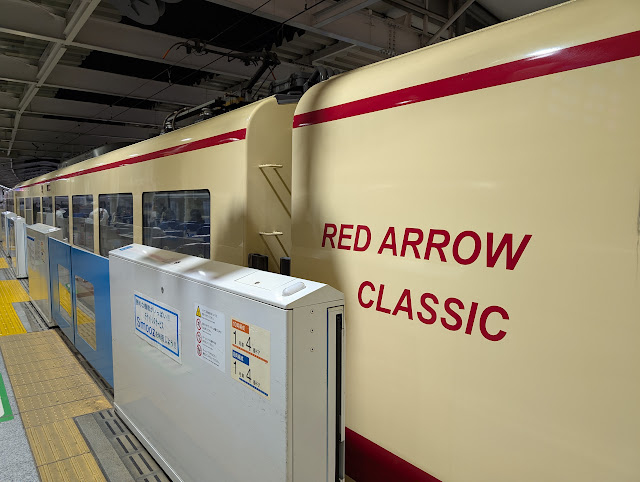
KS: For Jet Jaguar, there was an open call [for entries]. I think the Jet Jaguar design was based on an idea submitted by a kid. At first, Jet Jaguar was called Red Arone during the shoot. So, for the longest time, we called it Red Arone. But, after the movie was done, they realized that Red Arrow was the name of a train somewhere.
BH: Oh, yes, it’s a Seibu train.
KS: Was it Seibu? There was someone named Yoshiyan. He said, “Hey, Sekiyama! Red Arone is now Jet Jaguar.” I was like, “Really?” After they shot the movie, they decided to change the name Red Arone to Jet Jaguar. The shape you make with your mouth when you say “Jet Jaguar” looks a lot like “Red Arone.” They couldn’t use Red Arone, so they came up with another name.
BH: After they shot the movie?
KS: Yes, after they shot the movie, they changed everything to Jet Jaguar.
BH: I didn’t know that!
KS: After we shot Megalon, we were referring to it as Red Arone. That’s what I remember about Mr. Yasumaru. The person who told me this was Yoshiyan. His real name is Mr. [Naoyuki] Yoshimura. He worked on Zone for a long time. And, before that, Mighty Jack (1968) from Tsuburaya. Then he worked on Zone as an assistant in the art department at Toho. Yoshiyan worked on The Inugami Family (1976) with Kon Ichikawa.
BH: Oh, with the mask.
KS: Yes, with the mask. There were two legs sticking out of the lake. Yoshiyan made the mold for those legs. Yoshiyan was the one who told me that Red Arone had been changed to Jet Jaguar.
BH: Next, please talk about your work on Espy (1974).
KS: Espy was one mistake after another. There were so many mistakes. But the biggest mistake was at the end, with the Western-style mansion. It burns to the ground.
Originally, the image that Mr. Nakano and Mr. Fukuda had was bang, swish, crash, boom, boom! Usually, small plaster buildings are carried into the studio. They make them somewhere else and carry them into the studio.
But the shoot of the mansion was done in the Small Pool, which still exists today. They put a lid on the small pool and laid a platform [on top of it]. I think it took over one month to make that mansion. They shot the drama part first with Masao Kusakari and Yuzo Kayama.
They shot the scene with them first. When they were shooting our scenes, the drama part was already done. For the scene where everyone has escaped [from the mansion], and they look back and react [at what they see], there was nothing there. They told us that they wanted to fit what they had already shot.
But we made a huge mistake. The director called, “Ready, action!” and it blew up. Everyone was so surprised. There were three of us – Mr. Nabe, Mr. Kume, and I – the usual trio. The chief, second, and third – Watanabe was the chief, Kume was the second, and I was the third.
The chief was like a runaway locomotive. He always wanted the explosion to be bigger and bigger. The second always tried to hold him back – that was Mr. Kume’s job, like pulling the reins on a horse to make it stop. The chief tended to go out of control, so Mr. Kume’s job was to hit the brakes. I liked to go wild, too, so Mr. Nabe and I liked to go boom, boom!
But this one time, Mr. Kume joined us and went wild. Mr. Nabe, Mr. Kume, and I were like, “More gasoline! More! More!” It was supposed to be gradual, but, as soon as the director called, “Ready, action!” the whole thing exploded at once! And, when the flames died down, there wasn’t much left of the mansion. But there wasn’t anything we could do. We couldn’t do it a second time. Mr. Nakano reluctantly said, “OK, OK.” That’s how we shot that scene.
There were so many other mistakes. The scene where the ceiling in the conference hall caves in wasn’t done very well, either. In any case, we had a hard time with Espy. It wasn’t that good.
BH: Was this movie shot after Last Days?
KS: I’ll have to check my list. I’m not sure which one was first. But I think Espy was after Last Days.
BH: During this time, which Toho staff members did you work with the most?
KS: Mr. Nabe and Mr. Kume. Koji Matsumoto, Shoji Ogawa, and Makoto Ogawa did the special effects. I worked with them often.
BH: By the way, why did they name it Jet Jaguar?
KS: Because they had to choose something that would fit. “Godzilla” doesn’t fit the shape of the mouth for “Red Arone,” right? “Jet” doesn’t fit, either. But “Jet Jaguar” fits “Red Arone.” I think they chose the name based on the movement of the mouth. I don’t know the details, but they couldn’t use Red Arone because it was the same name as the train.
The people I worked the closest with at the time were: Tadaaki Watanabe, the chief, Osamu Kume, the second, and Kazuaki Sekiyama, the third, and Koji Matsumoto, special effects. It was the four of us.
BH: Do you remember anything else from Terror of Mechagodzilla (1975)?
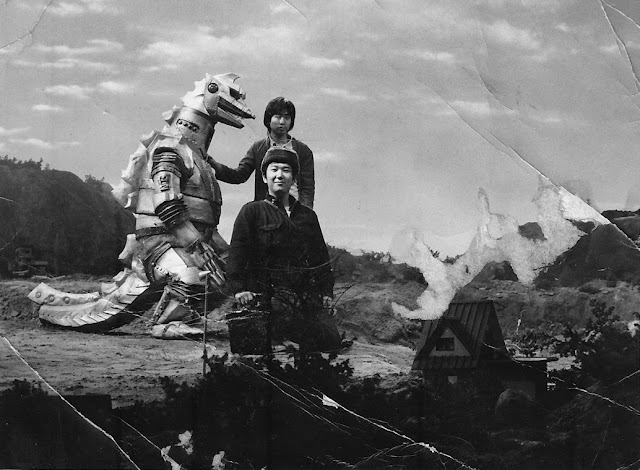
KS: There were a lot of explosions in Terror of Mechagodzilla. What I remember most is the scene where Godzilla runs towards the camera and is attacked by Mechagodzilla. This was in Stage 9, which was 45 meters long. I worked the switch when Godzilla was running.
Godzilla was supposed to run from here to here, and there were a lot of explosives set here. The explosives where he was supposed to run only go off after he passes by them. I didn’t set them off while he was above those explosives.
I was very close with Toru Kawai, the actor who was inside the kaiju. He passed away, but he was my closest friend. He was also inside [kaiju in] Ultraman Ace. I think he was also inside kaiju in Taro. I was setting off the explosives while he was running.
Suddenly, he lost his sense of direction [or orientation] and started going in this direction. He was supposed to go this way, and the explosives would go off. But, because he went this way, this part caught on fire. I was working the switch, so I was far away. But, as soon as they called, “Cut,” Mr. Kume ran over, picked up Godzilla, and threw him on the floor, laid him on his back, and put out the fire. He was on fire.
In Mothra vs. Godzilla, this part caught fire, as well. But that was nothing. It barely caught fire because there was some gasoline that splashed. But, when I started this job, I wanted to be a pyrotechnician and not a director because the night scene in Mothra vs. Godzilla with the tanks and Sabres was so beautiful.
The balance between the aperture of the camera and the lighting, the brightness of the napalm – that was the best. It was amazing and so beautiful. When I saw that, I wanted to be a pyrotechnician; I thought it was so cool. But, in Terror of Mechagodzilla, the kaiju suit burned quite a bit. I remember that very well.
BH: Do you have any memories of Mr. Kawai?
KS: Mr. Kawai was a hard worker. He was very organized and had amazing timing. He would blow chloro‐fluorocarbon [CFC] gas – a white gas – from his mouth. We put in a hose that went in from the kaiju’s leg. We were set up far away, about five meters.
We coordinated the timing to open the valve so there would be a time lag before the gas came out. With actors who weren’t very good, the timing would vary each time they did it, so the timing wouldn’t be the same between the test shoot and the actual shoot. But Mr. Kawai was so good. He would say, “Sekiyama, here we go!” and the timing would match. When Mr. Kawai did it, the timing was always perfect.
At the time, there were a lot of [suit] actors. Mr. [Kazunari] Mori was in Mechagodzilla.
BH: [How about] Mr. Zushi?
KS: Yes, Mr. Zushi was in Mechagodzilla, too. He was also in Zone. Mr. Zushi was in Ace when Mr. Kawai was injured. And Mr. [Kinichi] Kusumi from Zone. Mr. Mori was in Mechagodzilla. For the latter half of Ace, Mr. Kawai was in Taro, so Mr. [Tokio] Yajima was in [Super Robot] Red Baron (1973-74) There were a lot of actors. They were leaders who would bring everyone together. They would say, “Hey Kusumi, you should do it this way, OK?”
For Taro and Zone, there were no fight scene choreographers. So the hero and the kaiju suit actor had to discuss how they were going to fight. Mr. Kawai coordinated all that. Later on, Mr. Kawai stopped being a suit actor and worked in special effects. But he passed away when he was only 50 years old.
BH: What about Mr. Zushi?
KS: He was very trustworthy. He had a restaurant in Yokohama.
BH: It’s closed now.
KS: He closed it?
BH: Yes, he closed it in December [2022].
KS: Mr. Zushi had problems with his health.
A female [Godzilla fan] who wore a kimono and another person took me there. I was like, “Mr. Zushi!” It was the first time I had seen him in over 40 or 50 years. He was in good health then. Mr. Zushi was very quiet and trustworthy. He was a reliable actor. But, in Zone, I accidentally got him burned.
BH: Do you remember Mr. [Shinji] Takagi from Megalon?
KS: I only know of him; I never spoke with him. Later on, Mr. Takagi had a small role in Seibu Keisatsu (1979-84) by Ishihara Promotions. But I don’t know him. Mr. [Kenpachiro] Satsuma acted in Megalon.
BH: Yes, [he played] Gigan.
KS: His name wasn’t Mr. Satsuma …
BH: Oh, Kengo Nakayama.
KS: But I didn’t speak to him then. The first time I spoke to Mr. Satsuma was during Godzilla 1985. I know that Mr. Takagi took part in Megalon. There were four of them in total. Mr. Takagi, Mr. Nakayama, the person from Jet Jaguar … There was one other person.
There were four of them. Most of them were from P-Productions, I think. I didn’t really know the [suit] actors in Megalon. I only remember what Mr. Takagi looked like. Later on, I saw him in a small part in Seibu Keisatsu by Ishihara Promotions. And there was Mr. [Shoji] Takeuchi, who played Ultraman Ace. He was always getting scolded by Mr. [Kazuo] Sagawa during the latter half because he put on weight.
BH: (laughs) That’s interesting. Next, what do you remember about working with director Nakano on Terror of Mechagodzilla?
KS: The chief assistant [tokusatsu] director for Godzilla vs. Mechagodzilla was Mr. Kawakita. Mr. Kawakita stuck to the schedule and worked as assistant director to make the final product as close to his vision as possible. He would say, “Sekiyama, do it more like this. That’s good; that’s good!” It was less about what the director wanted and more about what he himself wanted.
The most important role of the chief assistant director is to help the production stay on schedule. He would say, “Mr. Nakano, let’s forget about that. We don’t have time.” That’s how he worked. But, for the next one [Terror of Mechagodzilla], Mr. Tabuchi was the chief assistant director, and Mr. Tabuchi was also the chief assistant director for Submersion of Japan.
And, in Zone, Yoshio Tabuchi was the director. I think it was easy for Mr. Nakano because he was working with Mr. Tabuchi. With Mr. Kawakita, I think Mr. Nakano felt like he was being rushed because he would say, “Please hurry! That take was fine!” For this movie, I think Mr. Nakano was able to take his time. But, for Godzilla vs. Megalon, the directing wasn’t good.
BH: Terror of Mechagodzilla was the last Godzilla movie for nine years. What was the feeling among the Toho staff at the time? Did it seem like the end of the Godzilla series?
KS: No, we didn’t think that it had ended. We thought it would go on for a while. But it was with director Ishiro Honda. And Ikio Sawamura … I really liked Toho actors. From the time I was a child, I diligently kept notes. Ikio Sawamura did this role and this role … Jun Tazaki did this role and this role … and Shoichi Hirose.
I was very good friends with him. I used to drive him home, and we did a lot of things together. I really liked Toho actors. Ikio Sawamura was in Terror of Mechagodzilla. Do you know who he is? He’s the old man who was always with the actress. What was her name?
BH: Tomoko Ai.
KS: Ikio Sawamura was the old man who was always with Tomoko Ai. That must have been his last movie. I think he had difficulty speaking. He couldn’t say his lines, so he didn’t have any. It was great that an actor like him was in the movie.
Akira Ifukube did the music. I didn’t think it would be nine years before they did another movie. But, after that movie, Mr. Kume told me to study special effects. Until then, I had been doing pyrotechnics and practical effects the whole time, so he told me I should do special effects.
Mr. Kume said to me, “[Himitsu Sentai] Gorenger (1975-77) starts tomorrow with Akira Suzuki at the Tokusatsu Research Institute, so go work as a special effects assistant and pyrotechnician there.” There were four or five days left for the Terror of Mechagodzilla shoot, but I left and went to the Tokusatsu Research Institute. That’s why I’m not in the staff photo that was taken at the end of the Terror of Mechagodzilla shoot. After that, I was at the Tokusatsu Research Institute for a long time, working with Mr. [Nobuo] Yajima.
BH: Around this time, you did a lot of television work. Let’s talk about your work on these TV programs.
KS: There weren’t any kaiju in Daitetsujin 17 (1977) – only airplanes, tanks, flying miniatures. And we weren’t very busy. At the most, we only worked two weeks in a month. At the least, we only worked one day in a month. I was summoned whenever there was work. But I worked on a lot of programs. First, I worked on Condorman (1975), then Gorenger. Gorenger went on for a long time.
Oh, and there was Akumaizer 3 (1975-76). For [Space Ironman] Kyodain (1976-77), they used hand puppets. The Kyodain would go like this and say, “Let’s go, Grounzel!” That was all me.
BH: Any memories of The Kagestar (1976-77)?
KS: For The Kagestar, Akira Suzuki did the special effects. He also did the special effects for Gorenger and Father of the Kamikaze. But Mr. Suzuki wasn’t there for The Kagestar. He was in Korea to film a war movie.
There’s a big plane in The Kagestar. At the time, they normally used military models, Hiruma Model Craft [airplanes, and ones] that were made by companies that specialized in models for the shoots. It was common sense to make flying models as light as possible. That was the standard.
But, around that time, toy companies like Popy started getting involved. Local toy companies that made prototypes starting making planes for the shoots. When the plane for The Kagestar was completed, it couldn’t be lifted by one person. Maybe that’s an exaggeration, but it weighed 25 kilograms.
There’s no way you can hang that with piano wire and make it fly, so we didn’t know what to do. We had to use really thick piano wire to make it fly. But it wasn’t digital, so we had to cut the lighting or use lighting to erase the piano wire or paint the piano wire. Those were our only choices. So I had a really hard time on The Kagestar.
BH: What about Ninja Captor (1976-77)?
KS: For Ninja Captor, I don’t remember what I did because I worked on so many programs. For some programs, I only worked for one day. For some programs, I only spent one day for the title sequence. So I have no idea what I did for these programs. [Kaiketsu] Zubat (1977) was also only one day.
BH: One day? (laughs)
KS: Yes, one day. All I did was the title and credit sequence.
BH: How about Daitetsujin 17?
KS: Daitetsujin 17 was the first proper program I had done in a long time. Mr. Kawai, whom we spoke about before, was a [giant robot] suit actor. And the suit actor for Daitetsujin 17 was a person from [the stunt company] Ono Kenyukai. Nobuo Yajima was the director. Tetsuzo Osawa was the art director, and Mr. Kume worked under him.
In total, there were 10 of us on the team. For [Daitetsujin] 17, there were a few more people than usual. But, until then, we always had 10 people on the team. Special effects and pyrotechnics: two, camera: two, lighting: two, director and art director: three.
There was one more person named Mr. [Yoshiyuki] Nakamura from Nikkatsu, who did Gappa [the Triphibian Monster (1967)] and other works. He came in a supervisory role to oversee the preparations for composite shots and developing [of film] processes. So, for a long time, there were 11 of us.
BH: Do you have any memories about director Yajima?
KS: I do. Mr. Yajima was a very good director, but he was also a very good producer. He was very diligent and always had prepared storyboards. Mr. Yajima drew very small pictures – we were never sure what he had drawn because they were so small. But he was very thorough and drew storyboards for everything.
I got along with him really well because we both liked to be over the top. He liked the explosions to be over the top. If I had them go off [in a big way], he would clap and say, “OK!” That’s the kind of director he was. At the time, he was the president of the Tokusatsu Research Institute, so he was managing both the money and the directing. That’s the position he was in. He was a very nice person.
I worked a lot with Mr. Yajima, and he took me under his wing. So did Mr. Suzuki. And, of course, Mr. Nabe and Mr. Kume did, too. I don’t remember anyone ever giving me a hard time. Mr. Kume got mad at me often, but it was a form of tough love. That’s when you care for someone who’s your junior, and you get mad at him [so he will learn]. He taught me a lot.
BH: Let’s go back to the movies. Please talk about what you remember from Zero Pilot (1976).
KS: I wasn’t there for the entire shoot. After I started working at the Tokusatsu Research Institute, if I had nothing to do, Mr. Kume would say, “Sekiyama, come and help.” That’s why I went to help him on Zero Pilot. At the time, I was flying radio-controlled planes, so I helped with the explosions of radio-controlled planes.
BH: What do you think of radio-controlled planes?
KS: It’s not like the digital radio control we have nowadays. It was analog propulsion, so there were a lot of signal interference and malfunctions. That wasn’t just for Zero Pilot; it also happened on Zero (1984).
We used a lot of radio-controlled planes. But, because the planes were going to be exploded and would then burn and fall, they didn’t use great new engines. And they were loaded with a lot of gas and explosives, so they were overloaded. So, as you would expect, they were flown by hand.
But it would pose a problem if they exploded right away. So I put timers on the planes so the electricity wouldn’t turn on for two minutes, no matter what. The timer would cut off the electrical source. When the script supervisor said, “One minute, two minutes,” the explosion would go off with a bang. We made this system and used it for the shoots. Mr. Kawakita used radio-controlled planes very cleverly.
I think it was a really good movie. Director Kawakita was in the groove. He had so much vitality at the time. It was really good because he wanted to try a lot of new things. Do you know Eiji Tsuburaya’s U-control planes? They were used a lot during World War II. But, with the radio-controlled planes they had during World War II, you couldn’t fly them where you wanted them to fly. In that regard, Mr. Kawakita used radio-controlled planes very often in Toho movies. He captured so many good images.
BH: Some Toho staff members have said that director Kawakita was quick to get angry. Is that true?
KS: No, he didn’t get angry. He didn’t get angry. How should I put it? He was very charismatic, Mr. Kawakita. Mr. Nakano was one of the higher-ups, so he wasn’t very approachable. You couldn’t go up to him and say, “Hey, Mr. Nakano!” So it was difficult to convey details and nuances to him. Mr. Kawakita was just like us and spoke to everyone equally. He would say, “Sekiyama! Sekiyama! I want the next one to be like this – boom! I’m counting on you.” He was very good with the crew.
On the other hand, Mr. Nakano wasn’t like that. He was like, “I’m the director! Mr. Sekiyama…” Mr. Kawakita would be like, “Sekiyama, that’s good! OK, OK, OK! Go ahead and do it! It’ll be fine – go ahead and do the whole thing. I’ll take responsibility.” That’s how he was with the crew.
He was charismatic, so everyone trusted him and would want to go above and beyond for him. That’s how he was. I don’t know about when he was older. After that, I did a lot of commercials with Mr. Kawakita like Bandai and Popy.
BH: What work did you do on The War in Space (1977)?
KS: Basically, it was inspired by Star Wars (1977). We wanted to do make this movie and release it before Star Wars came out, so we had to shoot it in a very short period. The bad guys’ spaceship, the Daimakan … it was so tacky. I thought, “What is this spaceship?” It was designed by Yuko [Tomoyuki] Tanaka, but by then Mr. Tanaka was an old man. He couldn’t keep up with the style around the time when Star Wars came out.
The production period for The War in Space was so short, and we had no money. So I don’t have great memories from this movie. But the scale of movies at the time was still very big. They had a lot of carpenters to make big space sets and things like that. I don’t have great memories from The War in Space. Yuko Asano had a good figure – that was about it. But Mie Hama from King Kong Escapes had a much better figure.
BH: (laughs) How much did Star Wars influence this movie?
KS: I don’t know. It was interesting to watch. But no one thought we would be able to outdo that movie. I don’t think anyone thought, “Let’s make a movie just as good as Star Wars.” We were just riding the wave and making a rehash, trying to fool the audience and make some money. That’s what the movie was for. Message from Space (1978) was much more of a masterpiece compared to The War in Space.
BH: Do you have any other memories from The War in Space?
KS: I don’t have that many memories from The War in Space. Oh, but what surprised me was the Goten. The design of Goten was horrible, wasn’t it? The Goten[go] in Atragon was so cool. But what the hell was the Goten? The special effects production design department only had the time and budget to make it with woodwork. Atragon was Goten[go], and The War in Space was the Goten. It had revolver cylinders.
It spins, then [missiles] comes out. But, in terms of the mecha, if it goes like this [motions with his hands], it’s wrong, isn’t it? It has to go like this; otherwise, it’ll be upside down. They had made that mecha, but it didn’t work because it wasn’t made properly. We were like, “What are we going to do?” So Mr. Nakano said, “It’s fine; we’ll just use it upside down.” The movie was a mess. It wasn’t very good.
Message from Space was amazing. The entire tokusatsu team in Tokyo was there. Well, most of the team. The modeling team was working at full tilt. They came up with a lot of different mecha for the aircraft. Did you see it?
BH: Yes, I saw it.
KS: The Gavanas’ fighter jet – the one that has the legs come out. There was one that was this big. The mecha was amazing! The legs come out while it’s flying.
Oh, another amazing mecha in The War in Space was the drill on the tip launching forward at the end. Meiho [Akinori] Takagi made that. The drill was about this big, and the base was about this big. We hung it by this part to make it fly. This part was cylindrical – it was a round pipe.
And here there was a bigger drill attached. This part rotated like this so it could fly. Normally, if you did that, it wouldn’t be balanced, but this didn’t sway at all. The mecha was amazing.
BH: Please talk about working on Message from Space.
KS: The Gavanas’ fighter jet in Message from Space was impressive. I wasn’t Mr. Kume’s assistant then. I was the second for special effects under Akira Suzuki, who was the chief. Mr. Kume came as the pyrotechnician, and someone else was his assistant. We worked on this movie for two or three months in Uzumasa, Kyoto. It was hard, working every day. But they had a big budget for this movie.
Until then, the [Tokusatsu Research Institute] only did small tokusatsu productions for TV, but all of a sudden they were working on Message [from Space]. Before Message [from Space], they were supposed to shoot a movie with a big kaiju shaped like a ray [a flat, cartilaginous fish] that wreaks havoc on Tokyo and dies at the end by falling into an industrial complex.
Hajime Sato, who did Goke Body Snatcher from Hell (1968), was supposed to be the director. The script had already been finished, and I think we saw the script. But then Star Wars happened, so they decided to do Message from Space first, and Hajime Sato’s movie got canceled. They didn’t shoot it. That’s why they shot Message from Space.
I did a lot of different things on Message from Space. What I loved most was Vic Morrow and Rick Jason – two actors I had watched on Combat! (1962-67) when I was a kid. Vic Morrow and Rick Jason were sitting next to me, eating stir-fried udon noodles. I was like, “It’s Vic Morrow!” I was so happy.
BH: Did you meet him?
KS: Yes, I met him. I didn’t speak to him because he only spoke English, and I only spoke Japanese. I was working on the miniature shoots, and he was in the drama shoots. But, when I was eating, Vic Morrow was eating there, too. And Rick Jason came to visit and ate with him. I was like, “Wow!”
BH: You must have been happy.
KS: Yes, I was very happy. In that sense, for people who loved actors, this was a great industry. There was an actor named Junkichi Orimoto who played the most senior Liabe, the elder. I think he played Etsuko Shihomi’s grandfather.
At first, an actor named Yoshio Yoshida was playing this role. He was great. For the longest time, he had played the villain in many Toei movies. But Mr. Fukasaku didn’t seem to like him, so after a few weeks of shooting they replaced him with Junkichi Orimoto and reshot those scenes. I was surprised that they did this.
Also, we didn’t know this at the time, but Shinichi Chiba injured legs. I think it was difficult to deal with. We didn’t know about it at the time, but we heard later that Shinichi Chiba had been injured. Anyway, I worked really hard on Message [from Space]. It was very different from The War in Space.
BH: How about director Kinji Fukasaku?
KS: I never met him. Oh, a little bit. There’s a scene where Aaron, Shiro, and Big Sister [Meia] walk in space with space fireflies. I worked on that scene, hanging the three actors. But I hardly ever spoke with Mr. Fukasaku. For both The War in Space and Message from Space, and other space movies where you see the night sky – I’m sure it’s different now, but at the time they hung a black curtain and attached hundreds [or] thousands of grain-of-rice bulbs. That was our job. It was a lot of work! Setting up these grain-of-rice bulbs was really hard work. And, for Message [from Space], it was also a lot of work. We did that kind of work, as well.
After Message [from Space], we came back, and I didn’t do any tokusatsu work for a while, for a few years.
BH: About five years?
KS: Yes, about five years. After Message [from Space], I worked on Legend of the Eight Samurai (1983). But it was with Mr. Yajima working on miniatures. After Message [from Space] finished in Kyoto, I didn’t do any [tokusatsu] for about five years, maybe four years. The next movie I did was Legend of the Eight Samurai, which was also shot at the the Tokusatsu Research Institute in Kyoto.
In Legend of the Eight Samurai, I assisted Mr. Kume, so I only did pyrotechnic work. We did all kinds of pyrotechnics. I don’t think the shoot was that long – maybe a month or so. I don’t remember. Anyway, I worked really hard on this movie, destroying castles and things like that.
BH: There was also Zero. What was your involvement in it?
KS: Zero was with Mr. Kawakita. It was the first tokusatsu movie I had worked on in a while. Zero was a war movie. I often confuse Zero with Zero Pilot and don’t know which is which. We flew a lot of radio-controlled planes. We made some mistakes, and there were also times when we were successful, so there was a range.
What Mr. Kawakita wanted to [get] was gun camera footage. He wanted to shoot from a fighter jet that was chasing another fighter jet that was flying in the foreground, and he wanted the smoke to cover the camera when the fighter jet explodes. I remember doing the shoot on location with the fighter jet loaded on the back of a truck and the camera following the fighter jet. Then the fighter jet would explode with pyrotechnics.
Also, at the outbreak of the war, the very first [attack] was Saburo Sakai’s air raid scene of Clark Field. Mr. Nabe was the chief, Mr. Kume was the second, and I was the third, and there was another person under me named Narumi. On the busiest day of this shoot, Mr. Kume had to go do the air raid scene for the drama shoot, so I remember the three of us having to do this huge pyrotechnic setup. We were completely exhausted. But I think we got a great shot.
I made the mecha to drop bombs from the skip bombing. I attached the explosives with electromagnets, so, when the fighter jet flew overhead, the rotary would cut the electricity, and the bombs would drop one by one. I created this contraption for Zero.
But it was too bad that they used Sunny trucks, and the crew members’ uniforms and flight caps weren’t great.
BH: What did you do on Godzilla 1985?
KS: Godzilla 1985 was the first Godzilla revival in a long time. As a kaiju movie fan, I was really gung ho. But the plot didn’t make sense. The Self-Defense Forces [SDF] gathered at Harumi Wharf to welcome Godzilla who was coming ashore. The image I had was Mothra [in the 1961 movie] in Dogenzaka or Shibuya with missile tanks, but they ended up with offensive weaponry with varying missile ranges in one line at Harumi Wharf firing at once.
It was clear that the people writing the script didn’t care for kaiju movies. If they were true Godzilla fans, they wouldn’t set it up like that. It was a shame because it was supposed to be a truly interesting highlight scene. But it was inevitable because they had to include people like Yasuko Sawaguchi.
At the end, the SDF set up explosives at Mt. Mihara, and the person who pushes the detonation switch was a part-time crew member, a student named Oku[mura, played by Shin Takuma]. That was ridiculous. Like Ren Yamamoto in King Kong vs. Godzilla, an SDF member should have pushed the switch. It was really disappointing to watch the movie. That’s what this movie was like.
And the Super X didn’t have to attack with conventional weapons in that scene. I think they should have made another cadmium missile and waited until it was ready. So the movie was really disappointing because I had such high expectations.
BH: In the Tokyo Bay scene, did Mr. Nabe make a mistake with Godzilla’s atomic breath?
KS: No, it wasn’t a mistake.
BH: Mr. Asada said there was a mistake.
KS: No, I controlled the switch, so I know better than anyone. First, when Godzilla tries to attack, they’re firing before he starts. They were told to start firing before Godzilla spews his atomic breath. They fire a few shots, then Godzilla fires his atomic breath.
I was told then to set off the explosives. I thought we didn’t need it, that it was confusing. But Shokei Nakano told me to do it this way. So, although it was the shot after they start firing, we shot the SDF’s cannons as soon as the director called for them. So several shots are fired toward Godzilla.
That’s why Mr. Asada and others who didn’t know the circumstances said we’d made a mistake. They said, “Why are the SDF firing before Godzilla fires his atomic breath?” But the sound wasn’t from the SDF’s explosives. The firing sound was from the SDF’s attack. I didn’t think it was necessary, but Mr. Nakano told us to do it, so we did.
I think it would have been better without it. That’s why Mr. Asada misunderstood it, as well. Next time I see him, I’ll tell him. With the shamisen [the nickname for the control device for the explosives] set-up, we were only able to set up 50 explosives that go off consecutively. One hundred explosives go off in that scene; I did the first 50, and Mr. Nabe did the next 50. When Godzilla goes “Arrgh!” I set off the explosives. So it wasn’t a mistake.
BH: (laughs) I see.
KS: That was Godzilla 1985. I did so many things on Godzilla 1985. That was when I was working the hardest on my own. From Godzilla [1985] onward, Mr. Nabe and Mr. Kume weren’t really motivated anymore. They were like, “It’s only a kaiju movie.” They would say, “Sekiyama, what’s your next explosion?” When I responded, “I’m going to do it like this,” they would say, “Sure, we’ll leave it up to you.” That’s how it was from then on. But I was disappointed with Godzilla 1985.
BH: Please describe working with tokusatsu director Teruyoshi Nakano on Godzilla 1985.
KS: For Godzilla 1985, he was highly motivated and worked very hard.
I like the SDF, so I would have chosen a different way to depict the scene. For example, the missiles. Their range is dozens of kilometers, like 20 kilometers, whereas artillery from tanks only fly two kilometers or so. So, when Godzilla is approaching and about to land, I first would have the missiles start attacking, even before we see him. And I would have that take place at Harbor View Hill Park [in Yokohama], which is a school field that’s on higher ground. I would have two missiles side by side there.
And, from the back of the cemetery that’s on the opposite side, there would also be missiles side by side. And, in the foreground, missiles would launch from over the fence of the school’s baseball field. They would go off, but Godzilla doesn’t flinch and continues to advance.
What happens next? The next weapon would be the AH-1S, an anti-tank helicopter, which would attack Godzilla. But that doesn’t work, either. What happens next when Godzilla comes even closer? That’s when the tanks fire for the first time. That’s how I would depict the scene. I love the night scene with Mothra when missile tanks fire in Shibuya. Have you seen that?
BH: Yes.
KS: Of course you have! If only [director Nakano] had put in minute details like Eiji Tsuburaya did, it would have been really interesting. [Director Nakano] had that opportunity, but it’s a shame he didn’t take advantage of it. Do you know what anti-tank helicopters are? At the time, it was the AH-1S. They were planning to use that, so they had made them. But we don’t see that in the movie, which is such a shame. There were a lot of things like that in Godzilla 1985.
And I don’t think they needed to insist on Ken Tanaka and Yasuko Sawaguchi’s being featured until the end [of the movie] because Godzilla is the main character. The human actors can change from one to the next. In the beginning, you can have Ken Tanaka, Yasuko Sawaguchi, and Mr. Oku[mura]. Then it can be Yosuke Natsuki’s professor and then the young guy from the SDF. But, because they insisted on entwining them with Godzilla, the script became unnatural. That was really a shame.
BH: After Godzilla [1985], you don’t seem to have worked on tokusatsu projects for 20 years. Why is that?
KS: I was working on commercials. I joined this company, and I was forbidden to do tokusatsu. I wanted to do tokusatsu, and I had a lot of offers, even an offer to work on the [Shinji] Higuchi Gamera [movies].
BH: Really? But you didn’t?
KS: The CEO said no. He said he needed me to work on commercials; otherwise, the company wouldn’t make any money. Tokusatsu and movies didn’t make any money, so he told me to work exclusively on commercials and make money for the company. Thus, he forbade me, so I didn’t for 20 years, even though I wanted to. But my master, Mr. Kume asked, “Hey, Sekiyama, do you want to join the Godzilla Team B?” When Team A can’t manage to shoot everything, Team B shoots the rest. In other words, if Team A is pressed for time, and they haven’t shot everything, they put together another team to shoot the remaining shots.
Whenever that happened, I joined the second team. So I joined shoots for a lot of different Godzilla movies, like [Godzilla vs.] King Ghidorah (1991) and [Godzilla vs.] Biollante (1989). I don’t know much about the productions because I wasn’t there for the entire shoot. I joined some of those shoots, but otherwise I didn’t work on any movies or tokusatsu for 20 years. That’s the reason.
When I turned 50, they let me do tokusatsu work again. What did I do first? I worked on a lot of movies like Aegis (2005), Sinking of Japan (2006), and Yamato (2005).
After that, I worked on [Godzilla:] Final Wars (2004). Mr. Kume asked me to join, saying that this would be the last Godzilla. He said, “They’re saying that this will be the last Godzilla, and it’s called Final Wars. I hope you don’t mind, but I want you to join the drama side” [instead of the tokusatsu side].
For Godzilla movies up until then, there hadn’t been much work for us on the drama side. There were things like the flickering mecha on a submarine or someone’s firing shots, but that was about it. But he said that, for Final Wars, there would be a lot of explosions on the drama side. He said, “So I hope you don’t mind joining the drama side.” So I didn’t work on the tokusatsu at all for Final Wars.
I was on the Ryuhei Kitamura team for a long time. I did a lot of movies. There were people who said a lot of [negative] things about Ryuhei Kitamura, but I found it easy to work with him. The way he shot movies – in the days when film was expensive, they only shot the cuts they were going to use. Let’s say that we’re going to shoot a cut where you say, “Yes.” The director says, “Ready, action!” and you say, “Yes.” Then the director says, “Cut!” The next cut is my saying, “Oh, really?”
But we would shoot all of the shots with you in one go. For example, we would take shots one, four, five, and eight. Shot one, next shot four, shot five, then shot eight. Then we would shoot the shots with me. First, we would take shot two, and I say, “Oh, really?” Then we would do shot four where I say, “No, I don’t think so.” Then the director would say, “Cut!” That’s how they used to shoot in those days. So, for us pyrotechnicians, let’s say we’re going to shoot a scene where you turn around and explosions go off. In that case, we would only shoot that part.
But that’s not how Ryuhei Kitamura did it. We would first do the shot with you with explosions’ going off in the background. Once the director said, “Ready, action!” we would keep shooting for a long time. I would hide here so I’m not in the shot, but, while the actors are acting, we’re shooting the explosions. Next, we shoot a wide shot of the two of us.
We also shoot the explosions. We do the same thing over and over, but only one of the shots will be used. So I said to director Kitamura, “I’m sorry, but, if we shoot this way, it’s going to be a problem for us pyrotechnicians. It won’t matter how many explosives we have; we’ll never have enough. So please tell me, and only me, which shot you’ll use.” The other crew members didn’t know. They just saw the director’s choosing the shots he wanted in editing. In a way, it was an extravagant method, like Akira Kurosawa.
I told him, “Director, I can’t do it that way. Please tell me which shot you’re going to use, and I won’t tell the others. You know more or less which shots you’re going to use, don’t you?” He told me that he did. He would tell me in secret things like, “I’m going to take the next shot like this. The part I’m going to use is where Ms. Mizuno faces this way and says, ‘Yes, yes.’ You don’t have to set off the explosives before then.” So I only set off the explosives where they were needed. When I thought, “OK, this is when he’s going to start needing them,” I would start setting them off. That’s how we worked together.
At the time, Ryuhei Kitamura didn’t get along well with the Toho crew, but I found it easy to work with him. I briefly worked with director Ryuhei Kitamura again recently, but I forgot what it was.
We [Eiichi Asada and I] didn’t have any shoots together, but I did work on Megalon with Asa-chan. Asa-chan clapped the sticks [film slate] on Megalon. He was the most junior person, and I was the most junior person, too. Asa-chan clapped the sticks for the entire movie, every time the director said, “Ready, action!” He may have worked on Terror of Mechagodzilla, as well. Those were the productions we did together. He then became the [special effects] director for Final Wars. Oh, but he did a Godzilla movie before Final Wars, didn’t he?
BH: [Godzilla:] Tokyo S.O.S. (2003).
KS: I did a little bit of work on Team B for that movie. I don’t remember if it was for Tokyo S.O.S., but I remember doing a scene with Asa-chan, with Godzilla in the Big Pool, Type 90 tanks in the foreground, and many shots being fired. But, on Final Wars, I didn’t have any shoots with Asa-chan.
Mr. Kume said to me, “Don’t worry about the budget for the explosives. Just do whatever you want.” So I would say to him, “Mr. Kume, please come here. We don’t have any more of these explosives.” And he would say, “OK, I’ll get you some more.”
So I didn’t have to worry about money at all and was able to do whatever I wanted to for Final Wars. I just remember making a lot of sparks the whole time. That’s all I did. Ryuhei Kitamura seemed to like that a lot. It’s flashy but surprisingly safe. Lots of sparks.
A few years ago, I worked on a John Woo movie. I made a lot of sparks then, too. John Woo seemed to like sparks a lot. And, with Ryuhei Kitamura, there were a lot of sparks, as well.
BH: How did you join the production of Sinking of Japan?
KS: For this movie, the tokusatsu was outsourced to the Tokusatsu Research Institute. The Tokusatsu Research Institute is the company founded by Nobuo Yajima. It was also where I used to work, where I worked on productions like Gorenger and Condorman. Akira Suzuki, my mentor, had worked there for many years, but he retired. There was someone who could do the special effects for TV, but this person was too young to be able to do the special effects for movies.
They were looking for someone, so that’s why I got the offer. Makoto Kamiya was the [special effects] director – I had worked with him often, and we were very close. We’re still in touch. For example, we worked on a Netflix show called Alice in Borderland (2020-25), which became a worldwide blockbuster, and Kingdom (2019). We worked on a few productions together with the same crew.
Kamiya was the director. I think the shoot lasted around 45 days. Kamiya is really persistent as a director. Do you know what I mean by persistent? “One more time, one more time.” “Now do it like this.” “Let’s shoot it a bit more like this.” “Do it a bit more like this.” “One more time.”
But I like shooting like that, so I worked very hard on Sinking of Japan. But, from around that time, they stopped using horizons [backdrops] for the sky and started using green screens instead, unfortunately. There was a movie called Giant God Warrior Appears in Tokyo (2012) by Hideaki Anno …
BH: It’s a short film, isn’t it?
KS: Yes, it’s about ten minutes. It was the same for this movie, but it’s hard to get a clean key of an explosion with a green screen. They say that nowadays they can key out a single hair from a green screen, but you can’t get a clean key of debris and dust from an explosion using a green screen. With a gasoline explosion like a gasoline tank’s exploding, you can get a clean key of the edge of the flames if you use a green screen.
But it’s still hard to get a clean key of an explosion, even with all the advances in digital [technology]. That means it’s a lot of work to get the right combination of explosives. You have to first create a lot of flames, so you don’t have to key out the small debris because the flames are the background. With green screens, you have to keep all this mind before setting up the explosives.
From Sinking of Japan, they stopped using horizons for the sky and replaced them with green screens and digital backgrounds. This has made it difficult to set up explosives, especially for the dust and debris. For example, it’s impossible to get a clean key of a plaster building explosion. From Sinking of Japan onward, I felt that times had changed.
BH: Please talk about working with directors Shinji Higuchi and Makoto Kamiya.
KS: The difference between Higuchi and Kamiya … Kamiya is much more meticulous. Among all the other directors, he knows a lot about pyrotechnics, so it’s easy to work with him. But, because he’s so meticulous, it can also be annoying. On the other hand, Higuchi didn’t know as much about pyrotechnics, so he left it up to me for the most part. Kamiya also left it up to me because he didn’t have a choice, but that was the difference between the two.
If Kamiya had directed Giant God Warrior, the pyrotechnics budget would have been triple. That’s how much he wanted to keep reshooting. If something was destroyed, we wouldn’t be able to reshoot anymore, but, if we were shooting B-roll, he would say, “I want to shoot it this way,” “I want to shoot it that way.” That was Kamiya. Higuchi was the opposite and thought more about the full picture, so he wasn’t as meticulous.
BH: Do you have any other memories?
KS: For Godzilla 1985, Higuchi was really into modeling.
BH: He was the assistant.
KS: Yes, he was the most junior assistant, so he was helping the others. He was very skinny. I remember Mr. Kume getting drunk in the car and throwing up. I don’t think Higuchi had a mentor for directing because he didn’t have that much experience assisting directors. Koichi Kawakita was Kamiya’s mentor.
BH: How did you join the production of Gamera the Brave (2006)?
KS: Gamera ruined tokusatsu in Japan. While we were shooting Sinking of Japan, a cameraman named Mr. [Satoshi] Murakawa – he’s now at Tsuburaya – asked me to work on Gamera, and I agreed. We had worked on Aegis and some other productions together.
He’s still a cameraman at Tsuburaya. Around the time of [Godzilla] 1985, there was an assistant cameraman at Toho named [Fujio] Okawa – he was the cameraman for Final Wars. And there was another person named [Hiroshi] Kidokoro. Maybe you don’t know him. I think he [Murakawa] was the cameraman for the Higuchi Gamera [movies], like Kidokoro.
So I accepted the offer. The way it was shot was completely different from other Toho tokusatsu productions I had worked on. First, I’ll talk about the positive side of Mr. Murakawa. He wanted to have depth of field. Let’s say there’s a guardrail in the foreground and a kaiju behind it. Normally, both the guardrail and kaiju would be in focus. But, if you shoot the scene with miniatures and the kaiju is in focus, the guardrail is out of focus and blurred. That doesn’t look very real.
In War of the Gargantuas, there’s an octopus in the first scene. At the end, when the octopus escapes into the ocean, the octopus’ tentacles in the foreground are out of focus, which makes it look like a miniature. But, if you have depth of field, and everything from the foreground to the background is in focus, it looks very real. Mr. Murakawa was very particular about this. You can resolve this by using a lot of lights, increasing the amount of light, and squeezing the iris as much as possible. He did that very well.
What I hated about Toho was that the lighting team didn’t like to see lights in the shots, so they used a lot of matte spray to make everything look flat. They sprayed clear flat spray to get rid of the sheen. But that looked really fake. Mr. Murakawa never allowed that. He said, “I don’t care if you can see the lights, don’t erase the sheen.” In that sense, I think he was an amazing cameraman.
On the other hand, the overlap between the drama director and the tokusatsu director was really bad. It wasn’t smooth. In the old days, Toho shoots always had a lot of carpenters to build new sets. They would first shoot Godzilla from behind, then shoot him from another angle, then take an overhead shot.
But, on Gamera, they built a set this size [shows the scale with his hands] and first shot [Gamera] from one angle. Then they were going to shoot him from a different angle, but they moved all the lights over here and moved the set around before shooting from that angle. So it took a really long time. We only filmed one shot a day.
At Toho, there were also a lot of times during Sinking of Japan where we only filmed one shot a day, but that was inevitable because it just took that long, even with everyone’s helping out. But that wasn’t the case with Gamera, so I was surprised. The skills cultivated by Team Higuchi on Gamera – they took amazing images and transmitted those skills to the next generation, but I was surprised by how different things were from Toho.
There was a kaiju with a very long tail – more than three meters long. When the kaiju walks toward the camera, they needed five people to make the tail move. But they didn’t have enough people to do that. So it was quite difficult.
BH: What led to your working on Shin Godzilla (2016)?
KS: This was also with the Tokusatsu Research Institute. There was a guy named [Katsuro] Onoue at the Tokusatsu Research Institute.
There were three guys – [Hiroshi] Butsuda, Onoue, and [Takashi] Miike. Onoue was also an apprentice under Akira Suzuki. After I stopped working for him, Onoue started working for him on the special effects team. So Onoue was a fellow apprentice and often offers me work. We’re doing a tokusatsu production together this year and again next year. That’s how I got involved with Shin Godzilla. Which one was first, Shin Godzilla or Giant God Warrior? I think Giant God Warrior was first.
Mr. Anno has an acute sensibility. I think he has a sensibility that we can’t quite understand. And I think I have an acute sensibility that he doesn’t understand regarding pyrotechnics and things like that. But, outside of those areas, he has an acute sensibility that I just can’t grasp.
But I think it’s hard for people to work under Mr. Anno. The ordinary person can’t understand what he considers good or what he considers bad. However, Mr. Anno’s productions – I worked with him recently, shooting tokusatsu for Shin Kamen Rider (2023).
As for Onoue – this is my person opinion – the only thing he can do is find people whom Mr. Anno won’t complain about. Who can do the pyrotechnics for Team Anno? I’m the only old guy left among the tokusatsu pyrotechnicians. That’s why I think they still offer me work. But Team Anno is a bit different.
Do you know they made a big Godzilla for Shin Godzilla?
BH: Yes.
KS: It took a lot of people to move it. But they didn’t use a single shot. When those shots were ready, Mr. Anno said, “I’m not going to use those shots. They’re not like the mockups of Godzilla that I like.” But, even for us, we couldn’t really see the difference. I like Godzilla, so I know a lot about Godzilla.
After they finished shooting Mothra vs. Godzilla, they made adjustments and reused the same Godzilla for Ghidrah the Three-Headed Monster. After that shoot was over, they used it in Monster Zero. So you know that they made adjustments to the one from Mothra vs. Godzilla, but you notice that this part is really different, and that part is really different. The Godzilla in Ghidrah the Three-Headed Monster and the Godzilla in Monster Zero look very similar – it’s the same one. There’s only a year difference, and they didn’t make that many adjustments, so they look very similar. But there are some differences.
And it’s the same for King Kong. King Kong in King Kong vs. Godzilla is similar. But, if you look closely, there’s a King Kong with long arms and a King Kong with short arms, and their faces are different. I notice things like that.
But Mr. Anno said that the CG Godzilla – the mockup Godzilla that’s about 1.5 meters tall and the big Godzilla have different faces and builds, but I can’t tell what the difference is. So I guess he has a very acute sensibility. But I think he acknowledges the work I’ve done and my experience, so he rarely complains about me.
For Shin Kamen Rider, we built a set in Fukushima and shot there. He came there and said, “I’m counting on you for this production, too.” I guess that’s the kind of person he is. He told me that he liked the burning scene [during Zoffy’s appearance in an episode with Birdon] in Ultraman [Taro]. I was responsible for those flames. He liked talking about these things a lot.
I joined the Shin Godzilla production because of an offer from the Tokusatsu Research Institute. I think it’s difficult to tell which scenes are CG and which were actually shot, but we shot a lot of explosions.
BH: Did you like Shin Godzilla as a Godzilla movie?
KS: Everyone, including my wife, said that Shin Godzilla was good, even people who normally don’t like Godzilla.
The use of the SDF and the way they attacked was very good, even though it was CG. All the things I thought they should have done in Godzilla 1985, they did in Shin Godzilla, like the anti-tank helicopters’ approaching and shooting.
BH: What led to your working on Shin Kamen Rider?
KS: As I mentioned before, it was also with Mr. Anno, and I was the only one they could ask to do the tokusatsu work.
At the Tokusatsu Research Institute, there are a couple of young guys named Wada and Nakayama, but I don’t think they’re able to work on movies yet. And they’re probably not able to work with Mr. Anno because I’m not sure if he would agree to work with them.
BH: What did you do on this production?
KS: I did a lot of explosions – the explosion when two dump trucks fall off a cliff, and the explosion of the bungalow. On the drama side, [I did the scene where] the aluminum truck explodes at the end. We shot those kinds of explosions.
BH: What was the most difficult tokusatsu work?
KS: If you had given me this question before, I would have thought about it. What would be the most difficult one? I’m very good with explosions, fire, pyro … so that’s not difficult. You can count on me. On the other hand, it’s difficult to destroy things, like destroying a castle or destroying a bridge and making it collapse or destroying a building. That’s really difficult.
I’m confident about doing explosions. With special effects, it’s not difficult to make a building explode, but it’s difficult to destroy it because you don’t know exactly what will happen until you do it. And you only get one chance. For explosions, you only get one chance, too. But destroying things is difficult.
BH: Which production did you find the most difficult? Last Days?
KS: (laughs) When I was an assistant, it wasn’t difficult. It was fun. It wasn’t difficult. When you become the chief, it’s difficult. You have to do everything.
BH: The chief has to supervise, right?
KS: The chief pulls the wire. “Is it going to work?” The second is responsible for the dust, but you worry if he’ll do it right. And you have to pull the switch. Things become really difficult once you become the chief. The responsibility for injuries and accidents, especially with explosions, is very big. But that’s all you do, so, in terms of the technique, there’s no problem at all. What’s really difficult is making things crumble.
BH: Which was the longest tokusatsu production? Was it Submersion of Japan?
KS: I wonder … The first production of Submersion of Japan with Shokei Nakano and Shiro Moritani was about two and a half months. But now, because we do productions for Netflix and Amazon Prime, a lot of productions go for six months or so. But, for tokusatsu, it’s very long – two or three months. For example, it was two months for Message from Space.
BH: Which was the best tokusatsu production?
KS: This is the toughest question because it changes. This might be the best today, but tomorrow it might be a different one. For example, the Kurosawa movies Yojimbo (1961) and Sanjuro (1962) – they’re both number one. Today, it’s Yojimbo, but tomorrow it might be Sanjuro. I get this question a lot, so I decided to answer it this way: War of the Gargantuas.
BH: What about the best Sekiyama movie?
KS: The movie where everything went perfectly was Giant God Warrior. If I were to rate explosions with 100 points being the maximum score, movies that didn’t go well would get 10 points, and good movies would get 80 points. The explosions in Giant God Warrior get a higher rating because there weren’t any explosions that I felt had failed.
And the explosions in Giant God Warrior didn’t need much post-processing, like CG or digital compositing. They didn’t need adjustments, so I think they went very well. We made a glass building made with reinforced glass and destroyed it, and it went very well.
But I still think the best movies are King Kong vs. Godzilla, Mothra, War of the Gargantuas, and Frankenstein Conquers the World. It’s impossible to make better movies than the ones I saw when I was little.
BH: Which tokusatsu production was the most fun experience?
KS: Oh, wow. All of them were fun, especially when I was an assistant and was given free rein. Everything I did was really fun. I got scolded often, but it was fun.
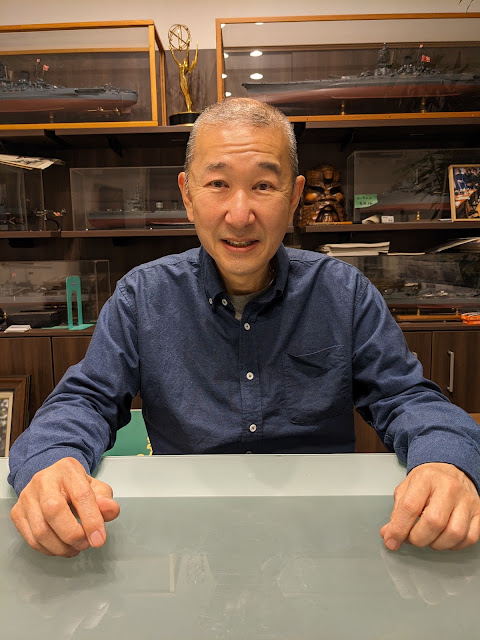
BH: What would be an example of a fun production?
KS: If I’m not judging whether the explosions went well or not, but whether a production was fun or not, I would say Terror of Mechagodzilla. It was fun. For Submersion of Japan and Last Days, I couldn’t do the kind of explosions I liked. They didn’t say, “You can go ahead and do this,” or tell me what I could do.
But, for movies like Terror of Mechagodzilla, I could do things the way I wanted. Was it the opening sequence? I’m not sure if it was Godzilla vs. Mechagodzilla, but the scene where the real Godzilla and the fake Godzilla are fighting in an industrial park.
BH: That’s Godzilla vs. Mechagodzilla.
KS: In that scene, I did whatever I felt like. They let me do anything I wanted. That was really fun. There were so many other productions that were fun, but the work I did during that period was the most fun. In that sense, I did mostly what I wanted on Godzilla 1985, so I had fun.
BH: Who was the best tokusatsu director you worked with?
KS: No comment. (laughs) Every director is amazing. Everyone has his strengths, including Mr. Nakano, Mr. Kawakita, Mr. Yajima … Any director who has mastered his craft is amazing.
BH: Who was the strictest director?
KS: What?! None of them was strict. Mr. Kume was strict. Mr. Kume was very strict. It was tough love. Mr. Kume was the strictest. Everyone else was very kind. There was a director that I didn’t like, but he’s no longer around. (laughs)

