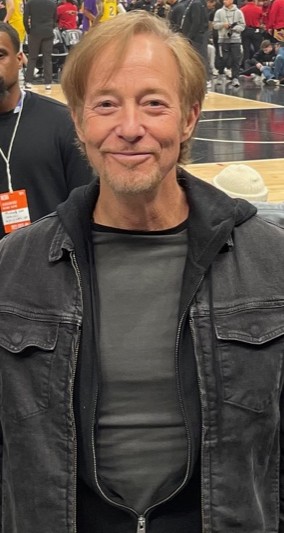
Michael Ross is a well-known figure in the entertainment industry as a successful television writer and producer, whose career in Hollywood has run the gamut of decades. Among his writing and producing credits are the TV series Evening Shade (1990-94), Kirk (1995-96), Andy Richter Controls the Universe (2002-03), Rules of Engagement (2007-13), Better Off Ted (2009-10) and Hot in Cleveland (2010-15). However, fans of Asian cinema are more likely to recognize Mr. Ross for his voice-acting work in several kung fu flicks, as well as Japanese tokusatsu movies, of the 1970s. These dubbing roles include: Kuronuma in Godzilla vs. Mechagodzilla (1974), Jiro Miki in Espy (1974), Professor Yoshii in Evil of Dracula (1974), and Mugar in Terror of Mechagodzilla (1975). In January 2026, Michael Ross spoke with Brett Homenick about his short-lived career as a film dubber in Hong Kong. (Special thanks to Harley Thomas.)
Brett Homenick: To start at the very beginning, could you tell us about where you were born, where you grew up?
Michael Ross: Born in Los Angeles in the San Fernando Valley, Van Nuys. Grew up here till I was 13, then moved to Hong Kong where I lived from 13 to 18, going to a British school, King George V School. If I was still in L.A., my way of making money would have been mowing lawns, but, as I was in Hong Kong, I would dub kung fu movies into English on the weekends.
And now I come to know from talking to you that I did some Japanese movies, as well. I also did a really shitty cabaret act. There was an article, I think, in the South China Morning Post that said, “Could he be our Tom Jones?” because I wore this big, flouncy white shirt with a high collar like Tom Jones wore in the ‘70s.
BH: (laughs) Just to make it a little bit more specific, could you give us the year you were born?
MR: I was born 1956.
BH: Perfect. So, before moving to Hong Kong, what were your interests and hobbies at that time?
MR: My Sting-Ray bike. When I was 13, I took guitar lessons and sang and was sort of trotted around by my mom. If we were invited to dinner at somebody’s house, whether they wanted it or not, my mom would insist that [I bring] my guitar and play and sing for people. That wasn’t necessarily my interest; that was hers. But I did it.
Then just the sports, baseball — typical San Fernando Valley kid stuff in the mid- to late ‘60s. Oh, one thing of interest — I played in a little league wherein my manager worked on the TV show Star Trek (1966-69). I forgot his name, but Leonard Nimoy, who played Spock, showed up to some of the games because his kid was in the league, so it was quite a sighting to see Leonard Nimoy.
BH: Yes, for sure. Did you ever speak with him?
MR: I did not. I was just like all the other kids, like, “Oh, my God, I’m seeing the guy from TV.”
BH: Around this time, before actually going to Hong Kong, did you ever have any interest in Asia or China?
MR: Well, I knew of it because my uncle, who was the reason my mother and I went there, lived in Hong Kong. After the Korean War, he got into the ladies’ garment business. But, before Hong Kong, he lived in Japan, spoke Japanese, and was an exotic in our family.
When he’d come to visit, I’d hear stories of what we in those days called the Orient, and then he was the one that invited my mother to come to Hong Kong. She was a depressed, divorced woman living in the Valley, and so she went on this adventure, and I went with her because I was 13.
BH: How did you feel about moving to Hong Kong at such a young age?
MR: It was presented to me in a rather exciting way. We would be spending a lot of time with my Uncle Larry — he had a boat, his new wife, Mucci, was one of the first Japanese supermodels of the late ‘60s. I would have an adventure.
On the other hand, my dad was saying, “You can come live with me in this one-bedroom apartment in West Hollywood.” It was really no question; I’d go to Hong Kong.
BH: So, when you actually got there, what were you involved in? What do you remember about your early days in Hong Kong?
MR: We didn’t have a lot of money, so we couldn’t afford the American school. Looking back, I’m just so glad that it went the way it did, that I went to a British school. I remember meeting the headmaster and seeing this grown man in shorts, white knee socks, and a white shirt — that was what you wore in the summertime.
I did have some culture shock when I was there because I was one of four Americans in a British school that had 28 different nationalities. So I was a freak, basically. (laughs) It was interesting to go from Los Angeles where everyone was like me to Hong Kong where I was the odd one, and there was a little bit of friction till I fit in in the first couple of weeks.
BH: What was the name of the British school you went to?
MR: King George V School. We would call it KGV [“kay-gee-five”].
BH: Do you have any standout memories from your time at KGV?
MR: The difference in terminologies. In the first couple of days, the prettiest girl in class leaned over and asked me if I had a rubber. She meant a pencil eraser, which [in British English is] “rubber.” I didn’t know that that’s what she meant, so I was rather sideswiped.
BH: (laughs)
MR: This actually happened. The Americans had just landed on the Moon because that happened in ‘69. Early days, a guy came up to me, and he said in his British accent, “They wrote a book about you.” And I said, “OK, what?” And then he held up a book called The Ugly American.
A very dear friend of mine, who’s to this day still a dear friend … Anyway, back then, I was sleeping over at his house, and the next morning his mom gave us baked beans on toast for breakfast. I’m thinking, “What are you people eating? This is ridiculous.” It’s one of my favorite things now.
So it was just a culture clash, wearing school unforms. And, in those days, they had a code for your hair. It needed to be, like, one finger above the ears and one finger above the collar. I was wanting to be a rebellious American, so the way I showed them was, I observed the letter of the law, but I just let my hair grow out massively on top of my head.
I was like Moe from the Three Stooges, or is it Larry? Whoever has the black hair, I had that kind of haircut, and I thought I was showing them. But I had a ridiculous-looking bowl cut until they finally relaxed the hair code, and then I had hair as long as anyone in Led Zeppelin at the time.
BH: Well, I think a real rebel would have gone with the Shemp look.
MR: Yeah! (laughs) Yeah, I wasn’t that good.
BH: Well, those are some great stories! Let’s talk about getting involved with dubbing. How did that all happen?
MR: In Hong Kong in those days, if you were an American, and you had no shame and wanted to do stuff, you could find your way into different situations. So I played guitar and sang at a place called the Godown Bistro, the name of which has a sexual connotation, but it wasn’t like that. The British godowns are like underground garages.
Anyway, I played guitar and sang at this underground club, and through that I met different people because it was a popular place. I found my way into the radio station in Hong Kong, reading the news headlines on the shifts that nobody would want, like Sunday mornings. It’s old-timey now, but they would read the news headlines at the hour.
Through my working at the radio station, I met a DJ who was into the world of dubbing. He said, “Hey, would you want to get involved in this?” I said, “Sure.” In those days, the dubbers were often radio DJs — expats from England, a couple from America, but mostly British, roustabout kind of guys. So I fell in with them, and it became a really fun home away from home on the weekends, and I was making money.
BH: Were you working for Matthew Oram’s outfit?
MR: It started with Barry Haigh. Matthew came in, I think, after and was one of the dubbers, and then Matthew did split off and form his own group, and I would dub with Matthew. While dubbing movies, he was also writing race forms, handicapping horse races. I think he also worked at the radio station.
Barry’s main job was [being a] newsreader, like the anchorman, on the evening news in Hong Kong.
BH: So you’re saying, though, that the first person that you worked with or worked under was Barry Haigh.
MR: Yes.
BH: What was it like to work with Barry? What was that situation like? Just give us some memories of working with Barry at the time.
MR: It was really fun. He was delightful. He had a wry sense of humor, so for me it was great to hang with these guys who were so much older than me. It was a fun atmosphere. Like I said to you before we started the interview, we were doing the Bruce Lee movie Return of the Dragon (1972). He would say, “OK, who could dub this black guy?” That was when I raised my hand.
We had to knock out a movie in a weekend, so everything moved quickly. He always brought in great food, and he had a really beautiful Chinese girlfriend. It was a party for the most part.
We’d do all the dialogue first, and they would put to the end all of the fight scenes, so we would spend the last couple hours of the dubbing session grunting and yelling and killing our voices.
BH: What do you remember about Barry’s background. You talked a little bit about it, but, in terms of who he was, what do you recall about those details?
MR: Well, stylish-looking guy, handsome guy. Again, I don’t know how he came to Hong Kong. He was British. It was fun to see the buttoned-down version of him every night on the news and then to know what he was like when he’d come to work in a cut-off T-shirt and run the dubbing session on the weekend.
And then you’d see him during the week again in his suit and tie and very proper form of delivery of the news. It was like peeking behind the curtain of these guys in the grownup world.
BH: At this time, who were some of the other people you remember working with? To jog your memory, there are folks like Chris Hilton, Warren Rooke, Linda Masson, Michael Kaye. Obviously, there’s Ted Thomas; I’m not sure if you ever worked with him, but he was pretty much the godfather of Hong Kong dubbing. So there’s a lot of names like that. Who were the people you remember most, and what can you share about your memories of them?
MR: Let’s see. I remember Chris was early days, and he was very funny. He had large, Elton John-like glasses and a very Monty Python-type sense of humor, very intellectually-delivered, wry jokes.
Fun guys. At nighttime, they were hard-drinking guys, so I would see them around in the nightclubs when we weren’t dubbing.
Ted Thomas, I think, is the one who I started with. Linda was, I think, married to another guy for a while, although they got divorced.
BH: Well, I do know that Linda was originally married to Ted Thomas, and then I think, maybe around the time that you got started, they separated or got divorced.
MR: OK, that’s it. Ted was present for a little bit, but then kind of fell out. Linda was there; I remember her because she was so striking and so stunning and dark-haired.
I remember Ted showing up at the Godown Bistro, the place that I played guitar and sang, with another woman. So I guess I was seeing the break up in real time; he might have been sort of a cad.
I had seen him in the dubbing studio with Linda, and then not that long afterwards I saw him with a very different, younger woman at the Godown Bistro. Those are my Ted Thomas sightings.
BH: But you did work for Ted Thomas in very beginning?
MR: My main recollection is of Barry Haigh — Barry and then Matthew Oram.
BH: Gotcha. When you compare Barry and Matthew in terms of how they ran things, in terms of direction, in terms of script-writing and so forth, how would you compare and contrast Barry with Matthew?
MR: They were both fun to work with. Neither brought down any kind of hammer. I mean, we all knew we had to get a movie done in a weekend. That’s why the lips keep moving after you hear the voice cut out. (laughs)
I’ve been a writer-producer in TV for 32 years, and any time we have to replace dialogue, what you might still call “dubbing,” you do one line at a time. In Hong Kong in the ‘70s, we would do a full scene, so you’d have two pages of dialogue, and you’re looking at the script and looking up at the screen and having the Cantonese soundtrack in your ear and trying to keep it all synced up. So we were just gunslingers.
With both guys, there was a light and fun atmosphere to it, a lot of joking.
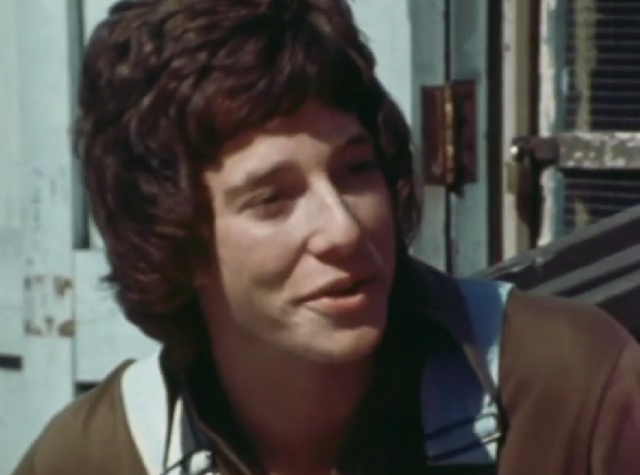
BH: When you essentially switched from Barry to Matthew, is there a reason that things switched up between Barry and Matthew? What happened there?
MR: I don’t remember. I just kind of get the call, and it was from Barry for the longest time, and then Matthew was one of the dubbers, and then Matthew started directing his own sessions. I remember there being no friction between the two of them.
But there was another guy, Andre Morgan. Do you know that guy’s name?
BH: No, not at all.
MR: Andre Morgan was American, and I may be talking a little bit out of my butt, but I think that he went to college with one of the sons of either the owner of Shaw [Brothers] or Golden Harvest studios.
But Andre Morgan showed up and started to dub. And then I think he co-directed some of the sessions, and there was a little friction there between Andre Morgan and Barry because Andre was cocky.
The only time I ever heard anyone’s voices raised [was] between those two guys. Andre went on to move out here to L.A. He was a producer of some movies. I ran into him all these years later in Los Angeles.
I was at that point still an actor before I transitioned to writing and producing for TV, and I saw him at a party. I remember, even though I’d been in L.A. for a number of years, he kept saying, “Welcome to L.A.!” — like, welcome to my world. (laughs) A bit arrogant, that guy.
BH: What are some of the details that you remember about Matthew, [and what are your] other recollections about working with him and what his style was?
MR: Matthew was super fun, super smart. He could do a number of things at once. Very dry sense of humor [with] a twinkle in his eye. I don’t even know if he did research on the horses he handicapped before their races. He probably created fictional histories that people were then going to bet on.
BH: Talking more about the process of dubbing directly, let’s get into the details there. When would a dubbing session usually happen, and how long would it last?
MR: As I recall, we’d start early Saturday morning, and we’d finish Sunday night. So we’d work Saturday all day long — maybe a 12-hour day — and then Sunday, same thing, starting early. You had to dub at least an hour and a half of filmed material in two days. It was insane.
I think Matthew and Barry would do the script transcriptions — I don’t know quite that part of the process. We would show up pretty early in the morning. They’d bring food in, and we’d work. We’d work hard and finish Sunday night.
BH: When you would do a loop, as best as you can recall, how long was that loop?
MR: They would probably be about a minute and a half, like two pages of dialogue, and usually a page of dialogue would be about a minute. I don’t remember ever seeing three pages up on the board in front of us. But I do remember talking to myself in different scenes, especially in Return of the Dragon, the Bruce Lee movie.
There were a couple of scenes where I would be the goofy sidekick, and I would be talking like this [in a goofy voice], and then I’d be the boss, the American boss: “You get those men to come here right now! Do you hear me?!” But, to answer your question, it was usually about a page and a half of dialogue we’d do at a time.
BH: Exactly at what age did you start dubbing?
MR: I want to say I was either 16 or 17.
BH: So what was it like to balance going to school and dubbing at the same time?
MR: Life was fun. There was so much going on. I wasn’t the best student. (laughs) But then, even if I hadn’t been dubbing and doing a shitty cabaret act, I don’t know that I would have been the world’s best student. I just got by; I passed just enough exams for my O-levels to get to my A-levels. I think I was amusing to the people at the school. I mean, I was in the all the school plays. I think they wanted to keep me around for their entertainment. (laughs)
British school was hard — a lot harder than what I knew American school to be. And then it was great to hang with these fun-loving semi-alcoholics and knock out these movies on the weekend.
BH: Was that something the other students knew about, your dubbing pursuits?
MR: My close friends did; in fact, the headmaster’s son, Mark Reeve, a guy who was a friend of mine, I brought him in one day. He didn’t really stick. My girlfriend at the time knew, and she would sometimes come to the studio and visit around lunchtime.
BH: And how did you meet her?
MR: In school. She was this gorgeous girl. One has a first love, and she was it for me. She was American, too, but had a British stepfather, so she’d been in Hong Kong for a long time before I was there.
BH: I know that you were only [dubbing] for about two years, so there may not be as much to talk about with some of the others, but are there any other highlights that you can recall, other memories that stand out in your mind that you can share with us about dubbing or just interacting with the other voice actors?
MR: Yeah, I can track a fun story for you. It’s my association with Bruce Lee — not directly. But goes like this: My mom sold American fashions for ladies out of our apartment in Hong Kong — pantsuits, that was the style of the day.
I came home from school one day, and she said, “You just missed Bruce Lee.” He was sitting on our couch with Linda, his wife. Somehow, Linda made an appointment and came with her husband.
I fucking just missed Bruce Lee! I remember my mom telling how he sat on the couch, and, in what we all now know as the Bruce Lee swagger, was hitting his stomach, saying, “Rock hard.” I knew him from American TV when he played Kato on The Green Hornet (1966-67) when I was a kid. He was just like a unicorn; nobody had seen movement like that.
Then he dies, and, not that long after his death, we’re dubbing Return of the Dragon. As I told you, I dubbed a number of voices, including this ridiculous-sounding black guy’s voice. If you were to google “Bruce Lee Chinese spare ribs,” there are a bunch of videos that come up, and all of them have this very tall black guy in an orange shirt. He asks the waiter if he has any Chinese spare ribs. (laughs) He [the character dubbed by Michael Ross] says, “You got any Chinese spare ribs?” [in] a ridiculous voice.
Then I moved back to the United States [in] the summer of ’74 and Return of the Dragon is playing on Hollywood Boulevard in Los Angeles at the Egyptian Theatre. I go to see it with my mom, and the audience was predominantly African American. Bruce Lee was an icon in general, but especially in the black community.
Anyway, I’m sitting in the audience with my mom, and the scene comes up with this black guy, and you could feel the audience lean forward because they know he’s going to be mixing it up with Bruce Lee. Guy opens his mouth to talk, and they hear this silly, high-pitched, cliché voice I copied from the Blaxploitation movies that I watched in Hong Kong at the time.
You could literally hear the whole audience, all at the same time, say, “Shiiiiiiiiit.” It was a surreal moment to be sitting in the audience and be the guy who they were listening to and hearing that reaction. (laughs)
BH: (laughs) That’s a great memory! Going back to the Mechagodzilla movies — of course, you voiced the alien leader in those two films. I just wanted to ask you, since that is such an iconic voice that Godzilla fans would certainly recognize, how did you develop that very specific voice?
MR: (laughs) Again, I think you’re giving me credit of being like a Method actor, which I wasn’t at the time. I think the directors would beforehand map out who’s going to do the different voices. So it might have been assigned to me based on what they knew I could do.
We would do a rehearsal, and, in that brief time, you’d try out a voice. If it worked, they’d say, “Yeah, do that.”
BH: Certainly, but, for people who might be interested, where did that voice come from? Obviously, you’re not British, but your voice does have a British accent.
MR: The British part was the result of me going to a British school. The rest was a 17-year-old’s version of what this guy would sound like, to sound grown-up and scientific-y.
When it came time to do the sequel, I did the same character for no other reason than I had done the first. They probably played a clip from the first movie to remind me what I sounded like.
There is one other thing. There was talk about the Transatlantic accent. That was the sound we were aiming at. A lot of the dubbers were British, but they didn’t want to speak with a British accent.
So this Transatlantic accent was its own little beast. Not American, not British, but [it] could be from anywhere, European-sounding, but without any distinction of country.
BH: Speaking of directing, we talked about Matthew Oram and Barry Haigh. Were there any other directors that you remember?
MR: Yeah, just this guy, Andre Morgan. He wasn’t as sharp as Matthew and Barry. Looking back with the perspective of working in TV here in America for 30-plus years, and dealing with a lot of entitled, not necessarily talented, people, I’d say Andre was in that category.
BH: Do you remember any specific examples of why it wasn’t as fun?
MR: Well, Barry was just a sweet guy. The time that he mixed it up with Andre was because they were trying to co-direct, and I think Andre was trying to be the big dog and didn’t know as much. The only time I remember any tension at all was when Andre was there.
BH: Do you remember who wrote some of the scripts? Would it have been Barry and Matthew, or would there have been other people involved?
MR: I don’t know who the others would be.
BH: I’ll throw out a couple of other names, and, if you have any memories, please feel free to share. How about someone like Bob Toole, or maybe Frank Mullen, or how about Saul Lockhart, maybe some names like that.
MR: The first ones, Bob Toole and Frank Mullen, I remember the names but no memories with them. Chris Hilton I remember from early days. There was one guy who was really fun, who was the one who got me into it. He was the American DJ I met at the radio station. He had me fill in for him on his show at night called The Young Beat. (laughs)
BH: Hal Archer?
MR: That’s the guy! Hal Archer — he was an American, a fun guy. He showed me the ropes of how to be a DJ.
See, I was 17; I didn’t know who I was, personality-wise. I could do these different voices for these movies, and then, when I was a DJ, I tried to talk really smooth, like Hal Archer. [speaks in a smooth, quiet voice] “Up next for you is Elton John, doing a little something like this.” I was a cipher for anyone else’s ideas.
BH: How about Ron Oliphant?
MR: I remember working with him but no specifics like I have with Hal.
BH: What about some of the women? We’ve mentioned Linda Masson, but there’s ladies like Barbara Laney, Caroline Levine…
MR: OK, I have a story about Caroline Levine. Caroline was, for a while, my manager for my being a cabaret performer. She was a singer or dancer in the States when she was younger. She would dub sometimes, but then she was like my manager, which was ridiculous. I mean, I didn’t really need one, but she would show up.
And then we kind of had a falling-out because, when I was moving back to America, she felt like she should have a stake in whatever money I made as a performer in the United States because of the work that she had done as my “manager” in Hong Kong. So we had a parting of the ways.
But, yeah, she was in the dubbing studio.
BH: I guess, when you were on better terms, is there anything else that you could share about your relationship with her?
MR: Yes. It was fun to have somebody that was a tether to the United States. I’d go to her house.
She was fun, nurturing. And she loved that she got to do some performing through the dubbing.
BH: Let’s talk about the end of it, so how did it all come to an end?
MR: I finished my A-levels at 18, and I moved back to live my life here and try my hand at what became my career.
This is a sad memory: I came back to Hong Kong to visit in 1979, and I remember talking to Barry Haigh, who was in the hospital. I don’t know how dire the illness was. But I was going to go see him and then did not end up going and just regretted it, especially when I heard he passed away sometime later.
I don’t know how long after that visit he passed. It’s just a lingering regret. He was such a great guy and so great to me.
BH: That is a shame. But you did say the last time you went back to Hong Kong was 1979?
MR: Yes, I came very close to returning in 2008. I was going to go with my Uncle Larry, the guy who brought my mom and me to Hong Kong. He’d long since moved back to L.A. I was going to go with him and my cousin — his son — and we were going to just do it up.
But, in 2008, there was a Writers [Guild of America] strike, and at this point I’d been a TV writer for 18 years. We were on strike, so I planned the trip to Hong Kong. The strike ended, and I got a job writing for a new TV show, and I had to go to work. So I missed out on what would have been a really great trip to Hong Kong and [going] back to all the old places.
BH: After you did come back to the States, how did you get involved with the entertainment industry out in Hollywood?
MR: I had enough money saved from dubbing and the aforementioned shitty cabaret act. In 1974 dollars, I had about six or seven thousand dollars, which was enough money back then to pay for my first year in college. I got into USC and Northwestern University, but I didn’t have anyone pushing me to go. So, instead, I got an apartment in Hollywood and my first car, and I went to L.A. City College, which was basically for free. I went into their theater department and quickly flamed out. From there, I just started taking private lessons in singing, dancing, [and] acting.
Then I started getting hired. I did TV specials — a Barry Manilow TV special! (laughs) I was doing stage work, did Evita and Cats in Los Angeles. These were the first productions — after they’d opened in New York, they would open in L.A.
Then I was married, and my wife [Markie Post], at a certain point, had a talk with me and said, “I think you can write,” not based on any hard evidence. She was an actress, and there was a little bit of friction in both of us being in the same business. She was doing really well, and my work had slowed down.
She had the talk with me, and thank God she did because I became a TV writer and producer for 32 years, the last two shows being for Netflix: Santa Clarita Diet (2017-19) with Drew Barrymore, and Unstable (2023-24) with Rob Lowe. They were my 11th and 12th series.
BH: In all that time, did you ever put Hong Kong dubbing on your resume?
MR: (laughs) When I did first move back, I didn’t have a resume by Los Angeles standards, so I know I put down that I performed at the Godown Bistro, and, now that I think of it, I probably put down that I dubbed kung fu movies into English. And I’m sure that anyone looking at it was just amused by this newbie who was putting that down as actual credits toward trying to get hired as an actor in Los Angeles.
BH: But, as far as you know, it never got you any jobs.
MR: No, no. (laughs) It did not. For a time, before I became a writer, when I was still an actor, I did a little bit of voice-over work for commercials — not a lot. I think all that time spent in front of a microphone in Hong Kong served me to be comfortable to do that kind of work.
BH: Obviously, the training, so to speak, that you got in Hong Kong helped you, but you didn’t get that job because, specifically, you [had] voice-acting work in Hong Kong.
MR: Yeah. As you’ve seen, because we were doing a movie a weekend, it’s its own kitschy world that, I think, you’ve been attracted to, and people are fans of it because it’s greatly entertaining to watch. But it isn’t high art. (laughs)
BH: Very true. It’s its own entity, and it has its own reputation, as well.
MR: To me, this has been great to discover that something I hadn’t thought about literally for decades has come back to me. It was a really fun time. What kid at 17 and 18 gets a chance to hang out with these colorful characters and dub kung fu movies into English and get paid? It was pretty cool.
 Vantage Point Interviews