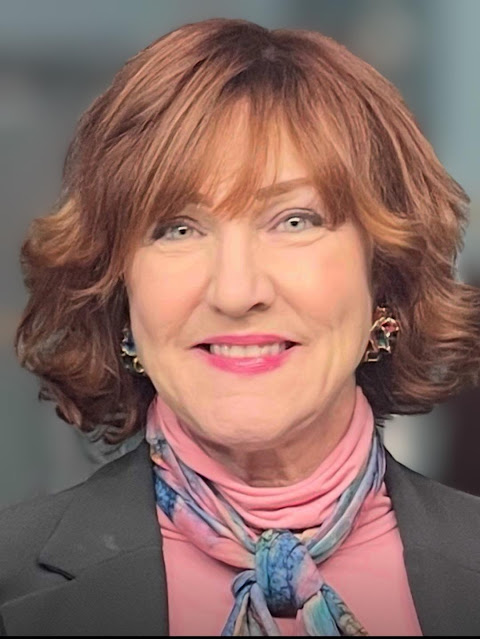
The late 1990s saw a bevy of Heisei-era Godzilla and Mothra films become available on home video in the West for the first time. These VHS releases featured dubbing recorded in Hong Kong by Omni Productions, which was headed by prolific voice actor Rik Thomas, and American Sharon Szmidt lent her voice to many of these productions. Aside from her Toho monster movie credits, Ms. Szmidt also voice-acted in such films as The Crazy Family (1984), Police Story (1985), and Typhoon Club (1985), as well as TV series like Doteraman (1986-87), Justice Pao (1993-94), and Dark Tales (1996-98). Ms. Szmidt shared her memories of these and other dubbing sessions in this April 2025 interview with Brett Homenick.
Brett Homenick: Starting at the beginning, when and where were you born?
Sharon Szmidt: I was born in Glen Cove Hospital in New York [Long Island] to Will and Julie Crose in 1954.
BH: What were your childhood hobbies at the time?
SS: When I was very young, my maternal grandfather had flashcards, and he taught me to spell big words, like “hippopotamus” and “scissors,” among others. At the age of two, he would send me to people’s tables in restaurants and ask them if they would like me to spell for them. They always did.
My reward was a dime, which I would spend on candy. My grandfather had me reading third-grade books by the time I was three, and I devoured books! My other hobbies during my childhood were mostly physical. I jumped on a neighbor’s pogo stick for hours! I was constantly in motion whenever I could be. I also began singing at a very young age and learned how to read music easily.
BH: Did you go to college?
SS: l went to one semester of college. I didn’t know what direction I wanted my life to go in. I had always wanted to be an actor but never talked about it because it seemed impossible to me. I didn’t know where to begin.
I did well in school, but, when my maternal grandparents were killed while crossing a road in Riverhead [Long Island], my world seemed to fall apart. I went to stay with a cousin in Florida for about three months but didn’t feel like Florida was for me. So I returned to New York. I considered going into the Air Force and came very close to going, but, again, didn’t feel like the right fit for me.
BH: When did you become interested in Asia?
SS: I became interested in Asia when I met my husband. His mother was from Korea, and his father was first-generation-born Polish. They met during the Vietnam War where his father was an MP. It is quite a beautiful story.
BH: How did you wind up in Hong Kong?
SS: My husband worked for Alcoa as a metallurgical engineer, and, after 19 years, his expertise was the aluminum can. He was given the opportunity to work in Asia overseeing and troubleshooting the can-making process over Asia. The company was headquartered in Hong Kong.
BH: How did you get hired to do dubbing?
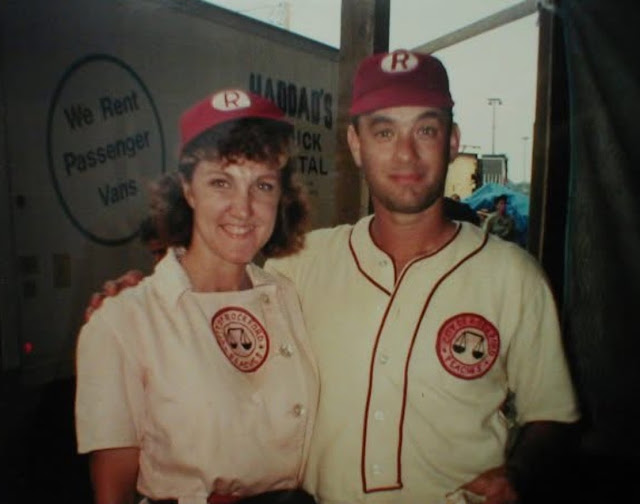
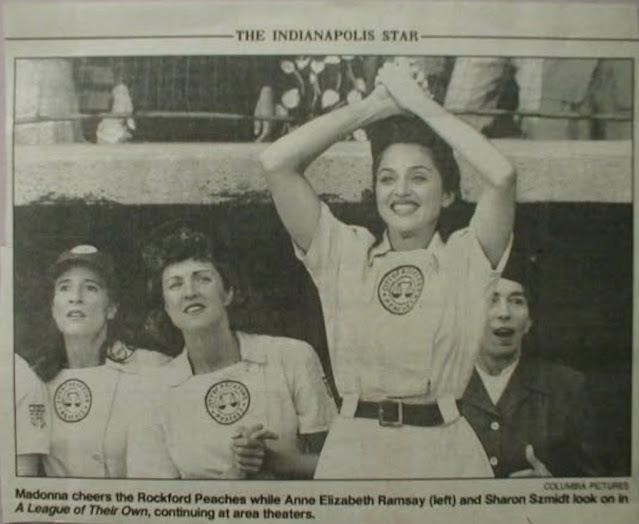
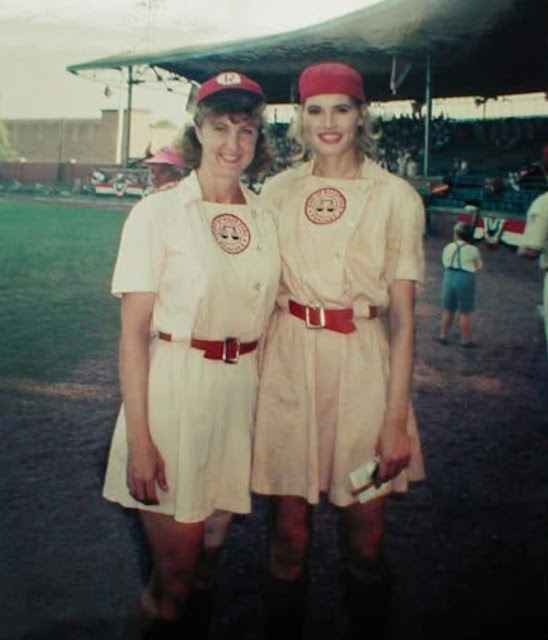
SS: I had been told for most of my adult life that I had a great voice. I also had the rarest opportunity to be in A League of Their Own (1992) when it was being filmed in Indiana and Illinois. We were living in Evansville, Indiana, at the time.
I went out and auditioned and was chosen out of about 1,400 girls to play Vivian Ernst for the Rockford Peaches [baseball team]. There were only two other girls chosen from the 1,400.
Moving forward to Hong Kong, my husband saw an ad in a local newspaper for North American actors for dubbing and voice-overs. He suggested I go audition, as did a girlfriend of mine. I did and was given a few pointers about dubbing.
I think Rik liked my voice because he hired me and said I would have to go by a different name because they already had two Sharons — one called Big Sharon, and the other called Little Sharon. That night at dinner, I talked about it with my husband and son. My son suggested I use Vivian, as that was my name in A League of Their Own. So I became Vivian.
BH: Do you recall when you were hired?
SS: I think it was in the last quarter of 1996.
BH: What do you remember about working for Rik Thomas?
SS: Rik was a little difficult to get to know at first. He was very focused and hard-working. I remember he loved Earl Grey tea and had several cups a day. Rik encouraged me to be more animated in my dubbing. At first, I was a bit self-conscious, but it didn’t take long for me to be less so.
So many of the people I worked with were so good, I began to really lose myself in my characters. I remember Rik telling me once to rein it in and not be so over-the-top! Rik was a great mentor. He made a tape of my voice so that companies looking for a voice-over actor could see whom they wanted for jobs. I soon became quite busy doing voice-overs for Hobie Cat, the KCR [Kowloon–Canton Railway], [in addition to being the] China Airlines in-flight entertainment announcer, and so on. I was also recorded and used on kiosks that were installed all over Hong Kong for the Chamber of Commerce.
I was usually cast as the girl next door, roles such as the goddess for Journey to the West (1996), a fairy [Cosmos] in Godzilla vs. Mothra (1992), as well as various other roles, such as children, sometimes even little boys. I remember a day when Rik cast me as the Skeleton Woman [White Bone Demon] in a few episodes of Journey to the West. I questioned him, as there was another woman who normally was given the villain roles. He said, “Whose name did I say I wanted to dub the Skeleton Woman?” I replied that he said my name. Right! Little did I know that I had this ability!
I played this woman who took on different appearances, one being a normal young woman, another as her demonic side and as her elderly mother. From hideous, vicious laughter to a genteel young woman to an elderly woman, I seemingly seamlessly transformed and did it all in very few takes.
When I was done with a session, I turned to see a trickling teardrop escape from Rik’s eye. He said to me, “You have no idea how good you are at this!” I will never forget it. I think my biggest role was as the voice of the female reporter in Godzilla vs. Destoroyah (1995). I absolutely loved dubbing!
BH: What about his wife, Ina Chow?
SS: Ina was a very sharp lady! She also had a good sense of humor. I didn’t know her as well as I knew Rik, but I had great respect for her diligence and capabilities.
BH: What other dubbing colleagues do you have strong memories of?
SS: I have strong memories of Craig Allen, Henry Coombs, Darren Pleavin, and Andrea Kwan. Craig was a very nice guy to be around. He was dedicated and hard-working. He was fluent in Mandarin, which I thought was pretty incredible. Henry could change up his voice to suit different characters. He too was a nice guy to be around. In between takes, he had us laughing a lot.
Darren and I had a scene in Shinkansen where we shared some wine and had to sound a bit inebriated. We had so much fun dubbing that scene, it felt so real as we laughed. He was very comfortable to be with. Andrea could do a multitude of voices! Our voices were similar when we were not in character [doing a] voice. Andrea could do cartoons and play different roles. She was great at sounding like a little boy. Andrea and I became good friends and still have a great friendship.
BH: Could you describe the process of dubbing at Omni?
SS: Rik, Ina, and a technician would be together outside of the sound booth. Rik would come to the waiting area we would hang out in and call whomever was needed for a scene. We would go into the sound booth, and Rik would tell us whose voice we were to dub. We had one microphone between us and the script. We never did a practice session because Rik and Ina found that the dubbing was best without practicing.
We got set wherever there was room. Sometimes, there were only two dubbers, so we were both able to sit while dubbing, but sometimes there were several of us. I made myself dub from different positions because there were a few who had to be on the right, or the left, and sometimes in the middle.
I wanted to be flexible so that I could handle any position. We put in our earplugs [listening devices] so that we could hear each other. Once we were set, the video would start. I would look at my character and speak when she was speaking, starting and ending when she did. Once, after I had become more experienced, I knew I was going to finish my last line before my character did so instinctively I drew out a word which worked beautifully. Rik even said I was smart to have done that.
BH: Did you find any part of dubbing particularly challenging?
SS: I only felt challenged when I first started because my voice was not animated enough. Once I got past that, it was one of the most enjoyable experiences during my time in Hong Kong.
BH: Do you have any general dubbing memories you could share?
SS: I have talked about some of my memories, and at the moment nothing comes to mind, but, if I recall more, I will share them.
BH: What was a typical workday like at Omni?
SS: On days when I was called to work, I would arrive at whatever studio we were working in on that day. We pretty much did our work at one studio, and I wish I could remember exactly where it was, but at this moment I don’t. I would sit and talk with the other dubbers until it was my time to dub. Then I would go back to the waiting area to wait for my next session.
As I [we] dubbed, Ina would watch and listen to catch any mistakes, mispronounced words, or not enough emotion. The tech would then do another recording, more if necessary. If it was to be a long day, we would break for lunch. Occasionally, Rik and Ina would join us.
Rik would tell us almost every time not to eat anything with MSG in it because it seemed to make us a bit lethargic, which meant there would be more do-overs. Some days, we worked into the early evening, but most days were like a nine-to-five job.
BH: How often would you work there?
SS: Most weeks, I worked three to four days. Occasionally, we worked less and sometimes more. I do recall at least once working six days.
BH: Do you remember much about how much it paid?
SS: I honestly don’t remember how much I was paid, except to say that I was paid well! I recall one month making as much as my husband! That only happened one other time, and that was [when] a residual check for the first A League of Their Own TV series [was] added to my usual residual for movie sales and rentals.
BH: What do you remember about the Omni facilities?
SS: The studios we used were basic and usually pretty clean. The building and safety codes are not the same in Hong Kong as they are in the U.S. I remember a place where the stairwell was full of boxes to the point that there was no getting out via the stairs in an emergency. Buildings all over Hong Kong often smelled of cat pee, but most of the studios we worked at were not like that.
BH: What sort of projects did you work on at Omni?
SS: I worked on a variety of projects. Japanese cartoons, a few drama series, several movies, voice-unders, which is used for documentaries, and a lot of voice-overs. I remember one voice-over I did for a hospital. There are a few words that are pronounced differently in Britain than in the U.S. One word is “controversy.” I pronounced it as North Americans do.
The director stopped the recording, and there was a conversation going on between him and the others he had with him. Finally, they put the speaker on and talked about how I pronounced it, and they were trying to get a hold of a higher-up to see which pronunciation was desired. They were waiting for a callback and had no idea how long it would be. I suggested that we record it both ways, and they could decide later which to use. That settled the issue, and recording continued.
“Voice-under” is what Rik called it when voicing a documentary. The original started, and the voice of whomever was originally recorded was heard for several seconds, and then the English voice would begin. It wasn’t timed to fit the original, as in dubbing.
BH: Do you have any memories of dubbing Godzilla vs. Mothra? Which part did you play?
SS: I do recall dubbing Godzilla vs. Mothra. I had only small roles — people in the crowd — but I also was the voice of one of the fairies. Funny story: We had driven from Tennessee to our son’s place in Florida. When we walked in the door, Godzilla vs. Mothra was playing on the TV. Our two grandchildren were watching it.
They were fairly young, but I don’t remember exactly how old they were. My granddaughter said, “Meine [German for “mother,” meaning “mine,” which what they call Ms. Szmidt], you are on TV! You are a fairy!” I did not even know that Mothra had been available in the U.S. at the time. She knew my voice well enough to pick me out!
BH: What about Godzilla vs. Destoroyah? Do you remember your character?
SS: I do! I was the voice of [Yukari] Yamane, the reporter and daughter of the scientist. I have a clear memory of my character being trapped in a car while a Destoroyah-like creature tries to kill her.
BH: At the time, what did you think of dubbing Godzilla movies?
SS: I never thought the Godzilla movies would make it to the U.S., but why wouldn’t they? They have a cult-like following. Dubbing them was really a lot of fun. Far-fetched, of course, but very entertaining!
BH: Did you dub any other Godzilla or Japanese monster movies that you could recall?
SS: Yes, I dubbed Godzilla vs. SpaceGodzilla (1994) and Rebirth of Mothra ll (1997). I don’t recall who my characters were. I wonder if they are available to watch. I will have to look and see.
[After watching the English version of both movies, Ms. Szmidt confirmed that she voiced the Cosmos played by Sayaka Osawa and the voice on the intercom near the beginning of the film in Godzilla vs. SpaceGodzilla, and that she played Moll of the Elias, Akiko Kimura the elementary school teacher, and the female tour guide in Rebirth of Mothra II.]
BH: How did working for Omni change over time?
SS: Once I became comfortable with dubbing, I enjoyed working there so much! I remember that time of my life as loving my job! I got paid to do what I loved!
BH: I know it’s unlikely, but would you happen to remember when you dubbed the Godzilla movies?
SS: Godzilla vs. SpaceGodzilla was in late 1997, before Godzilla vs. Destoroyah. We dubbed Godzilla vs. Destoroyah also in late 1997. Both were brought to the U.S. and released in January 1999. We also dubbed Rebirth of Mothra ll in 1997, but I don’t remember if it was before SpaceGodzilla or after. I can’t remember when we did Godzilla vs. Mothra, but it was before Godzilla vs. Destoroyah and released in the U.S. in April of 1998.
BH: Generally speaking, what was your life like in Hong Kong?
SS: Living in Hong Kong was like living at a resort! I did a lot of exploring. I would ride the trolley in the downtown area, often the only non-Asian person. I got a lot of looks! I would ride and look around to see what piqued my interest and then would get off there and explore. I found a great Chinese department store where the prices were so reasonable as compared to the shops at Pacific Place.
In most of the places I went, most people could speak English, but there was only one person that worked there that spoke English. I remember being there looking for a backpack, and it happened to be that person’s day off. Somehow, through motions, I was able to communicate what I was looking for and got taken right to that area.
I loved the great variety of foods from around the world. I fell in love with Indian food, Thai food, etc. I did find that the Chinese food in Hong Kong is different from what is served in the U.S. There are no fortune cookies, and crab rangoon is not on any of the Hong Kong Chinese menus.
I learned to get around easily in a foreign country. I would often leave our flat, walk to the closest public bus stop, take the bus downtown and the walk to the MTR station. From there, I would either take a mini-bus, taxi, or walk to my destination. It usually took me about an hour to get to any of the studios we dubbed from.
For the first two years of living in Hong Kong, we did not return to the U.S. but took advantage of traveling to countries we probably would never have gone to from the U.S. — Fiji, New Zealand, Vietnam, Thailand, Singapore, Malaysia, Indonesia, the Philippines, Israel, and more. I could go on and on about my life in Hong Kong!
BH: When did you decide to return to the States?
SS: We returned to the U.S. in June of 2000. My husband accepted a transfer with Alcoa to Tennessee.
BH: What’s your favorite memory from your life in Hong Kong?
SS: I have to say that my favorite memory from my life in Hong Kong was dubbing, specifically the episodes of Journey to the West when I dubbed the voice of the Skeleton Woman and learned that deep within me was this talent that caused Rik to tell me that I had no idea how good I was!
BH: What sorts of things have you been doing since you came back?
SS: I have done a few voice-overs, most recently for Homes.com. I am a vocalist, so [I] took on more singing with my church. My husband sings with a men’s group that has a mission to Latvia every two years, except during COVID, and I have gone along several times.
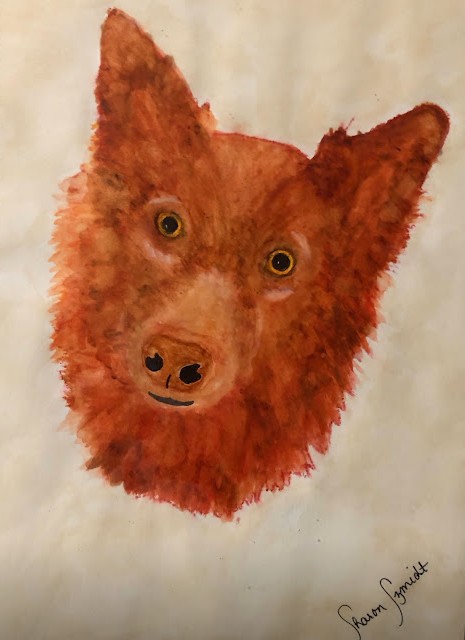
About a year and a half ago, I discovered that I can and do create beautiful art. Mind you, I went from barely being able to draw a recognizable stick figure to being an admired and talented, as I have been told, artist in acrylics, watercolor, and textured art. I watched several reels via Facebook and Instagram, and, with step-by-step tutorials, I became an artist seemingly overnight. I do not sell anything because I do this because I love it.
Most all of my art is gifted to family and friends. My husband and I do a lot of traveling! We have three kids with families in different areas, and we see them fairly often. We have trips planned to Ireland, Scotland, and Israel this year. We may also make a trip to Mexico. We love Cabo San Lucas and spent several days in Mexico City just over a year ago. We recently completed a total makeover to our great room because we have finally been home long enough to work on that.
We live on a lake in Tennessee, and our view is incredibly beautiful. We have a lot of wildlife that we enjoy, including the birth of a fawn in our backyard. We saw the fawn’s first steps and the reunion of this baby with its mother when she stashed her baby in some brush and went off to eat. We have a pontoon boat that was crushed by a tree that fell on it. We rebuilt it and took it for a spin before it got too cold to do so. We hope to spend a lot more time on it this year!
BH: Do you have any final comments before we finish this interview?
SS: Everything in my life has formed me into the person I am today, both good experiences and bad. Living in Hong Kong, dubbing, and doing voice-overs and -unders has enriched my life immeasurably. I am so very grateful for Rik and Ina taking a chance on me and developing talent I didn’t know I had!
Special thanks to Luca Smith.
 Vantage Point Interviews