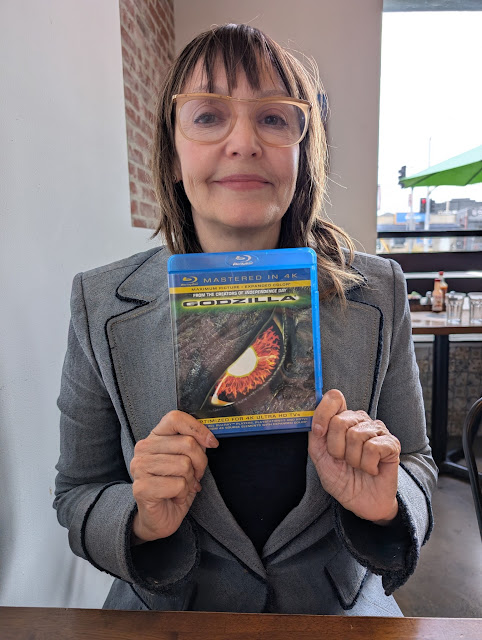
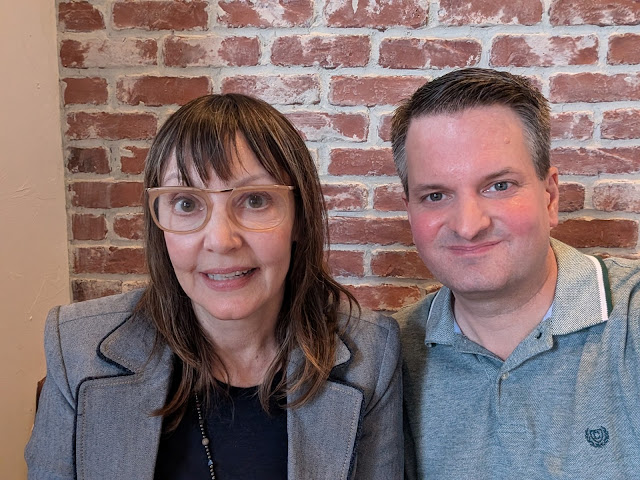
The year 1998 saw the release of TriStar’s Godzilla, one of Hollywood’s most secretive productions of the time, to much ballyhoo and fanfare. In the the end, however, the Roland Emmerich-helmed summer actioner underperformed at the box office and with critics. Recent years have proven to be kinder to TriStar’s Godzilla, as a good number of Godzilla fans have begun to reevaluate the film’s merits and praise its overlooked qualities. In the film, Arabella Field plays Lucy Palotti, the wife of intrepid news cameraman Victor “Animal” Palotti (portrayed by Hank Azaria), but Godzilla only scratches the surface of her eclectic acting career. Ms. Field’s other acting credits in movies and television include: Feeling Minnesota (1996), Dante’s Peak (1997), Seinfeld (“The Merv Griffin Show,” 1997), National Treasure (2004), The Sopranos (“Kaisha,” 2006), American Horror Story (“Bitchcraft,” 2013), and Curb Your Enthusiasm (“The Dream Scheme,” 2024). In November 2025, Ms. Field sat down with Brett Homenick in Los Angeles to share her memories of making one of the most talked-about Godzilla movies of all time.
Brett Homenick: Let’s start at the beginning. Please talk a little bit about your childhood growing up and your hobbies.
Arabella Field: Well, I grew up in New York City in Brooklyn. Back in the day, when the Mafia ran our neighborhood, it was like GoodFellas (1990). There was a social club on our corner and everything else, but the funny thing was — and I thought this was my own thing — the big thing was, watching all these genre films on TV after school. And a lot of them were probably inappropriate for kids to see, but I just was a passionate Godzilla fan, Planet of the Apes (1968), there were all those really scary Vincent Price/Edgar Allan Poe movies, the Hammer films, all that stuff. Then the weird devil movies like Burnt Offerings (1976) and things like that.
All those things were on TV, and, later, I realized with other friends who grew up in New York, “Oh, right, we were all watching these movies.” I said, “Wow, why do they have all these movies for kids?” And they said, “Yeah, kids were the only people who were watching TV.” So I think it had a big influence on all of us, watching all those. I just loved it; I feel like it was my film education.
BH: So, when you were watching those movies, especially the Godzilla films, do you remember any specific titles?
AF: Favorites are probably Mothra vs. Godzilla (1964) — big Mothra fan — Mechagodzilla, and the original. We just all were obsessed with Godzilla. (laughs)
BH: Was that on the Million Dollar Movie (1955-88)?
AF: I think it was on that, too, probably. There was something called The 4:30 Movie (1968-81). It’s funny; I just read a friend’s memoir who grew up in Upstate New York, and then another friend of mine also grew up in a different city in Upstate New York. He referenced watching all that stuff, too, and I was like, “That was just such a big thing for me.” (laughs)
BH: When did you decide you wanted to be an actress?
AF: I didn’t come from any kind of arts family or anything, so it was kind of a bold decision. I guess I really made the decision in high school. The time that I grew up in New York, if you had access to education and things like that, people did not want to raise their kids in the city. It’s the opposite of what it is now — everybody now is dying to live in Brooklyn. Then they were not. But, for all the kids, we all knew each other, and, by the time I got to middle school and high school, the club scene, the music scene, was incredible.
So, while New York was really sketchy in a lot of ways — I mean, we were just used to it — the freedom for kids was incredible. I mean, it wasn’t like a regular suburban upbringing. We didn’t have sports or anything, but, by the time I was 14, 15, I could get into any club in New York City. I had a fanzine with my friends, and I was the sort of unofficial photographer [for the Beastie Boys]. My best friend from childhood was Adam Yauch [who] became MCA of the Beastie Boys, so I was the first Beastie Boys photographer.
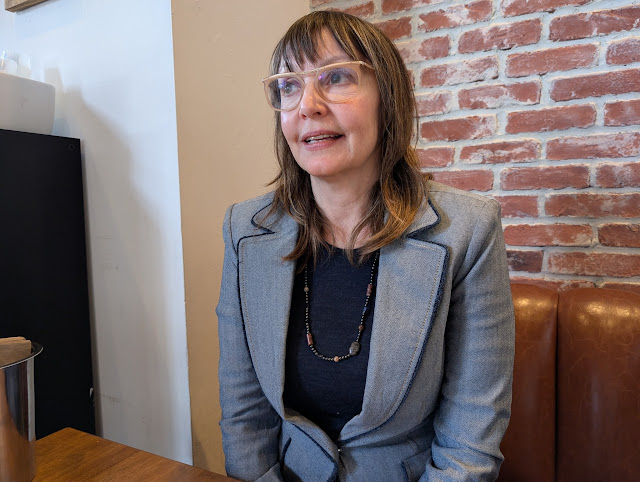
I photographed the Bad Brains, so many amazing shows, [and the] Young and [the] Useless. So we would photograph them and interview them, and it was a really thrilling time. So, by night, I did that, and then my high school was far from me — it was in the Midwood section of Brooklyn, and it was harder to get around Brooklyn then than it is now. It’s still kind of a pain in the neck to get from one part of Brooklyn, but then it really was.
But they weirdly had an acting program at this, and Marisa Tomei was ahead of me, but she was in the program, and she was brilliant. Even as a kid, she was absolutely brilliant. So that was a real privilege to get my first experiences watching her.
We had these very high-school-ish acting classes that weren’t the greatest. (laughs) I didn’t get cast in one play, but I would venture out into the city, and I started going to acting classes at HB Studio. It was funny; in those days, the only things shooting in New York City were soap operas. Now there’s almost no soap operas left, but they were a great gig for actors in New York.
There would be a few movies, but that was kind of the only thing. There was a studio, weirdly, right near my high school, right around the corner, and that was one of the first jobs. I think it was called Days of Our Lives (1965-present), and I got that job, like, two blocks from my high school. I thought it was kind of interesting. (laughs)
So it was a really exciting time to be in New York. We knew that it was an exciting time, that this whole downtown scene was exploding, and the music, the art, the club scene — it was incredible.
Of course, it’s a totally different time now with the Internet and everything, but I always think, for my kids, I wish there was some — maybe not doing all the things that I did — but that freedom to explore. There just really isn’t. I mean, there’s there’s kind of a movement now to get back to that.
It’s interesting now, looking back, since I have kids that are the age I was at that time. We could have been more protected, there was a lot of danger, things like that. But there was also a lot of maturing and growth. We had to figure things out on our own, we had to learn how to navigate things, and you didn’t have a cell phone to meet people. There was a lot of good, developmental exploration for a kid, I think. It’s interesting. It’s kind of ironic, but there were great things about it.
BH: What brought you to Los Angeles to continue your acting career in Hollywood?
AF: There was always things shooting in California. Also, as a New York kid, I just thought, “L.A., wow, how cool, how different!” It was just the opposite of anything I’d been around, but I would be flying out here a lot to screen-test for something or come out for a month to audition or whatever. I was always going back and forth, and, for a long time, I just did that. I just was bicoastal, and I actually love that. That’s really fun. And then it became my home. I’m always like, “I’m just going to be here for a month,” and it’s decades later I’ve been here! (laughs)
BH: Was there a role that you got that solidified the idea that you’ve made it as an actress, that this is your career?
AF: (laughs) No! I think Meryl Streep says no. In New York, I had been around, auditioning for quite a while. A lot of your success as an actor, if you’re getting auditions, that’s a great success. If you’re getting offers, that’s even better.
But I got a big John Patrick Shanley play in New York, and I won the Theatre World Award, which is really prestigious. It’s considered a newcomer award, and I won it for that and the play that I had done just before it. I noticed it was the first time [where] everywhere I went people congratulated me, and I thought, “Oh, I’ve done a whole bunch of things,” but, in New York, you were on the map if you booked a great play that everybody could see you in.
It was so much fun, and it was a hit. That was one of those things; [you] wouldn’t have known that that was going to be the thing that was a hit, but it just really connected with audiences; it was really funny.
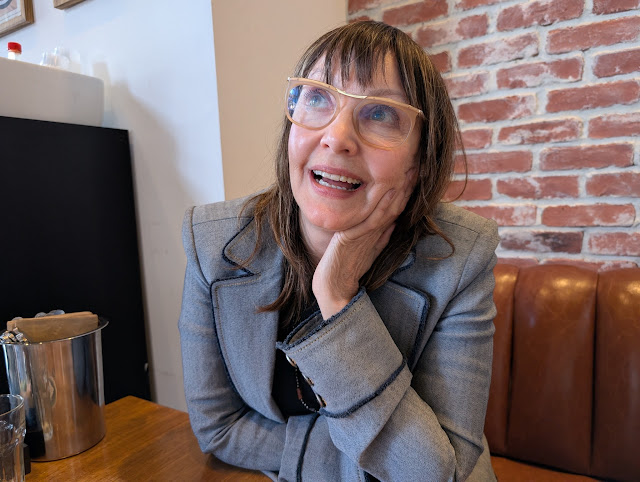
BH: Well, let’s move ahead a bit and talk about Godzilla (1998) and how you got cast in the the film. Please talk about that audition process.
AF: You know, I was thinking about it for this, and this is the funny thing. A lot of the biggest jobs I’ve gotten have been the easiest casting process. (laughs) I mean, I was put on tape once, and I think that was it. I was like, “Yeah, that was a good audition. It’d be really fun to get that.”
And then I forgot about it because it was quite a while later, and I just assumed, “Oh, yeah, I didn’t get that.” My friend was working for the casting director, and I probably thought, “Oh, I blew that audition or something.” She was like, “Oh, by the way, you’re in the running for that.” I was like, “What?!” She said, “Yeah, I think it’s you and one or two other people.” I was like, “Really?!”
Yeah, I’ve had that with other things. Again, it feels like it starts in the casting process. I mean, it was a pleasant audition experience. One audition, they trusted me. I got the job. The whole experience was a positive experience like that.
BH: Do you remember how you heard about the part? Do you remember who you were dealing with at the time?
AF: The whole thing was pretty regimented. You have a representative, your agent, your manager. They find out about the audition, and then they have to submit the actor to get the audition, and then the casting director, who was April Webster, and my friend Elizabeth Greenberg, who worked with her then.
Then they ask you to submit a tape. Now, you generally make your own tape and send it in. It’s not in person, but, in those days, everything was in person. So much driving, so much time. So I went to their offices, and I feel like I remember Dean [Devlin] being in the room. Dean, I think, was in the room and maybe a couple of other people — I can’t remember. I don’t think Roland Emmerich was in the room, but I’m pretty sure Dean was in the room.
BH: Do you have any idea about how long the wait was before you found out if you’d gotten cast?
AF: Well, that is something that I remember — it was a while. I forgot about it. I just thought, “Wow, that was a while ago.” A lot of things, they’re fairly quick. But that was a movie, and it was a big movie. So it was a slower-moving thing, and I was just so pleasantly surprised when I found out, “Oh, wow, I’m in the running! Wow, I totally forgot about that!” That had probably been 20 auditions ago or something.
BH: When you found out that you’d been cast, talk about that process and what happened next. I know the production was very secretive; they didn’t want any news at all leaking out. So what was also explained to you about the secrecy of the production?
AF: Well, I do remember that. I think that project was a new level of secrecy; you’re right. I had to go to an office to read the script. They could not send me the script, and I’m pretty sure — I have this very strong memory of this, but maybe somebody else would say differently — that they had all the different colors of drafts, and this one was like a rusty orange, so it was like you couldn’t steal it and copy it. (laughs)
I had never seen a script that color, so that’s what I remember. I did finally get a script because I did need a script, although I’m told now people in Marvel movies, some of the below-the-line people, have done the whole movie, and they’ve never seen the script. (laughs) But it was very, very secretive.
BH: So let’s talk about the beginning of the process and when you were hired and started shooting and all of that. What do you remember about the early times of the the process?
AF: We [actors] essentially have our own pre-production. We essentially have to prepare for the role, make sure we’re going to show up on day one ready, do everything we have to do, kind of on our own. But there was a lot of important costume choices. I always love when I meet with the costume designer; I love costume fittings. I start to get an idea: “Oh, wow, my character is going to look like this here, and I’m going to do that there.” So I spent a lot of time with the costume designer, figuring out what we were going to do; that was really fun.
I got to know Maria [Pitillo]; she was great. I already knew Hank [Azaria] because I had played his sister in a TV pilot some years before.
BH: Do you remember what that pilot was?
AF: It was terrible. I think there were three versions of it after me or something. It was called If Not [for] You (1995) or something like that. (laughs)
BH: It was never picked up?
AF: I don’t think it was. I mean, there might have been a version that was; it was awful. It doesn’t exist probably anywhere.
And then we knew we were going to be shooting in New York, which I was really excited about, coming back to my hometown and doing that, those big scenes. That was really fun.
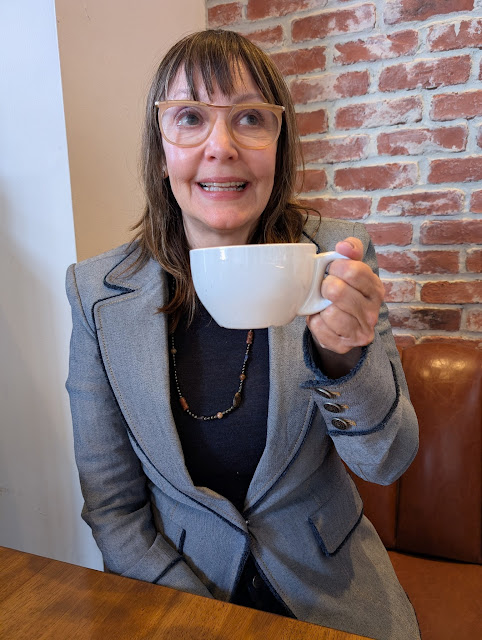
BH: Also, when it comes to finding the character of Lucy, how did you approach that? Were you inspired by somebody else in your real life or another performance? How did you develop that character on your own?
AF: I mean, she was a lot like many women I grew up with in the New York area. I definitely felt like she was very familiar. As an actor, you do all your individual actor homework, and you build out your character. It’s almost like being a writer. You’re given the stuff you’re given, and then you build from there.
When I know I’m going to be on a movie for a while, I also like to run around beforehand, improvising as my character, getting used to being my character. So, even just driving around as my character or doing my laundry as my character, I just like to get really comfortable with it. So, when I show up on set, I’m there, and I always feel like that’s the big thing for the actor, making sure that you’re in the same movie as everybody else, because sometimes it can be piecemeal.
On this one, it was great because I was involved from the beginning, and we all had an idea of the tone and everything. But, yeah, that’s the big thing. You want to make sure you [can] create an ensemble the best you can in that situation.
BH: And then let’s talk about Roland Emmerich and working with him as the director. So what are your memories of Mr. Emmerich as the director of the film?
AF: I just remember him being really easy to work with, and it just being a happy set. I wish I had some exciting gossip! (laughs) I feel like it was a really pleasant, good experience. He was easy to work with.
BH: What kind of direction would he give you in a scene, if any?
AF: The big thing I remember is when we shot in New York, those big, gigantic motion-picture scenes that were so exciting where they blocked off something like two miles of Midtown Manhattan for the part where the monster’s coming through, so we’re all reacting and everything.
I think we could only do it once, or maybe we could only do it twice, so I think there was definitely that thing, like, “OK, I better get this right because there’s a thousand people in this scene!” He was just very supportive.
BH: Well, how about Dean Devlin, the producer? Any memories of working with Dean Devlin?
AF: Yeah, he was great, too, and he was just so enthusiastic and also so supportive. It just felt like we were all their baby. He was very involved.
BH: You didn’t have many scenes with him, but, of course, Matthew Broderick was the big star on the show. Again, you didn’t spend a lot of time with him, obviously, but did you have any interactions with him, and what do you remember about Matthew [Broderick] on the production?
AF: We definitely didn’t have an individual scene together. I certainly met him around New York. It was cool to be working on a show with him; he’s such a legend. It was fun.
BH: I think you worked a little bit more with Maria [Pitillo], of course. So what do you remember working with her?
AF: Oh, she was so sweet, and she was a lot of fun. We just were having a blast. It just was so much fun to be in New York, shooting this crazy Godzilla movie. She was great; she was great.
BH: Another one you work with, of course, is Hank Azaria, your co-star from that ill-fated pilot, and [you] spent a lot of time with him, I’m sure, on the set. He’s a very funny guy, great voices, all that. What you remember about Hank Azaria?
AF: Yeah, exactly — so talented and such a leader and really smart guy. It was really fun, us all collaborating together. I remember the diner scene in particular because some of it we shot there, the exterior stuff, and then some of the other stuff we shot actually in downtown.
And there were a lot of stunts on those days; that was exciting. They would say, “Hey, do you feel comfortable being right here, or do you want to be further back?” And I was sort of like, “OK, yeah, I’ll go for it!” So those days were really exciting, and I felt like we had a real good camaraderie.
BH: And then, of course, another actor that was your boss in the film was Harry Shearer, another famous comedian. Any memories of working with Mr. Shearer?
AF: Yeah, that was the first time I met him, and that was really fun because there were all these Simpsons (1989-present) people working that day and for a few days. He was so cool and fascinating to talk to and very approachable.
BH: Another one who was famous on TV at the time, and, again, I think you were kind of separate …
AF: Oh, Vicki Lewis.
BH: Did you work with her at all?
AF: I feel like there’s one group scene we’re in together or something. We had the same agent. She was so cool, and she was a Broadway legend, so it was amazing to get to know her. She was really cool.
BH: One of the main aspects of the movie is, there’s a lot of fake rain. All the time, it’s raining. So what do you remember about the the fake rain, and how was that done? How did it affect your acting, if at all?
AF: It’s funny; I was watching, and I was like, “Oh, I forgot about the fake rain.” I love that stuff. That’s why I loved the New York scenes. I remember thinking that.
Sometimes, film acting is frustrating because [the director says], “Look at the corner of that thing right there and imagine you’re seeing Godzilla kill somebody,” or something. But, with that, there were so many real elements.
That’s when I just geek out. I just love it so much, things like the rain, the smashed cars, everybody’s screaming and running. The little kid in me who just wants to play, I love that, so I love it when there’s fake rain — there’s all that. Yeah, it feels so real and like you’re really there.
BH: You also mentioned that there were some actual location shoots in New York. Do you remember the specific places where you shot?
AF: The big one I remember, it was Midtown. It must have been a Sunday or a Saturday. They blocked off literally something like two miles and made that huge set of destruction.
I feel like it was right near Penn Station. Is that possible? Or one thing was, and maybe something else was. But it was one of the busiest spots in New York that they closed down and and set up. It looked like it was really happening. For me, as an actor, that is so cool when you’re like, “Oh, my God, I don’t even have to act!”
BH: Do you remember around what point you saw the design for Godzilla? Were you already filming? Had you completed your scenes already when they showed you what the design would be?
AF: I worked a bit, then I had [time] off, then I worked a bit. I think there was something like that. I could have sworn that there was a party at Dean Devlin’s, and they had a secret trailer, and it was the first time we had seen the monster. I was surprised because I thought, “Oh, wow, the monster is actually really scary.” I mean, the traditional Godzilla is scary but also like a toy, kind of campy, and fun.
The script felt like it was trying to be campy, and I like that. I don’t know if that translated [to others] as much, but that’s what I took from it. I thought that was kind of fun. It was sort of funny in moments. But the monster, I remember being surprised. It was scary, muscular…
BH: Like a dinosaur.
AF: Like a dinosaur. Yeah, and I was surprised. I was not expecting that.
BH: OK, so that’s interesting. So the first time you saw it was actually this trailer. So they didn’t show you any sketches or [say], “This is what you’re going to be reacting to”? It was like that?
AF: They must have, as you’re saying that, but it wasn’t clear to me at least until I saw that.
That was super top-secret, and I think it was even just an assembly. It was not a real trailer. Look, a lot of times, with movies, it’s like that. As the actor, you get the script, and and there’s the movie on the script, and there’s the movie in your head, then there’s the movie that you create, which you’re going to be in as you show up, and then you show up, and then there’s other people! (laughs) You realize it’s going to be a little different. And then sometimes the final product is totally different. But I was surprised — a muscular kind of dinosaur, those legs, those dinosaur legs.
BH: Of course, with people like Hank Azaria, Harry Shearer, they’re very creative, funny people. Was there any ad-libbing among yourself or any of the other actors that you can recall?
AF: I’m sure there was, I think. I’m sure with him there was. I think I was pretty careful to stay on script. I don’t know if there really was much of an opportunity. In the moment, in some of those scenes where we’re shocked, there’s definitely some embellishing. But I think, in my story line, I kept pretty close to the script.
BH: Another actor who was there, who has a big part in it — I don’t think you have any scenes together — was Jean Reno. Did you deal with him at all? Was there any interaction?
AF: I just met him, and he just seemed like this larger-than-life, cool guy. Everybody was like, “That’s Jean Reno! That’s Jean Reno!” He was definitely this very larger-than-life figure. (laughs)
BH: And then there’s the scene where you have the refugees from New York. They’re all in the same house or apartment together.
AF: Again, something like that, you’re kind of really experiencing it. But that was great; that was really fun to do.
BH: That was on the set, wasn’t it? Or was that at a location?
AF: I remember being there. You would think that would be on a set, but I feel like I remember it being on a location, but I could be wrong. I could be totally wrong.
BH: But you would say, to the best of your memory right now, it was probably a location? That’s interesting.
AF: I just remember walking around this small apartment and stuff, but that might have been a set. But it obviously felt real enough to me that I’m saying that it was a location. But I don’t know. Somebody else probably knows for sure. (laughs)
BH: Probably. Of course, a lot of it was CGI, but then you did have the suit-acting, as well, and practical effects going on. Were you there, or were you watching, when they were filming some of the suit-acting or the practical-effects scenes?
AF: I remember the seeing the baby Godzilla, and that was just incredible. I feel like I remember being in Madison Square Garden.
BH: You were in the apartment with all the refugees [during that time in the story].
AF: No, no, but I mean seeing the set with all the baby Godzillas, but maybe that was a set. But I remember seeing it. That had been to have been set. And yet I remember it as being …
BH: Like Madison Square Garden.
AF: Yeah! (laughs)
BH: Excellent. If I recall correctly, I think you just said that you were there and then left [the production] for a little bit and came back. So what was that all about?
AF: A lot of times on a movie, you’ll work, and then you’re going to be off for a few weeks, and then you work again, and they pick up your story line. So there was a lot of that, but I think it went for quite a while.
BH: Time period-wise, do you remember essentially when it started and then when filming wrapped?
AF: No. I feel like, from now on, I need to write these things. It had to have been more spring weather because we weren’t freezing cold.
BH: Gotcha. So, when filming wrapped, do you remember anything about the wrap party? Was there anything special that they had planned? Did you do anything big? This was supposed to be a big production.
AF: I can’t remember the wrap party. I can’t remember. (laughs)
BH: No worries. Of course, the ad campaign started after shooting. Godzilla was everywhere for a long time. Do you have any of your own memories of seeing things when you were out and about, maybe in L.A. or New York?
AF: Yes, exactly. One day, I drove by, and obviously it was totally different then. It was the ‘90s. I can’t remember what giant building it is in L.A., but it was some landmark, and they had wrapped the entire building in some sort of advertising.
I mean, a whole tower was wrapped, and it probably said, “Size Matters,” or something. I thought, “Wow, that’s serious!” (laughs) And I also thought, “I hope people like it!” (laughs)
And then the coolest thing they had — which I had for a long time, and I don’t know if I still have it — they had these press things. It was some sort of folder or book, and it said “Godzilla.” You opened it, and it made the sound [of Godzilla’s roar]. It was really amazing.
BH: Was that a promotional thing?
AF: It was a promotional thing. But I got one, and I just thought it was the coolest thing. (laughs)
BH: I’m sure there was a big premiere. Obviously, it was supposed to be the biggest movie of the year. What do you remember about the premiere?
AF: Oh, my God, that was insane. It was so many people. Yeah, it was totally crazy. I think it was at Madison Square Garden, right? I feel like it was. I mean, just the most people I’d ever seen. It was super fun.
It seemed like everybody loved it. (laughs) It seemed like it was only going to be up from there.
BH: Was that your first time to see it at the premiere, the whole movie?
AF: I feel like I’d seen a couple of cuts. They might have even been finishing and changing the CGI and things like that … although I probably did see a screening before that. I probably did — I think we saw a number of things before it came out.
BH: Shortly after that was the critical backlash and whatever happened there. So, when that was going on, what was your reaction? Were you surprised by it, or how did you feel about all that?
AF: I was amazed by how many people just violently hated it. (laughs) I thought, “Well, it’s an action movie.” I thought it was fun. I really don’t think it was the worst movie; I thought it was a lot of fun. Boy, people really had an opinion, and I think also probably because it was such a huge marketing campaign, unfortunately.
But that’s the irony. It was just a really positive experience for me. (laughs) It was really fun!
BH: So, when you think about all the credits that you’ve had on TV and film, how would you rate Godzilla in terms of your career?
AF: At the time, I was like, “This is great!” And then it was weird to be in a bomb. I mean, I wasn’t carrying the movie, so luckily I was like, “Hey, I stand by my work.” (laughs) And then I think people want[ed] to blame each other or whatever, and that’s too bad because it was a perfectly good movie. It was fun.
Yeah, it wasn’t Conclave (2024). (laughs) But it was a fun movie. I love it that younger people are discovering it. I mean, my kids are really obsessed with the ‘90s, so they’re interested in all that. But it was disappointing; it was a huge disappointment.
BH: Looking back on it now as we sit here in 2025, what is your take on Godzilla ‘98, and how do you feel it fits in with the series overall?
AF: That’s a great question. This is this nice closure. It’s nice to feel like it fits into the canon. Personally, I love Godzilla Minus One (2023) so much. I mean, that’s such a great movie, one of my favorites. I’m proud to have been part of the Godzilla story in some small way.
For somebody as a kid who just loved Godzilla so much, it was a real thrill for me.
BH: Speaking of Minus One, there’s been Shin Godzilla (2016), as well, Godzilla: Final Wars (2004) — there’s been a few Godzilla projects since then. What else have you seen, if anything?
AF: I have to catch it. I haven’t seen anything past Godzilla Minus One, so I want to see those. I just really loved Godzilla Minus One.
BH: What was it about Minus One that you liked?
AF: I thought it was smart that it stayed true to the Godzilla style, to the Godzilla expectations. It definitely felt to me in the style of a Godzilla movie. But it then had these important emotional stakes, and it probably was the intention of Godzilla (1954) from the beginning, telling that postwar story. I just thought it was so powerful and brilliant.
The story of this pain of this loss but then the redemption of the guy at the end. I just thought it was amazing, but that also just shows you can be a genre film — you can not offend the rabid Godzilla fans. You could stay true to that and still have it be good.
BH: Last question. As someone who enjoys the Godzilla films going back to when you were a child, going up all the way to Minus One, what would you like to see in the future, if anything, with regard to the series?
AF: That’s a really good question. I don’t know. I mean, when I saw Godzilla Minus One, I didn’t even know I wanted to see that. People kept saying, “Oh, it’s so great,” and I’m always skeptical when people say that. (laughs) And then I thought, “This really is great.”
I guess I’d like to see that you can have a powerful story without it being heavy-handed, without it being condescending to your audience. You can stay in the genre; you can be loyal to the style and parameters of the genre. But do a good job, take the time to write a good script. Take the time to really develop your script.
 Vantage Point Interviews