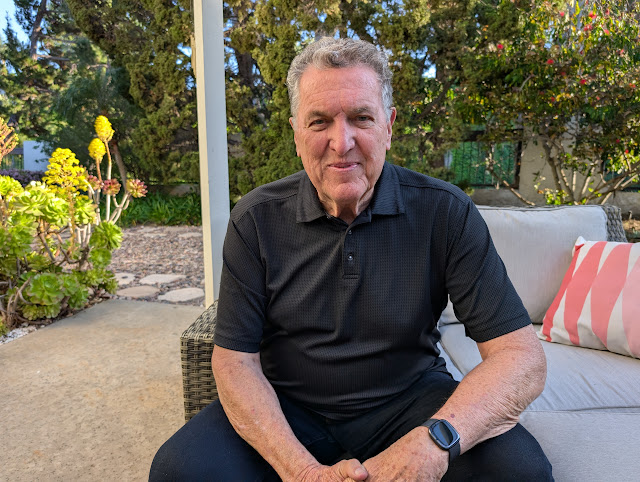
Rankin/Bass Productions made several live-action films with Japanese director Tsugunobu “Tom” Kotani during the 1970s, and The Bushido Blade (1981) tends to be the most obscure of these productions. Filmed in 1978, The Bushido Blade predates the production of Shogun (1980) but only saw release in the U.S. after the latter had premiered on American television. The Bushido Blade proved to be the first film of actor Mike Starr, who portrays Cave Johnson in the film. Mike Starr got his start in acting via fellow actor Dan Lauria in the play Vespers Eve and would go on to play Boone in The Natural (1984), Crocker in Funny Farm (1988), Mr. Zirella in Lean on Me (1989), Pooter the Clown in Uncle Buck (1989), Frenchy in GoodFellas (1990), Frankie in Miller’s Crossing (1990), Tony Scipelli in The Bodyguard (1992), Mulligan in Cabin Boy (1994), George Weiss in Ed Wood (1994), Joe Mentalino in Dumb and Dumber (1994), Thumper in Clockers (1995), Eddie in Summer of Sam (1999), Block in Jersey Girl (2004), and Eddie Gottlieb in Sweetwater (2023). In April 2025, Mr. Starr shared his memories of making The Bushido Blade with Brett Homenick.
Brett Homenick: Let’s start at the very beginning. So why don’t you talk a little bit about your childhood and some memories that you remember?
Mike Starr: Well, interestingly enough, to give you a Japan connection, when I was about eight or nine years old, my eldest brother, John — God rest his soul — joined the Marine Corps. We lived in Queens, and he was [in] a number of places, but he spent a year in Japan. So he would send gifts home or whatever, but I would read this stuff, and that must have been my first fascination with Japan. So that’s a memory of it.
He played baseball in Japan when he was with the Marines, and he went other places with the Marine Corps. But I think that was my first interest in it. I don’t know why — I think I started seeing films with Toshiro Mifune, but there was a strange fella in the neighborhood — nice guy, this tall guy. He would walk around with [what looked] like a samurai sword on his back. He had this amazing posture — he was about six-four, African American friend of mine. He didn’t talk to many people.
He said, “Starr, would you like to go to Japanese films?” I said, “Oh, yeah, I’m getting into it.” Maybe college influenced me — [I went to] university at Hofstra. I remember one of the first things I saw was Rashomon (1950), and she [my teacher] discussed the usage of sound in the theater and all these [things]. I was becoming fascinated, I think, with it.
But I remember he said we’ll go down, and there was a place called the Japanese Bijou in Times Square, actually, and there were classic Japanese films, and I went with him. Wouldn’t you know that a few years later I become friends with this guy, Joe Bordinaro, who knew my brother in college — my brother, Beau, whose real name is Bill Starr.
He had a Japanese partner [and] was from Buffalo. We became friends, and he was always an enterprising business guy and still is, but he said, “That was my theater; that was my group.” I used to go and see so many Toshiro Mifune films, and I got influenced, I think, and I was always interested.
It’s more in now to say this, but I was reading books about Zen Buddhism and some other things, and Zen combine[d] with various things from the West — different religions. And, crazy enough, Leonard Cohen’s [Zen] master Sasaki Roshi, who lived to be 106, through a lot of interesting ways, I brought him actually to Hofstra to speak.
But some friends started this Long Island Zen center eventually, but we did a seven-day retreat before we were married in 1975. He [Sasaki Roshi] married us, and then our friend, Joe Genito, a Roman Catholic, we did a service there with the family and everything a couple of years later. But I always had this yearning and desire to go to Japan, and then Bushido Blade (1981) happened out of nowhere, it seemed. And we wound up going.
BH: Before we get into that, I also understand that you saw Godzilla (1954) when you were a kid.
MS: Oh, God, yeah. We knew [the big] horror movie [from Japan] was Godzilla, but that would be on what was called the Million Dollar Movie at 6:00 or 5:00 on Channel 9. They would have the same movie, and, in fact, the theme [music] was [from] Gone with the Wind (1939). Until I saw Gone with the Wind, I thought it was the Million Dollar Movie theme.
But the big thing I saw in the movie theater, at the Parsons movie theater in Queens on the Jamaica-Flushing border there, I went with my friends to see Rodan (1956). Do you know Rodan?

BH: Of course!
MS: Yeah, and that was like, “Whoaaa!” So that’s a big childhood memory.
Man, that freaked me out; that was wild to see that. Yeah, that was childhood stuff. My friend Brian Rose, the professor, [who] coaches me on a lot of things, including dialects and whatnot, or how to speak American (laughs) and Shakespeare or whatever, he gave me this book that I showed you about Godzilla, but he told me about a whole interesting subtext behind Godzilla and what’s behind it, and the connection with the A-bomb, things like that — really, really interesting stuff.
But, when you saw Godzilla, it was, “Arrrgh!” — it’s just this big thing. And Raymond Burr and the Japanese army — what did I know? — we were watching that.
(laughs) But Rodan, I hadn’t thought about Rodan and maybe said that in a long time. And it’s funny when you learn in school the sculptor R-O-D-I-N, Rodin. “No, no, Rodan’s the big, gigantic prehistoric bird.” (laughs) Yeah, there was so many things you watched. And, of course, they had subtitles and dubbing in some, and voices that didn’t quite match.
In fact, when we did Bushido Blade, I think they were still doing [it]. I think it was Richard Boone or maybe [post-production executive] Bob Cardona, great guy, who was helping on the film. When you go in and loop on a film, you get four beeps — just beep, beep, beep, and you come in on the fourth like music [and] say your line. But I think, when we did it, we did it old-school, or they said it was the old European way, but we had to literally listen and watch and match it. I forget — there was something else, but it wasn’t the four beeps; it was just, you had to do it.
BH: When you saw Rodan, was that in the theater, or was that on TV?
MS: That was in the theater. I was the baby brother, so I’ve been going to movies since I was five, six years old. We’d see Ivanhoe (1952), we’d see medieval knights, and I’d go with my friends, too, when we’re 10, 11, 12, and see Guns of Navarone (1961) and things like that. But Godzilla, I want to say, was the TV show, but I don’t know if I saw that in the movies. But I have tremendous memories of seeing Rodan on the big screen in Queens.
We had some great theaters — the RKO Keith’s in Jamaica. They had this theater where they used to have a rock and roll or music concerts and rhythm and blues — whatever they would have in the ‘50s and the early ‘60s. My brothers would go there, but these were massive. It’s kind of [like the] movie Radio Days (1987) that Woody Allen [directed], which I had a brief thing in, but it was like Radio City Music Hall. Some of these places had these old, great theaters, so you can imagine Rodan was just really bigger than life.
BH: Well, let’s move ahead. Let’s talk about Bushido Blade. So let’s talk about how you got cast in this movie.
MS: I knew nothing about it. I get this call. An ex-NBA New York Knick Luther Rackley said, “Oh, I heard about you,” and I’m saying, “What?” “There’s a movie in Japan.” And I said, “Really?” And this was, like, about a month or two before I even got in it, and I hadn’t been in any films whatsoever. I had done theater and done commercials, and you’re trying to get in things. I’m wondering if I even had one line in the movie because I always say Bushido Blade was my first film, so I go, “Wow, wow!”
So he calls me, and he says, “Boy, you know some interesting people.” I had a scholarship for theater and even some scholar-athlete money, as it were. But what am I gonna do? I’m married now; now I’m in the real world. And I look in the want ads — the Daily News or New York Times — and what is now LA Fitness and was a few other names was Jack LaLanne’s Health Spa. Jack LaLanne was a famous, great guy at the time, and I guess they bought the franchise name. I went in, and I’m making $125 a week.
I’m working right by the World Trade Center and Midtown Manhattan, so I was exposed to a lot of interesting people. And I remember people saying, “So you’re going to be an actor.”
I was trying to play football, and Matt Snell, a great Jet, who my brother played with — one day, I was trying to get in films, [and] he said, “I didn’t know you were an actor.” I said, “I’m much better than a football player.”
So I worked there, and I met so many people and befriended people. It was an agency called Raglan Shamsky. Cynthia Ragland was this great classic agent and in commercials. Oh, my first job — now I realize I was a stand-in on Paradise Alley (1978) for this big boxer, the Stallone movie. So I remember making that. And he had all these bodyguards at the time, and they were great; they were fun people. All the guys New Jersey guys — just really nice people.
They had me work at the Copacabana sometimes. I got to meet Bette Midler and Katie Sagal, who was one of the backup singers. They called me Mike the Actor. Everyone had a different name.
But, when they went to do Raging Bull (1980), there was a fight scene at the Copa, and [Martin] Scorsese used the bouncers or the guys working there like that, and I couldn’t do it because I was doing Of Mice and Men in Massachusetts in, I think, StageWest and Springfield. I think that’s what I was doing. I lost three jobs over that, doing theater, because I got my Equity card. Just then, there was this and that, and my friends did a play that was popular, and I’m going, “Oh, lord!” I thought I was doing the right thing.
I think that’s when it was because I remember — was it First Deadly Sin (1980) with [Frank] Sinatra? They wanted me to be his massage therapist in a scene; I couldn’t do it. And then there was Prince of the City (1981) — I was supposed to do something.
But, getting back to why I’m mentioning the gym, when Luther Rackley was looking, he was asking people. Supposedly, I think they had wanted Merlin Olsen, if you know who that is — a famous [L.A.] Ram. But he had a big series at the time in the late ‘70s — Father Murphy (1981-83).
I don’t know if he did Little House on the Prairie (1974-83), but evidently I think he turned it down. And Alex Karras, the famous Detroit Lion, who was announcing on Monday Night Football, had done some really good things, and he had a series, Webster (1983-89). I think they wanted him.
So now I think it was Luther, or someone said, “Do you know [anyone?],” or someone gave him a tip [and] says, “Oh, Art Shamsky knows this guy,” or Art, who was on the ‘69 Miracle Mets, said, “Wait, I know a guy. He’s a great guy, and I believe he’s a wonderful actor, and I think he’d be a great choice.” And that’s what happened.
So they called me in. I didn’t know where I was, and there was this agency, and a guy was helping out his sister or something. He was about 60 at the time and from Connecticut — classic kind of WASPy guy. And he [was like], “Well, we’re going to do this and bring in this. Benni, we’ll get this.” Later on, I would joke with one of the producers, Benni Korzen. I said, “I’m going to make a T-shirt with his face on it, saying, ‘I got you the worst deal I could,’” and he said, “Yeah, that’s pretty true.”
BH: (laughs)
MS: Anyway, they tracked me down. There were these classic two ex-cops that worked there — the legendary guys that worked at Jack LaLanne’s. One was maintenance, one was sales, and the maintenance guy kept grilling him. “Well, what do you want with Mike?” He didn’t trust the guy. (laughs) He said, “Who are these people you know? I’m just trying to get you in this movie.”
He got his cut, but they sent me to this agency. And then the agent’s trying to help me, and he’s showing me I should make faces at the audition and, “Do it like this!” and really hunched down. I’m saying, “Well, I guess that’s what they want.” And I went in, and Arthur Rankin must have thought, “Who the hell is this guy?” I’m standing there with my shoulders hunched and going [adopting the voice of the agent], “What if you fellas…,” making faces.
He said, “Oh, you guys are great.” Timmy Murphy — God the rest his soul — was on the show Dallas (1978-91), I believe, or a spin-off of it. He was wonderful. He was like 17 or 18 at the time, and he and I went in. And they said, “Well, we’d like you to study with an acting teacher,” and they said, “Is there someone [you’re interested in?]” I said, “Yeah, Stella Adler.” And he said, “Oh, that’s good.”
Well, I don’t know if they had a connection with David Mann, who’s a wonderful teacher, but it took a lot of time, a lot of coaching. He wanted to help me, and he really helped me with a lot of things — trying to dial down things, which I didn’t. It sunk in eventually, and I saw him again years later, and I thought of going back with him, but he would have this long acting class on Sunday nights, and I’m living in Queens, scraping to get by with the rent. We’d moved back into my old neighborhood with the house, and my wife, I think ,was working as a dental assistant; I forget. Now she’s a pediatric heart surgeon, but that’s another story.
She went back to med school 11 years after [getting] married, and we had three kids. I had a two-year-old, and the crazy thing is when I was over there in Japan, my wife had been born in England. Her dad was in the [U.S.] Air Force, and — God rest her soul — my mother-in-law couldn’t find the passport, the birth certificate, or whatever it was.
We were in Kyoto 10 days, and we were all over. Eight days out of that, I was off. I had this traditional Japanese place at the Miyako Hotel if you know that. They couldn’t get everything clear, and they could have spent 10 days [there]. They wound up spending a week with me and my daughter. I always felt bad about that because I was hanging out with the crew, and they’d take you out drinking.
That was the first time I ever had sushi, and sushi wasn’t known in the States in those days, really. But they would take me to cool places. Mako Iwamatsu was born in Kyoto, but I don’t know if he grew up in L.A. or New York, but he moved when he was 14; his mother got him out of Japan. He was also a fabulous painter but a tremendous actor, and he was a real neighborhood, street guy. When you talked to him, [he’d say], “Hey, man, lemme tell ya.”
So how I got it, evidently they said, “No, no, this is the guy.” They want me, and they said, “Well, we want you to gain weight.” But I could go up and down, and I remember there was a famous casting director, Barbara Claman. When I first went out, I was much smaller than [in] Bushido Blade and fit, working at the gym. [She] said, “You’re not a very good type. You should be a stunt man because you’re not really [a] leading man; you’re not this.”
I remember coming back at an audition, coming back about 40 pounds heavier. (laughs) She didn’t recognize [me and said], “You are a great type!” And that would happen. At times, I would drop a lot of weight in the business, and then some directors said, “You’re not going to work like this.” I should have never listened to them. I had a friend who was a power lifter, and he was one of the original trainers, but he wanted hours a day, and I had to do other things to make money, and I’m on unemployment sometimes. And I wasn’t happy with the size I went over there with on the movie. I think we could have done it a little better.
But also they said, “Listen, you don’t have to do any horseback riding, just kind of sit on a horse.” Well, a week into it, I’m going down hills and cliffs and looking over the Pacific Ocean, holding on for dear life. We’re watching the rushes, the dailies, and, because they said they couldn’t find a stunt man my size and a Caucasian guy — I don’t know; I forget — and I had to do everything, Frank Converse said, “What do they need a stunt double for? All you need is a sack of blue laundry with a red wig on it!”
That was the other thing they wanted. They wanted you to look radically different. [It was] 1854, I think, when Commodore Perry went in, and they wanted to dye my hair red [with] a red beard, right? So I look so different from the Japanese because we were the gaijin, the foreigners, and it had at the time been closed off to anyone. And they really wanted a different look, so they sent me to Vidal Sassoon on Fifth Avenue. When would I ever been in there? They sent me there — they said, “Listen, we really need the hair to be red.”
So the stylist says to me, “Listen, it’s not going to look red enough for them right now, but, believe me, once you get out in the sun, it’s going to turn orange, so please tell them. Let it be now, and it’ll get very bright. I guarantee you.” I go back, and the producer, Benni Korzen, didn’t want to hear that. He said, “No, no, no, you gotta go back and tell them we want it really bright red.”
Guy goes, “OK, I’m warning you.” I said, “Yeah, I know. What am I going to do? This is what they want.” Well, I get there. When I first met Richard Boone, he said, “I’m wondering who this big, orange-headed guy is with the orange hair.” It got so bright. You have the reflectors on when they do outdoor shots, so we’re on the top of these cliffs and hills. The sun is just beating down, so I wind up looking like Bozo the Clown here or something. I had this orange head. And it worked OK for the film, but they didn’t believe me.
But I remember getting on those horses, and I have some of the great stories. It wound up ending out beautifully with the horse. Jeez, it was kind of nutty. I remember they gave me a couple of lessons. I went off one time, and Gloria Cardona, who was married to Bob Cardona; they were consulting or something. I guess they were producers on it, but she was a ghostwriter in England. She said, “You get back on that horse right now!” I said, “OK, OK!” I got on, and I rode. I have a lot of funny stories about that.
Anyway, back to how I got it. So, sure enough, I got it. And, just for the sake of history, I would have liked — no disrespect to David Mann — to say I studied with Stella Adler, and [that] would have been interesting because you kept hearing about these legends. My friend, Robert Davi, wound up studying with her, but it would have been good. She probably would have said, “You’re not going over there looking like that — get in shape completely.” I remember one time I was losing too much weight on the set. I said, “I’ve just been eating fish.” And they said, “No, no, no.” They really wanted me quite large, and it took me a while to get rid of that weight. I go up and down since then, even before that I did. I think I’m one of those guys that yo-yos and eats.
But there I was. I mean, I could move well enough, and they wanted the look because we do this whole sumo wrestling scene, which was a funny story. And then we do the breakout in the prison. When I was a freshman at Hofstra, I saw not only James Earl Jones in The Great White Hope (1970), but they [the New York Shakespeare Festival, a.k.a Shakespeare in the Park] would come around to the neighborhoods, and I was about 15 or 16. And there’s James Earl Jones doing Shakespeare and Cleavon Little from Blazing Saddles (1974). He was quite a character, and I had a big conversation with him around the ice cream truck, and he was so supportive. But I was so moved by theater.
I got to see James Earl Jones. So, in my freshman year at Hofstra, which my brother ambushed me and got me to be a drama major, but I got a full tuition scholarship. I stayed there five years. I wrote a paper because they had this great program. It’s 1969 or ‘68. For $50, we got to see all these Broadway shows. You just jumped on the train from Long Island into Manhattan, and we would see [them]. I saw Maggie Smith on Broadway; I saw The Death of Bessie Smith. I saw so many cool things.
I saw James Earl Jones, and it blew me away. Usually, in the theater, even in films in the ‘40s, a lot of times people were relatively shorter. And here was this big guy, James Earl Jones, who had inspired me. So I wrote a paper on him, found out that he studied, he was from Mississippi. So, all of a sudden, they got James Earl Jones doing, I guess you’d call it, a cameo, a few days. They set them up in Japan, and I told him about it. He goes, [doing a James Earl Jones impression] “I’d be very interested to see that.”
I saw him one more time in Manhattan. He wasn’t doing Fences yet, I don’t think, and he gave me a lot of advice if I went to L.A. I remember saying to Mako, “So this is how it works now in the business? I just go to L.A., and I’ll just work? I just become a star after this movie comes out?” I thought I was in a blockbuster and that all you do is, you’re in a film and just show up. He goes, “Man, I hope so, but I got nominated for an Academy Award, and, two weeks later, I was out cutting trees again.” (laughs) He turned out to be right.
So we went to Japan, and actually Richard Boone took care of us in Hawaii. We had set up this thing, the Hawaiian Village. It was a real tourist place; it was in Honolulu. He goes, “Well, when you finish that, come over to the Big Island. Me and Claire will take care of you.” And he did, but one day there was this huge [guy] — I don’t know if it was Samoan or Hawaiian — he said to me, “I hear you an actor. You an actor?” I said, “Yeah, I’m trying to be. I just did a film. I did my first movie, and I do theater.”
He goes, “How come you don’t do no Hawaii Five-O?” I said, “No one asked me.” And isn’t it weird the things you remember? He hands me this note. I walk in, and I get it. If you ever see it, it’s called “Small Potatoes” (1978). You can see it, and I have this gigantic red hair, and I’m this gigantic character. I made friends with this guy, Pehu [Keohokalole], who played like the bodyguard with me or bouncer. I played this Mob guy.
[Steve] McGarrett, Jack Lord, who was from Queens — his name was really Jack Ryan. I found out all this stuff, but he was a very aloof and whatnot. But he said, “Are you from the ‘Bronix’?” I said, “No, I’m from Queens.” “Oh.” He had about 30 takes he was doing, and they gave me one take while the crew was pulling out wires, and I did it with the script supervisor. I guess you could call it street sense, but one thing I was lucky about at Hofstra, we had very serious training, I feel. We had some some super-solid people. So many good people came out of there.
I just said, “I better do this like it’s a poem,” and I was right — I had one take to do it, and it got on the film. But it was crazy. When I see it, I laugh. Some of the writing on it and whatnot was very pat. But I had a great experience.
Bushido Blade was a tremendous experience, but I had a lot of anxiety about getting on these horses, and it was actually an interesting evolution that happened to me. I said, “Holy shit. What am I going to do?” They said, “Listen, don’t worry; your horse will be fine. You’re going to follow what Sonny Chiba does, and your horse is trained.”
We had this woman, Michie, young translator, and she said, “Michael, do not worry.” And we had this — he had been a captain, I think, in the Japanese army — the sweetest man. He was in his 70s at the time, and he was the horse sensei, very quiet. I called him Sensei — he was the horse instructor. And they looked out for me, all the Japanese.
So I’m sitting, and they said, “Don’t worry; your horse will follow and do whatever his horse does.” So I think they’re going to ride up. They go, “Action,” and then I’m watching, and my horse has no rider on it now. All of a sudden, here comes Sonny Chiba with spears, every kind of type of traditional, ritualistic wardrobe, and he’s going a mile a minute. He’s speeding up. Now I’m going, “What?” and my horse is following it, just following it. And he’s doing all this great stuff. [imitates Sonny Chiba’s yelling]
I said, “Holy shit,” and my horse takes off and goes the other way after the take. I said, “What?! I thought he was going to follow and stop!” So that was one of the funny things, and I finally went up to Chiba and said, “Chiba, will you do me a favor? Would you go slow?” He goes, “Ahaha!” He thought I was joking. Kept saying, “Go slow.” So, finally, someone said, “You gotta talk and get a stunt double. You can’t do this.” I spent 15 minutes talking to Tom [Tsugunobu] Kotani, it seemed.
“So, Kotani, it doesn’t make sense. I don’t know how to ride a horse.” He goes, “Ah.” And the Japanese do that great thing that you probably know well of saying “yes,” meaning “I understand.” So he’s nodding at me for a good 10 minutes. “Yes, oh, yes.” I said, “And you don’t want me hurt. Then you won’t have the character.” He goes, “Ohhhhh, yes, yes.” So I said, “So I don’t have to get on the horse?” He goes, “Oh, no, you must ride horse.”
BH: (laughs)
MS: “Anyway, it would be ridiculous.” I said, “OK, let me get on the fuckin’ horse,” and I remember I held on for dear life. But what was crazy is, we have to rescue Frank Converse. I think that’s the scene, and Frank Converse is fighting all these ninja, and I have to pull up on the horse, riding up.
(laughs) I’m literally holding on to the neck of this horse, and, on “Action,” I have to come flying out behind the bush and rescue him. He jumps on the back; we get away. And Tom Kotani, who’s the sweetest man on Earth — he was so wonderful and a wonderful director — said, “Michael, we need a line here.” I thought, “OK. Could you think of anything to say?” Frank Converse gets the Bushido blade back. He gets it back, and Tom says to me, “How about, ‘Oh, is that the blade of Bushido? Great, great,’ and ride off!”
So the 72-year-old man and three guys are holding my horse behind the bush. They just let it go, and it comes out. And the horse was very sweet; they looked out for me. [It] came out in the [clearing], and I’m trying to say, “Oh, is that the blade of Bushido? Oh, great!” Well, I come out, and it’s up a little bit of a hill.
I come out gripping. They’re all holding the legs of the horse and everything. They’re pulling it, and they let it go. I come riding around, “Captain, captain!” My voice must have been 18 octaves up. I go [in a high-pitched voice], “Captain, captain! Is that the Bushido blade?” Converse is supposed to say all these lines; he looks at me and goes, “Yeah,” or something like that. (laughs) It was really funny. We were laughing later.
He’s fighting and shooting; he’s not gonna say all this stuff. I go [in a high-pitched voice], “Great,” and I just ride out of the shot. That’s right; that’s what happened. I just ride out. We ride out with another horse that rescues him, but I’m hunched over, holding on to this thing. [in a high-pitched voice] “Captain, captain, is that the Bushido blade? Great!” I just get off, and they’re all waiting for me by the bushes and grab the horse.
Timmy’s character gets kidnapped, so now I’ve gotta go through this town. I told my friends what I always wanted to do was be in one of those Westerns where the guy arrives and looks to the left and the right. Well, I got to do that, but now what they do is, they catch a mate. I’ve got this boatswain’s hat; it’s a special hat the boatswains wear you can see in history books. So I got the hat with the two ribbons in the back.
I’m riding this horse that I find, and now I’m holding on again. So I have to go around, and it’s the 1860s. We’re in Mifune Studios; we’re in all these great places — Toei Studios, that you might know in Tokyo. If you know the Japanese style of that time, the way the poles stick out of the the roof, and it bends up and right around your neck and your head, for me, with the height. So I have to just literally once again, ride around the corner on “Action.” So I ride around the corner, and I have to go looking for him. So I literally have to just come around easy, and they throw a net on me.
I forget who comes up to me. Maybe Michie translates and goes, “Do not be afraid. This is the number-one net man in the world.” I said, “Who’s number two or three?” What it is, is these chains with a net that goes over and drops, but it’s heavy chains, and they throw it to capture someone, and they throw it right around my body, and it’s no problem.
They explained to me, and Tom Kotani says to me this horse gets completely — I guess the word would be spooked or nervous — if you yell. “So we’re going to have to whisper, ‘Action,’ and you just take off and go around.” So it’s simple enough; I did [it] one time, right? Well, maybe the first time this happened, Tom Kotani, getting ready [whispering], “OK, rolling, quiet.” All of a sudden, Kotani goes [yelling], “ACTION!”
Fuckin’ horse takes off; I go flying around! (laughs) All you hear on the loudspeaker, Kotani goes, “Sorry, Michael, I forgot.” (laughs) Anyway, we’re going to do it, and they dropped the net. They couldn’t do it on that one, and it misses me. It hits me on the top of the head, the chain, right on my hat — I’m glad I had a hat. Then they come and capture me, but we had to match it for film.
So, instead of doing the whole net, they started out with this thing [for the sake of continuity], pulling on my head. It was a heavy chain, and I had to sit on the horse and pull away with the net, and they get me. The next thing, I’m in the baths with James Earl Jones and all of us, and he shows me how I can escape, where to go. I remember I had to say a line to him. I said, “Can you draw me a map of it?” And his line was, “No need.” James Earl Jones is just brilliant. I said, “Can you draw me a map of it?” He looks at me, [and] his character goes, “Hehehehe! No need. It’s right this way.” But, the first time we did it, I thought he was laughing at me because I was such a bad actor. (laughs)
He was so believable; he just laughed at me. I’ve had training, and my friend Brian Rose, the professor — we’ve known each other since the late ‘60s. He’ll coach me. I had taken speech lessons and whatnot, but it took me a while to really a lot of times flatten out. I’ve played characters like in Black Dahlia (2006) where you couldn’t have the New York accent, but I think a lot of times it crept through. I didn’t know what the heck I was doing sometimes. I was really trying to not do it at the time, but you get all excited; all these crazy things happen.
My voice, it’s really funny to hear it because it was in a different register. Then there was a really exciting thing I did, and I don’t know if it was connected with that scene. But they had these weapons from the 1850s that they fired, and the horses took off.
BH: Like a flintlock gun or something?
MS: Yeah, yeah, like a flintlock, I think. Yeah, it was like that, and they went boom, boom, boom. He’s shooting, and these guys have swords. I literally had to take off really fast, and everyone would laugh after I did it. But I remember this one; it was such a great feeling. I wish I would have stayed with it and really learned how to be on a horse because each time was an adventure. But I took off, and it was really great, and he went one way, and I stayed on the horse. I think of that, and I said, “Holy shit, I did an action scene!” Once those guns went off, this horse took off.
But, anyway, for some reason, this horse would take care of me. Finally, we do a big scene. I think it’s with the U.S. Navy out of Yokosuka and the Marine Corps, and I’ll have great Richard Boone stories about that, how good he was to the Marines. But there was a guy [who] came up to me, and he said, “Boy, they’re going to make you ride?” It was on the beach. He said, “I come from Saratoga. I grew up with horses. Let me take care of it and break the horse for you.”
He was a big, strong guy. Nice guy. Forget his rank — Navy guy, seaman, I think. But he got on this horse. They were looking at me, and you know they didn’t want him on it. There was something they sensed. It was really strange. I said, “He’s said he’s going to warm up the horse for me.”
He gets on this horse, and we’re on the beach, and we have extras and tourists. The horse takes off on him; he can’t control it. The horse takes off and runs through the crowd. I always remember seeing the Japanese man I called “Horse Sensei.” I remember when I [said], “He’s going to help me,” and they kind of went OK.
It was different cultures — even humor. I’d say, “The AD [assistant director], he’s crazy, ain’t he?” That was an expression, a street expression, back in the ‘70s. He [Tom Kotani] goes, “Michael, he is not crazy. He is very smart.” I said, “No, no, no, it’s an expression.” I’d get in hotels sometimes and use this New York slang, and I had to learn; there was a lot of cultural stuff I learned.
So I guess he just felt he couldn’t argue, and I felt bad about that later on, so they said OK. He gets on this horse, and he couldn’t control it. They had to run and take it down. Now, if this specialist, this guy who grew up with horses and worked them out at Saratoga [can’t control them], what the hell am I going to do? Michie, the translator, comes over, and Sensei starts talking. “Your horse is named Horai, which means ‘happy.’ Horai likes Michael. The sensei is nodding very politely with that wisdom. Sensei says, “That person has a different temperament from you,” and Horai did not like him and didn’t want him on him.
I don’t know if he hit it hard, and he says, “But Horai likes Michael.” I’ll never forget the sensei. So, don’t you know, I get on this horse; it was one of the most beautiful experiences ever. I rode down, it was perfect, and I wound up beating everybody. We’re escaping, and I went ahead of Frank Converse, who was a super-trained horseman, and Timmy, who had taken two months of training. And there I was, riding away. I even hit it at the end — I didn’t mean to hurt it or anything — I did it like, “Yeahhhh!” I jumped, and I celebrated, and that was the last time I was on the horse in Japan. But they promised me that Horai I was going to take care of me.
When I got to Japan, they were building Narita Airport at the time, and they were just about to open. I went to the old one in Tokyo [Haneda Airport], and there was a controversy because there’s not much farmland, as I remember, in Japan, and they were taking it and building it on farmland and taking it away from the farmers. So there were demonstrations and I believe violence. When my wife and two-year-old daughter came in, they were coming into a very tense situation. I was very nervous, and I was talking on the set to Timothy Patrick Murphy. I was nervous. What am I going to do?
Richard Boone calls me at [my hotel room]. “Hey, hot shot, this is Dick Boone.” I said, “Yes, Mr. Boone.” “Come on down here. I’m gonna feed ya.” [Then he said,] “So I understand your wife and daughter are coming tomorrow.” And I said yes. “So how the hell are you gonna get them here?” Timmy Murphy had gone down there and pleaded with Richard Boone. I had seen him on the set, didn’t talk a lot yet. [Murphy said,] “Mr. Boone, they’re making his family come…” He said, “You just follow me. Now let’s eat and drink.”
I spent a week in his hotel room, and eventually, when my wife and daughter [arrived], that next morning, he said to one of the producers, Benni — I shouldn’t have given him the finger — but he said, “Do you realize Mike Starr’s wife and daughter are coming into that airport?” “Oh, yes, Mr. Boone.” “Naaaah, you know better than that!”
Richard Boone really taught me a lot. He confesses to me that he has throat cancer. But he just treated us like gold. I remember that day. We walked down. He had this racing jacket, and he was like an inch or two taller than me. He said, “Nah, come on, Benni.”
He had, like, a limo; they had a Buick, and he had a driver. He said, “Not only are they being picked up at the airport; Mike Starr’s wife and baby daughter have the use of my car and my driver for the whole day.” “Oh, but Mr. Boone…” “No, no, Benni, I don’t want to hear it,” and I gave him the finger. I resorted to too much of my background. (laughs) Which I shouldn’t have done, and I apologized later on. But, when I look back at that, I say that was really wrong.
People at Rankin/Bass were nice. Arthur Rankin was nice. We went to Kyoto. I’ll tell you a funny story that happened there, but, anyway, while I was standing there, this guy comes up to me and says, “Excuse me, is that Richard Boone?” Richard Boone was like, “Yeah, that’s me.”
He [Richard Boone] told me that him and his brother couldn’t go out to bars in Arizona; people want to pick fights because of his character. He said, “I gotta warn you about that.” He warned me. And he said one time to me, “Hey, hot shot, I guess you’re wondering why I’m doing all this.” I said, “You’re generous.” He goes, “Nah, I’m trying to teach you that, when you get to be a big shit, which I think you will, you better not hoard that money; you better spread it around and help other people.”
I listened to him. He had such a special way about him. Finally, this guy said, “Is that Richard Boone?” A guy came up to me with dark hair. I said, “Yeah, yeah.” He goes, “Well, I don’t want to bother him, but would you tell him I’m from Israel, and I wanted to thank him.” So I went up to him, and I didn’t realize in the ‘60s and ‘70s, he was a great friend to Israel.
I mean, I’m not trying to get into any politics on the interview. It’s just a fact. He did a lot for the people in the early days. He was a really well known, as he was in Hawaii by local people — just loved him and said [he was] one of the only people that ever gave to this island and didn’t take from us, they would tell me. I mean, he was just really beloved, and he was a solid character.
He told me he wasn’t going to have a grandson because, “My kid won’t have [one].” He would give me advice about just calling people up just to see how they’re doing. I was 28 at the time; he was in mid- to late 60s. And my wife, Joanne, said, “Why don’t we give [our son] the middle name Boone?” John Boone Starr — and my brother started calling him Booneski, and Claire Boone sent us a beautiful cup engraved, saying, “Welcome to the world, John Boone Starr.” And I have a grandson, Michael Boone Starr.
So Richard Boone — I’ll tell you one great story. I mean, there’s so many great stories. We were out there working, and people were stationed in Yokohama and Yokosuka. My brother had been stationed in Iwakuni. I really bonded with the Marines and the Navy guys. There’s a lot of people I joked and laughed with.
Anyway, we were filming, having a great time. Richard Boone, every day he was there, everybody just adored him. So I’m in the room, and, geez, you’re eating these $100 steaks and drinking vodka. He says, “Come on! I’m gonna feed ya.” We’re talking, and he gets a phone call. “You come on up here!” [He said,] “Do you believe these people? They’re paying these people [in the Marines and Navy] like $50, and these two fellas, they just stranded them. And now they gotta get back to their base. So I told ‘em to come here, and [I’ll] feed ‘em.”
So he calls these Marines up. (laughs) They’re eating; it was so nice. I was 28, and they seemed like they were 12; they were so young. “Yes, Mr. Boone? Yes, sir, Mr. Boone!” He goes, “Name’s Dick.” So, finally, he’s giving them vodka, beer, whatever the heck, we’re eating, and this one Marine passes out. As I’m talking — Richard Boone always wore this big robe. He walks around; he goes, “Yeah, yeah, go ahead, Mike. Keep talking.”
He goes around; he takes this bucket of ice that champagne was in or vodka, I forget, takes this big bucket of ice, and he just dumps it on one of the Marine guys. He goes, “Oh, sorry, Mr. Boone!” “Name’s Dick! Listen, Marine, if you’re gonna drink with me, stay awake!” So I think he kept them there till, like, midnight — it was crazy — and sent them both back in a limo. Whatever it was, it was pretty late. They said, “We gotta get going, sir.” “No, no, don’t worry. I got that.” Instead of them taking buses or whatever, they didn’t know what they were going to do because they left them there.
Finally, when I get on The Natural (1984) by clowning around at the tryouts with Mickey Treanor, my friend; we were laughing. He was an ex-cop. I was just trying. I’d been in a Broadway show that closed in one night. It was a big hit off-Broadway.
But Lou DiGiaimo, I was friends with, he says, “Listen, you want to come down to try out for that?” I said, “I can’t play baseball, Lou.” Barry Levinson had done Diner (1982). I want him to remember me, so I greased my hair, and I’m trying to stay off the field, but we were laughing so much, and I tried to play. Lou comes over to me and says, “You weren’t lying; you can’t play baseball.” I said, “No, I told you I can’t.” I was trying every excuse. “Oh, I can’t throw; my shoulder’s hurt. I didn’t take the shot today.”
At this tryout, I was just fooling around. I sit down in the dugout. We were siting, laughing, and I wasn’t trying to impress Barry [Levinson]. We were telling funny stories that we knew about different people and this character we knew. Well, evidently, Levinson was listening, and he said to Lou DiGiaimo, “Who was that big, funny guy?” He says, “He can’t play baseball.” “I don’t care,” and all of a sudden I’m in the movie.
I show up, and they have me out there, line drives whizzing by my head. He said, “Mike Starr, get off the field! I didn’t bring you to play baseball!” He taught me on that. He said, “Listen, we have so many stars, I’m going to ask you every now and then to improvise or ad lib. Think of things 10 to 30 seconds.” He was very honest with me, and I did it. Every now and then, he wanted an insult, and I actually helped sing the national anthem, and they faked it around me, and then I sang a song around the piano. But he had me, “Here, insult something. Say something about Bob.”
Well, the reason I’m saying that is, he said, “We gotta come up with a name,” so my mother’s maiden name, Brennan, I said, “How about Brennan? How about Booneski?” He goes, “How about Boone?” It was a big baseball name, and, of course, Daniel Boone. I think Richard Boone’s father, through the lineage, was related to Daniel Boone, and his mother was, I think, Russian Jewish, so we had a whole connection. That’s why I told you that Israel story, and he said, “Yeah, yeah, I did.” I’ll never forget, when we got interrupted when the Israeli guy came over to thank him — he was very nice to me, and he thanked him — Richard Boone leaned over and says, “I wish next year in Jerusalem,” giving the the proper thing to say, and then he goes, “Yeah, I try to keep it out of the papers”; I said I never knew. He was just a good man.
Anyway, we come up with the name, and they were all sneaking my name in. “Hey, Boone!” “Hey, Booneski!” There’s a hospital scene with [Robert] Redford after he collapsed, gets kind of poisoned by Kim Basinger. Redford is in a hospital, and I had to say some sarcastic [comment], “Hey, how’d you like to wake up to this every morning?” Because the nurse was nasty, right? And he goes, “Hey, Mike, what’s your name in this?” So I tell him the history. As I’m going out on this shot, you see Redford go, “And watch your head on the way out, Booneski,” and laughs. Every take, he did it. He said, “Mike, they can’t cut around that. We just immortalized him.” So now I have a 12-year-old grandson who can see him calling me Booneski. You couldn’t be any nicer than him.
And that’s a whole other story. He was great. I mean, he was such a class act. Can you imagine, I’m wondering how to pay the rent, and Joanne’s an undergrad, not even in med school yet — she’s at Queen’s College. I got three kids, and I’m standing there, and he’s telling me, “You should consider keeping a place in Manhattan and keeping a place like out in Utah.” I’m going, “Oh, yeah. Sure, Bob.” I’m wondering about paying the rent in Queens. He was so kind. He wasn’t arrogant, but he told me the whole idea for Sundance when we were there. I can say I was standing there when he said that. I have experiences like that in my life.
So back to the movie, Bushido Blade. Everything was an event. Going out with the Japanese crew, going out with Mako and Frank Converse was good. One night, I wandered on my own, and these two guys saw me. I wanted something different; I went to a Chinese restaurant. The other cast all happened to go out that night; it was nothing against me.
I went out, and I went to a Chinese restaurant on my own in Kyoto. And these two guys sitting there said, “We are with IBM, number-one company in the world,” and they took me out. They took me to a karaoke place. I’d never seen karaoke before, and one of the places they took me was this unreal bar made out of marble, and this cool guy with his hair back — he was a great guy.
There were two or three beautiful Japanese women with him. I guess they worked there or [were] friends. Now I know nothing about anything, about any of this karaoke; I mean, it wasn’t known in the States. He starts singing “Gypsy Rose” by Tony Orlando, and he was very good. The women started dancing with him and backing him up. I’m going, “Wow, this is cool!” And I forget if it was that place, but I got up and sang Tom Jones’ “Green Green Grass of Home.”
But I had wonderful times there, and on the set [Ryu] Kuze-san was Toshiro Mifune’s sword teacher and choreographer, and we did a big fight when we break out of the bathhouse. That’s where I saw they had all the tattoos on their back.
When I was a kid, whoever had tattoos was either, your uncle or cousin just said, “Oh yeah, I got drunk in the Army, Navy, Marine Corps,” and they would have these, or guys might have just come out of jail or been in jail. I’m not besmirching them, but I’m talking about in the ‘50s, growing up in the ‘60s. I remember this guy trying to get into business, and he was erasing all his tattoos in the late ‘70s. Who would know that it would become the most in, chic thing for everybody? Everyone has a tattoo now, just about. But I remember they told me that what they did for serious crimes [was] tattoo people. They weren’t the guards; they were the guys in the bathhouse. In the water, they had just that wrap-around.
They had all these, and I don’t think they were their tattoos. I also saw a lot of guys playing baseball — stunt people. They drilled; I went and watch guys practice, and the Japanese were so strict [about the] fundamentals. I mean, it was fascinating.
We did a whole fight scene, and my big thrill was, Kuze wanted some[thing] comical of me [grunts in an exaggerated way], carrying two guys [grunts in an exaggerated way], and he would act out the whole thing [grunts in an exaggerated way]. He would laugh so hard, and so I had to be, like, the big wrestler. I had to do a big sumo fight scene.
I’m getting to know Richard Boone; it’s supposed to rain the next day. And they said, “You gotta fight sumos.” So I said, “That’s fine,” and I see them coming there. And I have to say, “What have you fellas been eating?” and then their leader comes and fights me. We had to do it on bricks and hard sand. It’s all make-believe, right? I’m in the movies.
Richard Boone warns me; he said, “You gotta be careful. Sometimes, you get into things, and people may want to show you how tough they are.” I said, “Nah, come on.” I’m drinking with him. But I’m I’m sitting there with him, and they said, “You’re not going to work tomorrow, anyway. Don’t worry.” Well, sure enough, we worked. It was so humid; I was hungover. I get there, and the make-up people loved me. There was a sweet guy. They liked me; they said, “[Hitoshi] Omae-san is here, and he said he’s going to teach the American a lesson.” I said, “Aw, fuck no. You gotta be kidding me.” “And we told them about you; we were rooting for you in the fight,” he said. Well, it’s make-believe. Oh, Richard Boone was right.
I’m just trying every cheap trick I can try. This guy comes over, “My name is Omae,” fourth-degree judo, about 18 belts. I said, “My name’s Mike Starr. I’m from Flushing, Queens, dirty fighter, black belt in dirty fighting, stick, garbage can.” I said, “Pick up garbage can, throw it.” They’re all looking at me: “Ohhhhhh…”
So then he says to me, “Anyway, I cannot defeat number-one American football player.” I look at him and say, “Yeah, neither could I.” What I didn’t realize, the hair and makeup [people] told him I was America’s greatest football player.
(laughs) I was like, “Are you kidding me? Are you serious?” I found that out, and we wound up getting along well. We did this fight, but it was tough, and I was so tired. We fell back, and then we become friends in the scene. It was all right; he was good. He didn’t do anything bad, but it was a physical thing because we had to collide. They taught us to do [it] the way the sumos do it. We had to collide, and that’s why they wanted me so big on it. I had to be the number-one wrestler in the Navy in the story.
But that was fun. It was a little freaky; the horseback-riding was freaky, but I would learn, and we had to improvise a bit. Laura Gemser was the woman; she was supposed to be part Japanese. In the ‘70s, there were these movies [called] Emmanuel. They were not porno, but they had things in it that people wanted to see. So she was called Black Emmanuel because she was dark, I guess.
Bill Ross was our go-between. I remember one time we were in a small town; we went to places like Hakone. There was a little guy with a hat, like a cabbie-type hat, but evidently he was somebody in town. We were at this restaurant; we’re sitting there. But this guy’s really angry, loud, and I have no idea what he’s talking about. Bill Ross says, “I know; I don’t blame you. I want to go over and hit him myself.” I said, “No, no, I have no idea.” “No, no, I know. I don’t blame you, Mike. You don’t want to take this shit.” I said, “What are you talking about?” Evidently, the guy might have been a low-level yakuza, I don’t know, but he was complaining about the Americans and how we were getting treated.
What do I care? He was just saying stuff; he didn’t come near us or anything. He was just really going off, but Bill Ross was fluent in Japanese, of course. And he told me a lot about the films he was in, and he played the right-hand man to Richard Boone’s character, to Commodore Perry, and I learned a lot from him. Bob Cardona, who I think had to do with the teleprompter, and his wife, Gloria — they looked out for me. They took me out once for Kobe steak. What a night we had, and with Bill. Each time you learn about behavior on the set because Bob told me he had to direct [Laurence] Olivier.
Mako said to me, “Man, this is a street guy — Chicano, man, and he he goes over to England, and he works, man. He’s cool; he’s smart and educated, but he comes from the streets, man.” He would tell me; I’d say, “Yeah, no kidding,” and he was really good, and he looked out for me. I had crazy humor that eventually people liked, and I had nicknames for everybody. I remember standing out there with my red hair, my orange head. I remember I had some time off, and I was walking around this busload of Japanese students, like seven, eight years old, started cheering for me. They must have thought I was an American pro wrestler. I mean, I had all good experience[s].
We stayed at the the Hilton, but we were in different different towns and cities. One day, we get this remote location where Mako and I gotta go across this whole area, and we get in some little boat. I mean, it’s only like a foot. I said, “Are we gonna die?” Mako said, “I don’t know, man.” But we were [in] little rapids, but then we had to walk along the side of this ridge, but we really had to go to a remote place.
Arthur [Rankin’s] wife was a model, I think, but a retired model, and I remember seeing her on some things. But Arthur took me out one night, and he said, “You know, Mike, you’re going to do well in this business because you’re a nice guy.” I said, “Yeah, everyone can take advantage of me.” He goes, “No, no, no. I want you to stay the way you are. Business is different.” He said, “I did a movie with Cary Grant. He didn’t have an agent; he had a lawyer.” He said they came in with an attache case; they had a serious face, negotiating. They opened up the case; they sat there. Once the deal was over, he said, now you can just be nice.
So he was teaching me, as Richard Boone taught me, if you didn’t like your deal, well, it’s over; you agreed to it. Make the best of it on the set, but you don’t want to be known as the guy that’s a pain in the ass. And I’ve seen it with people conflicting or always in a bad mood or fighting and arguing or moping and being negative. You’re part of the solution or problem, but I remember he told me that.
So, anyway, we’re riding in this van, going through these mountains and gorges. I felt like I was going back in time, as you do feel in Kyoto. We’re going in this area. He goes, “You know, Mike, some people spend their whole lives never being able to see this. Some people, maybe in retirement, get to come here for a few days. They save all their money so they can come here. No Americans have been seen here. Very few people have seen what you’re seeing now.”
So I’m like, “Wow, that’s cool. That’s cool. That’s great,” trying to be as polite as possible, so I’m looking. And he goes, “Oh, no. This is extremely special.” He’s showing me this, and we had to get off and pull on this boat. We’re sitting on this little, tiny island. I’m sitting there, and I said, “Wow.” I’m looking up, and all you hear is the water wafting, and I’m looking up at this.
This is like a dream come true. So I’m sitting there, and I decide I’ve really got to celebrate this.
I’m gonna sit cross-legged and just meditate here, and I listen to the waves. All of a sudden, out of the trees and the bushes in the water is this American tourist boat, and all these are people going, “Hi, are you making a movie?” Killed the whole thing. So much for “the only people that had ever seen it,” like I was in some remote Amazon area that no one else had ever seen. It was hysterical.
BH: Do you remember what part Japan that was?
MS: We were just out. All I know is, we drove somewhere for 45 minutes or an hour and a half out of Kyoto. I couldn’t tell you where I was.
I saw an interesting cultural thing. I saw an American, I think he was, white guy, in serious maybe Buddhist robes, and I think he had silver hair. I see him in a really traditional outfit, and about a minute later I see — this is 1978 — a Japanese kid, early 20s, teens, with his hair dyed four different colors, wearing surfing T-shirts, tie-dyed shirts. (laughs)
I said, “Look at this. Here’s the guy with the ceremonial Japanese thing; he’s American. Here’s the Japanese guy that wants to be a surfer/rock-and-roller from the States. And that said it all. That was Roppongi.
BH: I know you talked a little bit about Arthur Rankin and Jules Bass already. Did you have any other memories of those two gentlemen?
MS: Yeah, I don’t remember dealing much with him [Jules Bass]. I think I might have met him quickly, but it was usually Arthur Rankin.
They literally had eight to ten shows on a Christmas, Frosty the Snowman (1969).
I liked him; I wound up really liking him. Frank didn’t really care for the way the producers were treating everyone. My wife and I kept in touch with him [Frank Converse] for a while, and we went to see him on Broadway, but, [as for] Jules Bass, I can’t say if he was there, that we had conversations. He seemed like a silent partner on this film. This seemed like a labor of love that Arthur wanted to do. I can’t remember, really, his whole connection with Japan.
The writer on it, Bill [Overgard], wrote this, but he had been a cartoonist. He gave me a drawing and signed it. I hope I have it somewhere. My wife would keep things.
Arthur and William Overgard, I’d go out with them, and Bill was just a nice guy on the set. He had names like Prince Edo.
I don’t really have bad memories. Benni was a nice guy. You know, business is business. You start learning that — business is business.
It was funny because it was my first film, and our rent was $150, $250, whatever it was, in the neighborhood, according to your salary. (laughs) I was getting some commercials and doing free theater.
I don’t know if they thought that I was some big star because Frank — I remember this one AD [assistant director] loved him from a show, Coronet Blue (1967). He was something, and he was a super-handsome, solid guy, great guy, and he really knew his way around a horse. I regret that I didn’t and that I wasn’t in better shape, but life is life, go through it. And, in other ways, I learned things. But, geez, I wish I could tell you. Mr. Bass, I think I might have met him briefly once. Who knows.
BH: [Regarding] William Overgard professionally, did you work with him much on the script, or was there much freedom with the lines? I know you said you ad libbed a little bit, as well.
MS: Yeah, when we had the fight. Not much, I didn’t do much. I mean, maybe Kotani would tell me we need a line here, but I really didn’t do much. I just stayed to the script, except that fight when Laura Gemser, Frank, and I are there fighting them off.
I don’t remember where it was, but we were up on these cliffs, and me and Frank were there, and we’re fighting off people, and he threw in a funny thing. She [Laura Gemser] was a samurai, and she said, “If you mix whale oil and alcohol,” or something, “and light it, you could set a fire.” So Frank ad libs; he says, “Grab this this bunch here.” I said OK.
He came up with this funny line. When we started throwing them, they were exploding. Frank said, “I’ll say ‘whale oil,’ and you say ‘alcohol.’” So he looks at me and goes, “Whale oil!” and I go “Alcohol!” like Butch Cassidy and the Sundance Kid (1969) or that type of humor. That was the only time.
Basically, I stayed with the script, but William Overgard was very humble. I don’t know if he had written many scripts. He was very down-to-earth and regular. He wasn’t like, “Hey, you’re not changing my lines,” and we got along well. It’s just there was some conflict sometimes, and I felt bad about it. I said, “Hey, why are you bothering Frank?” but very little, very little.
BH: So who did Frank not get along with?
MS: Rankin’s assistant, I think I joked with one time. Well, one time, they didn’t even have a changing place for him. So he went in with the horses as a protest and changed with the horses. He felt they weren’t really taking care of him right, or some things weren’t right on the set, or that I wasn’t taken care of. I don’t know that he had direct conflicts. He was, like, irritable on the set, they thought.
But he didn’t yell and curse people up. It wasn’t a tantrum; he was fed up. He goes, “This is bullshit!” He didn’t have a changing area, which was wrong. He had this military uniform and everything. I guess they considered him sarcastic. He couldn’t have been any better to me and Mako. There just seemed to be a bad energy or conflict, and he wasn’t happy about the way they were doing things.
This was a memorable experience for me. There’s other films I didn’t feel I was in the right physical shape. And then others, like The Bodyguard (1992), I trained for weeks, and sometimes you think you’re prepared.
You learn each time. The Natural — I tried to learn baseball in three days. That’s a funny story, but I had fun. And just had a great time but learned about improvising, and it helped me out on GoodFellas (1990).
With Scorsese, he would test me in a fun way. He’d mention some film or trivia, and I’d get it. He goes, “I knew you’d know, Mike Starr!” So it was all laughter, my relationship with him.
When it came to do that one scene with Frenchy, Nick Pileggi was so nice. I said, “Wait, there’s something not right.” He goes, “What’s that, Mike?” I [explained it]. He goes, “Well, say whatever you know.” He gave me that much freedom. But we worked it out, I mean.
[Robert] De Niro just fed me things. He was great, and Ray [Liotta] was beautiful. We worked this out, and I read the chapter before it. I read the book, but I read it again, and there was a detective on the set that told me things about Frenchy. And then there was also Frank Sivero, and he was the only guy allowed to speak Italian or Sicilian in the movie. He spoke Sicilian, and he told me a lot about the guy I was playing.
So he wasn’t a security guard. It was more, he was an air cargo supervisor. But there was no security. You’re looking at him; it was me! So I wanted to play it very joyous, like I came flying out of a cannon, you know.
BH: So that was your stuff.
MS: Oh, yeah, that’s all me, and De Niro threw me a few softballs. He goes, “What’s the security?” I went, “You’re looking him! I’m the midnight-to-eight man, I’m the commandant!” Scorsese said, “Commandant?” I said, “Well, this is 1960.” I was a fanatic about wanting things correct, and I said, “Hogan’s Heroes (1965-1971) is this big show. There was The Great Escape (1963), Stalag 17 (1953),” and Scorsese’s getting a kick out of it.
I said, “Remember, there was always a commandant in a prison.” I said it was the height of the Vietnam War. We were brought up on World War II movies, and there was always a guy. I thought I’d just say it. He goes, “I love it! Keep it in.”
I would ad lib, or he’d asked me a question, and I would sing the song that Robert Mitchum sang in Night of the Hunter (1955). He goes, “I knew you’d know, Mike Starr!” I would impersonate people, Jack Palance. It was just a delight to be on the set, and, wow, when De Niro came — we were in Brooklyn one time, and he walked on the set. He was always very good to me, by the way.
But he came, and the whole place would light up. Everyone was like, “Whoaaaaa…”
Paul Sorvino, who was on it, was great. But [Joe] Pesci broke my balls all the time. He had to do that where I slipped the key to him, and I’m acting like I don’t know him. I slipped the key; he goes, “Mike, why don’t you try some left-arm acting in this scene? See, you’re acting with your right arm!” He was great.
Ray was a really sweet man. Chuck Low, who was Morrie, [Scorsese] wanted me to make fun of him about his wig. I did a thing that was a reference to a 1960s Bob Barker [game show], but people don’t know him from Truth or Consequences (1956-75).
“Hey, Morrie, where did you get that wig from, the looms of Mohawk?” I should have done a quick one because Thelma Schoonmaker, the Academy Award-winning editor said, “Mike, you made three cuts in that. Marty was laughing so hard, but you went a second over” [while stretching out the word “looms”] When you see the movie, the cocaine scenes and everything, you see how tight he cut it; it was just a little too long. So that was never in it.
I don’t know if it would ever be in a director’s cut or deleted scenes. A lot of people still to this day, evidently, thought the scene was a very effective scene, that it’s memorable. I improvised everything I said from research and from what Frenchy was like. Imagine the thrill; I want to be shot out of a cannon, and Scorsese puts me with [a] tah-dah! [when I enter the scene] — he had something when I come in. De Niro takes a cigarette and puts it out.
De Niro’s so specific. The character he was playing in real life, Jimmy Burke, was named Jimmy Conway in the movie, but he was conscious about being the only Irishman among people, and Irish Americans weren’t really known for their sartorial splendor, so he was very careful, and he fixed his cuffs. You watch De Niro in that scene, he fixes his cuffs before he gets up. That’s how detailed and specific he is. He gets up and puts his cigarette down, and he would nod at me after a scene like that, that smile, and I’d be in heaven.
What we did, we rehearsed it ourselves. The day before, I was on the set, getting wardrobe or something. That’s when I saw Pesci do “funny like a clown.” On Scorsese, I sat with Charlie, his dad, and Frank Sivero one night when we were shooting at the airport to listen to their stories. Unfortunately, sometimes the punchline would be in Sicilian. I study classical Italian, but sometimes I wouldn’t get it. I said, “Come on, you got to tell me.” There’s a lot of cool stories I could tell you about that, but that night, sitting there with them, wow.
But they [Scorsese’s parents] were just absolute delightful people, delights. We rehearsed alone. I don’t know when I said “commandant”; maybe when we finally filmed it. We rehearsed, and Pileggi said, “You made everything.” I said, “Yeah, but I read your book,” and I did George C. Scott, “Hey, Rommel, I read your book,” from Patton (1970).
Then we rehearsed with department heads, the cinematographer and the head of props. Then we rehearsed in front of the whole crew, and they said, “OK, let’s shoot it.” So, by the time we were doing that, I mean, yes, I improvised, but, please, maybe I added things, but De Niro would always make everything fresh.
It was just total focus. I felt so alive because I was so focused and present. We were so rehearsed that I felt totally clear that I could say anything. I wasn’t afraid, right? I wasn’t afraid because they made it such a perfect working atmosphere, and there are some atmospheres that are just great.
BH: There’s also, at the very beginning of the movie [The Bushido Blade], a minstrel show with people in blackface.
MS: Oh, that’s right; I forgot about that. Yeah.
BH: Do you not have any memories of shooting that?
MS: No, I wasn’t anywhere near that. Was I in it, in the scene?
BH: I think you’re in that scene, but you might not be on camera at the same time with them, so I’m not sure; they might have cut it in later.
MS: Well, I don’t even remember; that’s funny.
BH: It probably wouldn’t play very well today.
MS: No, geez.
BH: Then, obviously, you’re wearing the beard, as well. Was that a real beard?
MS: No. I’m glad you asked that. No, no. (laughs) I’m glad it was convincing.
BH: (laughs) Gotcha. Do you remember any of the other filming locations that you haven’t already mentioned?
MS: Being out on that cargo ship in the water. Whatever it was, we had to do their meeting. I think Mifune comes out.
BH: Was that Yokosuka, or do you remember where that was, where they shot that?
MS: Geez, I thought we were very close to Tokyo at the time; it was out on the water. I can’t think of any other locations. I remember playing softball out in the field. I remember being out in a park somewhere, but I went all over in Kyoto. I wanted to see all this. I wish my wife could have been there.
BH: In the communal bath scene, when you’re making the escape with James Earl Jones, there’s obviously the big fight there, and there’s also a lot of naked ladies there in that scene.
MS: Oh, I forgot about that. That’s right. Everyone got a big laugh because everything collapses. Geez, I forgot about that, too.
BH: Do you have any memories of shooting that scene with the naked ladies?
MS: No, just the fighting, working out the fighting, and Kuze, the choreographer for Toshiro Mifune, just saying, “Wow!”
But I remember working out the fighting and him just smiling and laughing, getting a big kick out of me.
BH: Speaking of Mifune himself, Toshiro Mifune, did you have any memories of working with him?
MS: Because I didn’t have any scenes, I remember being half out of it. It was raining there. They were burning time, and we were at Mifune Studios, I think it was, or maybe Toei — I forget. But I remember getting ready for the elevator, walking through like this, like I’m half out of it.
I’m waiting, and all of a sudden in this samurai outfit comes Mifune out of the elevator. He looked 10 feet tall. He was not that big, but I was like [gasps]. Here’s this guy I idolize, and I just went [stammering], and I tried to get out of the way, and he went, “Mmmm … dozo,” and he let me [pass]. And I said, “No, no, no …” That’s all I remember. I just remember seeing him.
I guess Richard Boone had the big scenes with him, right? I remember seeing him on the boat, but no conversation or nothing like that.
BH: How about Sonny Chiba?
MS: That we had laughs! He got the biggest kick out of me. “Yeah, go slow, go slow. Hahahaha!”
But I remember him being freaked out by insects or whatever. There was a bee or something, he started jumping around. He goes, “I hate these!” I remember just seeing him in that great outfit, and I had just started knowing about Sonny Chiba as an action guy.
BH: What about Tetsuro Tamba?
MS: I remember the first time I saw him, he was in ceremonial gear as a samurai [in] that battle scene we had. I come up to him, and he goes, “Are you bigger than Rock Hudson? I was in Cannes Film Festival with Peter Graves,” and he just started telling me all these things.
Then he showed me Ninnaji Temple. I remember sitting there, and I was just blown away by looking at this amazing garden, and he goes, “We have many gardens like this in Japan. He’s telling me, “It needs this, the sand, manicured [in] such a way, perhaps a koi pond,” and he’s telling me all this stuff.
He’s telling me about it. He said, “Do you like it?” And I went, “Yeahhhh!” I said, “Oh, Tamba, it’s amazing!” He goes, “Eh, seen one Japanese garden, seen them all.” (laughs) I used tell that to a guy who would laugh so hard when I tell him that. I don’t tell that story much, so you got a classic there.
BH: For sure! I know you’ve talked a lot about Tom Kotani already, but did you have any other memories of working with Mr. Kotani?
MS: Just having a nice talks with him. He was a very, very sweet guy, and we would talk about films. I mean, this was a big opportunity for him.
I don’t know how much they knew about Arthur Rankin, but I think maybe they thought they were working with the the biggest people in America. I don’t know, but he was just a nice, humble guy who really did his work.
I don’t know what else to say about him because I didn’t go out with him much, maybe one time had dinner or something. But we talked a bit. Yeah, I wish I could give you more. You probably spent more time with him than I did.
BH: (laughs) Perhaps. And then, of course, at the very end of the movie, there’s those fire stunts. There’s a lot of fire going on at the very end of the movie on that cliffside.
MS: Oh, that’s right, yeah. We shot that early. That was pretty freaky.
BH: So do you have any memories of shooting those fire stunts?
MS: No, just that line I told you, “Whale oil!” “Alcohol!” Yeah, I forgot about that. I forgot that it was a little more elaborate than I was letting on.
BH: Obviously, there was a delay in the release. It comes out, I think, in 1981, but do you remember what year you shot everything?
MS: It was ‘78, I thought, because my daughter was two years old. Yeah, it was ‘78, and I did Cruising (1980) in 1979. It was May of ‘78, and I remember sitting around, going, “I wanted this job so bad,” but I remember saying, “Wow, what if I have to actually do this and really do it?” — that realization.
I remember sitting there, and I remember even being around Fifth Avenue and 53rd, going to meet people. It’s right by the Museum of Broadcasting. It was a special feeling, but I remember sitting one night in Queens, going, “Hey, I’m gonna have to actually do this and come up with things.”
I remember seeing it late at night on Channel 11, but I remember these characters all took me out, all these different people, characters. They threw a party [at] this place in Queens. We watched it, and they ordered all this great food, and we sat around there and watched. That was my only premiere and screening of it.
BH: And then, after the the shoot, you went to Hawaii with Richard Boone, correct?
MS: What he said was, “You guys do whatever you want to do,” because we had booked this thing before we knew him. He said, “Well, once you get tired of that, come over to the Big Island.” Yeah, so he took care of us.
BH: And that’s when you got Hawaii Five–O.
MS: Hawaii Five-O was when I was at the tourist place, the Hilton Hawaiian Village. The guy stood there and said, “Hey, how come you don’t do this?” Then I talked to Richard Boone about it, and he just set me up for things. Oh, God, I have a lot of funny stories about Hawaii Five-O; I can tell you that.
BH: Could you tell one?
MS: I just remember it was so interesting, the different types of people that lived in Hawaii — native people, people who [are] Japanese, part Japanese, Chinese, all that stuff. I just remember different, different people when we were standing out there, talking. But I remember Jack Lord said [to my friend], “What’s your name?” I got to be friends with this guy, Pehu.
He was very polite [and replied,] “Pehu, Mr. Lord,” He goes, “Pehu, can you say ‘Aloha’ when we walk in there?” And he said, “Yes, Mr. Lord.” We’re out there, hanging out. [He said,] “Did you hear what that guy wants me to say?” and tells one of the other guys. Like I said, you didn’t know if someone was part Japanese, part Chinese, part white; the diversity in Hawaii is so interesting.
He turns to one of these guys, [who] says, “Wow, what does he want you to say?” “He wants me to say, ‘Aloha,’ fuckin’ ‘aloha.’” I said, “You don’t say that?” He goes, “No, maybe with your brother you haven’t seen in two years, [but] we don’t walk around saying ‘Aloha’ in real life.” Between that and the diversity, now I’m learning a little more than what you saw on The Brady Bunch (1969-74) or whatever shows would show Hawaii! (laughs)
I said, “No kidding,” and then we were hanging out. I remember I was wandering Waikiki. It was an interesting coincidence; my wife’s grandfather happened to be visiting at that time. He was a great musician; [he was] a pianist and played in places, and I remember they went places while I did that.
But I get back, and I’m on unemployment now. I’m like the only actor in Jamaica, Queens, whatever. But I’ll never forget Pehu gave me his number, and he said, “If you ever need [anything], I run the Sting Discotheque. If you ever need a favor, anything.” He was so nice, big guy. I think he might have played at Arizona State or something like that.
There was this really nice guy. This black guy was working at the unemployment place, and he says, “I’m getting married; I’m going away to Hawaii.” I said, “Oh,” so I wrote [it] down and said, “Make sure you go see him.” He did, and he took care of him.
Anytime I showed up at unemplyment, he goes, “Mike, over here!” (laughs)
I remember reading the script and what happens. You know who was in it? Richard Romanus, who played the loan shark in Mean Streets (1973); he’s brilliant, and we had nice talks. He was really super, but I remember it was a Mob thing, and it was called “Small Potatoes.” There’s a car accident, and someone was carrying $30,000 in an attache case in the scene.
I remember reading the script, and the two cops come over. This was the writing in this; you ready for this? He goes, “Hey, look at this!” They open it up; they open up the money. They don’t count it or anything. All of a sudden, he goes, “There must be 30 grand there!”
Jack Lord, I don’t know; he was strange, but I never like to speak ill of people.
But I remember there was a guy, Lou Valentine, Lithuanian Lou. He was a bookmaker or something, and he used to do his straight job, [which] was driving a limo. So, when you get these stars, you’d want the car for the people [in order to get tipped], and then there was a whole limo for their suitcases. They were in New York. So I had told stories about Jack Lord, [and] Lou Valentine said, “So I was with my buddy; we were doing this.”
He says, “Hey, I’ll flip for it. Who wants to take this?” He goes, “Nah, you can have the tip.” He [the other guy] did drive Jack Lord, and I don’t think Jack Lord was the greatest tipper. It’s kind of a funny story, I know, but I hate saying negative things.
He said, “Thanks for the heads-up, Mike. I just had to just drive their equipment around.” How I got it — I mean, that guy was huge. “How come you don’t do no Hawaii Five-O?”
And I remember I ate a mango he gave me, and I broke out from the skin, I think. So Richard Boone was going to take me marlin fishing, and I couldn’t go out in the sun for a week, but my wife and my two-year-old had a great time. She had a great time in Japan. Now she’s a principal in Chicago, associate principal in Chicago now, and it’s great.
It was an all-day affair on Hawaii Five-O. We were on this little — not a cruise ship. It was floating right next to the dock, and the toilets broke. We were filming this, and it was terrible. I’m going, “Aren’t they gonna do something here?” Some guy tried to make a joke to Jack Lord, and he went, “What, what, what’s that?” He was out there. I had to meet James MacArthur, though, I was thrilled.
BH: Oh, how was he?
MS: He was real nice, you know, Helen Hayes’ son.
He was really nice. I got to see him; I don’t know why. Maybe I saw him in makeup and hair or something like that because I can’t remember if he was in the scene at all. It’s just me and Pehu and Jack Lord. I go, “Hey. Yeah, nice try!” because he was in this disguise. I said, “This is a party for charity.” He goes, “Well, I’m a charitable person.”
I remember he didn’t have the cues right or anything, and I was trying to be polite. I said, “Am I taking too long?” He started saying, “Sanford Meisner told me that the study of acting…,” and, “… the spaces in between.” I’m going, “OK, thank you, Mr. Lord.” And I had hurt myself so much — oh, my God — on the horses and everything, and I’d gained weight.
My back was hurt, so I was sideways, and I was having fun with the camera operator. We were just talking, and we were laughing. So he leans over, and he goes, “Hey, Marlon, I know you, but I gotta shoot the money.” It’s the first time I heard that. In other words, I was leaning sideways, but I wasn’t trying to be like James Dean or Brando. [So he] said, “I know you’re Marlon Brando, but could you stand up straight, man?”
BH: How long was that after Bushido Blade when you shot that?
MS: Just a few days, like a week. We literally went right to Hawaii.
 Vantage Point Interviews