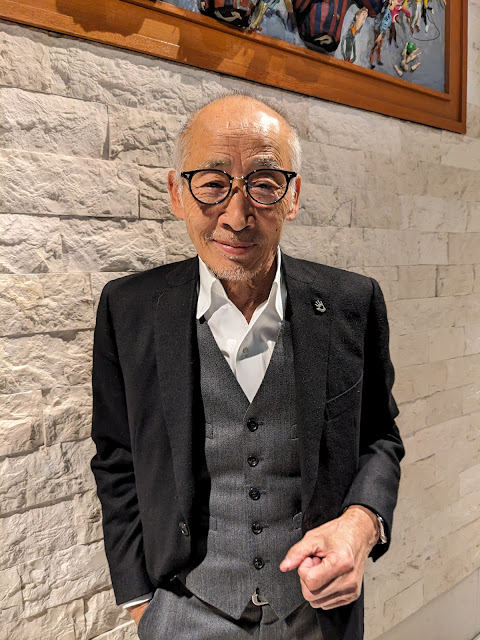
Around the world, Yutaka Hayashi is best known for his acting career, especially for playing the role of race car driver Hiroshi Jinkawa in Godzilla vs. Megalon (1973), but his work in entertainment encompasses not just film as an actor but a variety of bands as a drummer. Mr. Hayashi was a founding member of the group sounds musical act the Village Singers, which was formed in June 1966. By 1968, the group became so popular that Shochiku decided to produce a series of Village Singers-oriented movies, starring the band members who essentially play themselves. This series of films would eventually lead Mr. Hayashi to embark on a full-fledged acting career through the early 1980s. In February 2024, Mr. Hayashi sat down with Brett Homenick to discuss his acting career in an interview translated by Nagako Okuda.
Brett Homenick: Please talk about your early days. Where did you grow up?
Yutaka Hayashi: I grew up in Tokyo and attended both elementary and junior high school there. My interest in music began during junior high when I started playing the guitar and drums. When I entered high school, my passion for music surpassed my interest in academics. Without informing my parents, I secretly left school to pursue my musical aspirations, eventually forming a band and making my debut as a professional musician.
BH: As a child, what were your hobbies and interests?
YH: As I said, my hobby is music. I loved music a lot, and then I also played baseball and things like that, which anyone would do.
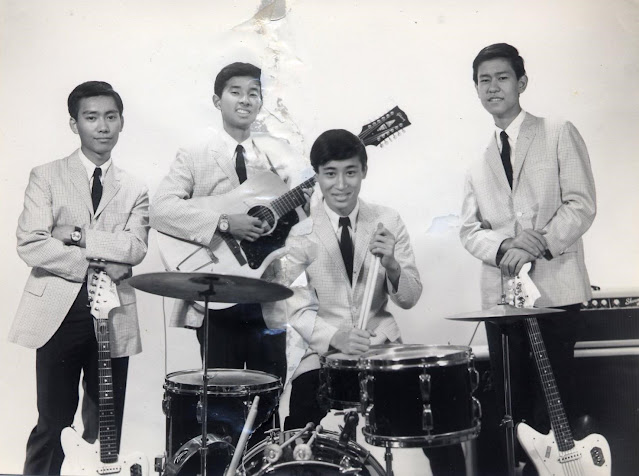
BH: How did you join the Village Singers?
YH: I was playing in a country and western band with my friends, and then one of my schoolmates said that a band called the Beatles had come out, and we should have a band like that, too. So the four of us formed an amateur band, and, while we were playing together, we were scouted by a professional band. That was the beginning of the Village Singers.
BH: Please tell us about your early days with the Village Singers.
YH: In the early days, we played mostly cover songs, of course, copying the Beatles, the Beach Boys of American pop music, and the Liverpool sound of England, I guess you could call it. I was copying those kinds of things.
BH: How did you become an actor?
YH: I disbanded the Village Singers when I was 26 years old. Around that time, I was involved in activities such as making movies about the Village Singers and pretending to be an actor. When I quit, a movie director said to me, “You might be good at acting.” So I thought I’d give it a try.
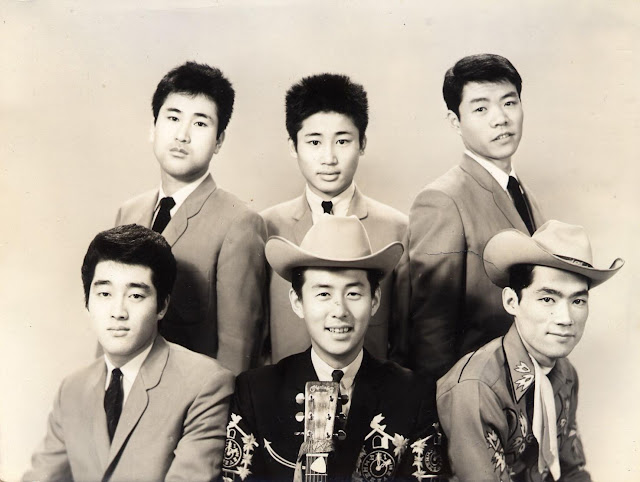
BH: Shochiku produced several movies with the Village Singers. Why did Shochiku decide to make these movies?
YH: I want to know, too. I wonder why. At that time, it was a bit of a trend to feature hit songs in movies. It was probably because the president of Hori Productions, where I was, also loved movies, and he had a good relationship with a producer at Shochiku, so I think [that’s why] we started at Shochiku.
BH: All three movies were directed by Koichi Saito. What do you remember about working with him?
YH: Koichi Saito told me, “If you quit music, you’d also make a great actor.” So I became an actor after quitting the band. However, after leaving the band and starting to work as an actor, I wondered if Mr. Saito would use me for his projects, but I was never called to work on any of his projects after that. The director really loved music, was very knowledgeable about it, and was a very skilled director in terms of how to use music.
BH: Falling Leaves and Kisses (1969) stars a young Hiroshi Fujioka. What do you remember about working with Mr. Fujioka?
YH: Fujioka-kun … I can’t really recall much about him. He was a very serious guy. I thought he might be a bit more laid-back as an actor, but he was far more serious than we were. During breaks, he would be reading the script and studying for the next scene so diligently. It made me realize that actors are this serious. I had this image of him as a really nice young man.
BH: Do you remember Shinichi Yanagisawa from this movie?
YH: I remember Shinichi Yanagisawa. If I recall correctly, he was the husband of Junko Ikeuchi, but, other than that, he didn’t leave much of an impression on me.

BH: You appear in The Ghostly Trip (1972) at Shochiku. Please talk about making this movie.
YH: Oh, you remember that well. Was it Frankie Sakai? Yeah, that’s it. Oh, and the director was [Masaharu] Segawa. That’s right. Somehow, I remember, after Frankie finished filming, he was causing a ruckus at a hot spring inn, getting drunk, and causing some commotion.
BH: You appeared in episode 15 of Kikaider (1972-73) as the human form of the Golden Bat. What do you remember about shooting this episode?
YH: Sorry, I really don’t remember. I remember being in Kikaider, but, as for what scenes or roles I had, I’m sorry; I don’t remember at all.
BH: Please talk about working with Daisuke Ban.
YH: Daisuke Ban … I don’t remember. Sorry.
BH: How did you get cast in Godzilla vs. Megalon (1973)?
YH: This might have been directed by Mr. [Jun] Fukuda at the time, right? At director Fukuda’s audition, he asked, “Can you drive?” I said, “Yes, I can.” Then he asked, “Are you athletic?” I said, “Yes, I am,” and I was chosen for the audition.

BH: For the lake scene at Lake Motosu, there were different shooting days. The first day was too cold for Hiroyuki Kawase, who was crying in the lake. What memories are there of that day of shooting?
YH: I don’t remember much about that, either. It began with an earthquake, right? A scene where everything shakes, right? I don’t have much memory of that, either. I’m sorry.
BH: During the highway scene, the car had to make a U-turn to continue shooting. What do you remember about shooting this scene?
YH: I don’t remember at all. I’m sorry; I really don’t remember. Was there a scene like that? On the highway?
BH: Please share your memories of director Jun Fukuda.
YH: He was very kind, like an old man, the director at the time. He let us do whatever we wanted in any role. He was a very understanding director. Lovely.
BH: How did director Fukuda direct the actors?
YH: He never used such a strong tone with Kawase-kun or the kids. He would gently guide us through the acting. He was a very easy director to work with for us.
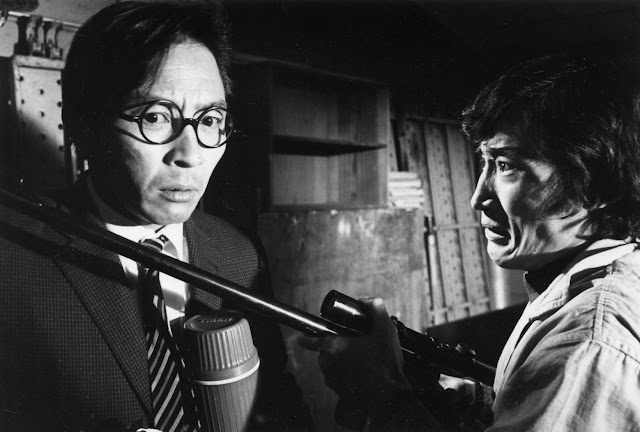
BH: Your co-star was Katsuhiko Sasaki. Please talk about working with Mr. Sasaki.
YH: Mr. Sasaki’s father [Minoru Chiaki] was already a great actor. He was a wonderful actor and appeared in movies directed by [Akira] Kurosawa.
Mr. Sasaki himself was very quiet. While everyone else was joking around during breaks, he would be reading a book alone. He was a bit of an unusual actor back then.
Most actors or musicians tend to be a bit carefree, but he wasn’t like that. He was more like a schoolteacher.
BH: Do you have any memories of working with Hiroyuki Kawase?
YH: Kawase-kun was little at the time, so all I remember is playing catch with him during breaks.
BH: You were in many car-racing scenes in this movie. Please talk about filming them.
YH: Honestly, it was just fun to drive and race around. Later, when I saw it, I realized, “Oh, so that’s how they filmed it.” To be honest, as long as I was gripping the wheel and driving fast, I didn’t have to think much about the acting. They just filmed it properly, so I could drive in my own way. It was great.

BH: You were also in many scenes with Jet Jaguar. Please tell us about it.
YH: Honestly, I thought for a moment, “Huh? Can this become a movie?” It felt a bit cheap for a moment. But, when I saw the movie, I thought, “Oh, it’s good; it’s powerful.” I felt a huge difference.
BH: Jet Jaguar’s original name was Red Arone. During filming, which name did you use? Was it Jet Jaguar or Red Arone?
YH: I don’t remember, but I think it was Jet Jaguar. I’m not quite sure.
BH: You had some fight scenes with Ulf Otsuki and Kentaro Tomita, the Seatopian agents. Please talk about how these scenes were done.
YH: Mr. Otsuki and the other person were also very senior actors. We had to be careful not to hurt each other in the fight scenes. During rehearsals, the choreographer would direct me. But my movements were already sensitive and skillful, so they [the senior actors] told me, “You can do it however you’d like,” and, “Don’t worry if you collide with us. It’s OK.” They were very kind older gentlemen.
BH: There was also some location shooting at the Okutama Dam. Do you have any memories of this shoot?
YH: Okutama Dam … I don’t remember filming at Okutama Dam. A truck scene. I remember being inside the truck, but that was probably done in the studio. Although they filmed the scenes with the truck’s driving outside at Okuktama Dam, the scenes inside the container were shot in the studio, just shaking it a bit. So I don’t really have much of an impression of Okutama Dam.
BH: Did you watch any of the tokusatsu scenes being filmed?
YH: Of course, I watched it. Yes, Mr. [Teruyoshi Nakano] handled all the Godzilla battles, and we could observe them, so I went there briefly and watched the filming in the studio. It was interesting and strange, seeing the battle scenes being filmed.
BH: How long did shooting last for Megalon?
YH: Probably about two months, including all the dubbing and everything. I think it was about two months.
BH: Do you have any other Megalon memories to share?
YH: Megalon? Hmm … Honestly, not much. But, you know, back then, I didn’t really watch the movies I was in. But, after they were released on DVD, when I watched them again with my children and grandchildren, I thought, “Oh, it’s quite enjoyable.” I think it was good to have done it.
BH: How did you get cast in The Bullet Train (1975)?
YH: I had a friend named Koichi Iwaki-kun, who was an actor. We happened to meet a Bullet Train producer from Toei at a restaurant somewhere, and he asked if we could join the movie together. I said I would like to go if I could meet Ken Takakura, so I went and had that memory.
BH: What do you remember about director Junya Sato?
YH: Junya Sato … I don’t remember at all.
BH: This movie had an all-star cast. Did you work with any of the big stars?
YH: As for Ken Takakura, I remember greeting him from a distance, saying, “I’m Hayashi. Nice to meet you.” But, other than that, I just watched him silently as a fan, unable to get closer.
BH: What other memories do you have about shooting this movie?
YH: I don’t remember much about that. I don’t really remember whether we shot it on a set or at Tokyo Station.

BH: Please talk about shooting Assault! Jack the Ripper (1976).
YH: Jack the Ripper was directed by Yasuharu Hasebe, a so-called B-grade director at Nikkatsu, who was great at making action movies. He was like Don Siegel in the U.S., a director I really liked personally. I used to work with him not on movies but on TV, in shows like Seibu Keisatsu (1979-84) and Daitokai (1976-79), which were action dramas.
At that time, the director said to me, “Hey, Yutaka, I’m going to make a [roman] porno film. Would you like to be the lead?” I replied, “Director, I don’t want to get naked. I don’t want to get stabbed in the butt.” Then he said, “You’re playing Jack the Ripper, so, if you just take off the front of your jeans, the rest will be OK.” I remember saying, “OK, I’ll do it.”
BH: What are your memories of working with director Yasuharu Hasebe.
YH: Of course, he was really a director who loved action. Even the way I held the knife, he’d say, “This is how you hold a knife.” He’d say, “This is how a young man moves.” He’d teach me how to cut from the bottom and from the top very strictly and thoroughly. So, among all the directors I’ve worked with so far, he’s probably my number-one favorite.
BH: How about working with Katsura Tamaki, who played Yuri?
YH: You know, despite her chubby face, she was a very delicate girl. Normally, it’s the man who has to be considerate, but she would ask me, “Are you all right, Mr. Hayashi? Are you tired?” I felt a bit awkward, you know; it was kind of strange. She was a kind girl.
BH: What else could you share about making Assault! Jack the Ripper?
YH: The poster for Assault! Jack the Ripper was posted in our neighborhood, and the movie theater posters said, “Assault! Jack the Ripper.” So, when the kids went to school in the morning or came back in the evening, they would see the movie posters.
They were right there on the path where they walked, and, since Yutaka Hayashi’s name naturally appeared, even if my face wasn’t shown, it was associated with this sexy movie. So, when my daughter came home, she’d say to her mom, “Dad’s name was written on the poster of a sexy movie. Is he in it?” So I ended up giving my daughter some pretty unpleasant memories.
BH: You also made Wet & Rope (1979) at Nikkatsu. Please tell us your memories of this production.
YH: This was by [author] Oniroku Dan, right? I don’t remember it at all. That was work I really didn’t want to do, and, by chance, I did Assault! Jack the Ripper through some connections. Since it got a bit of a good reputation, I was asked to do it by the president of our production company [talent agency], so I hardly watched it [when it was screened]. Yeah, I haven’t even seen the preview. So I have no idea what kind of movie it turned out to be.

BH: How did you get cast in The House of Hanging (1979)?
YH: I participated in an audition for Kon Ichikawa’s film. Mr. Ichikawa must have known that I played the drums, so I think that’s why I passed the audition. I think I played the role of a drummer wearing an eyepatch.
BH: Please talk about working with director Kon Ichikawa.
YH: It’s not that the director didn’t give any acting guidance; I just don’t really remember any conversations. Still, because he was a master, he was hard to approach. You couldn’t crack a joke or two with him. I only had the impression of watching him from the outside. He was a bit too much of a master.
BH: How did director Ichikawa direct the actors?
YH: I think it was Koji Ishizaka at that time. They [Mr. Ishizaka and director Ichikawa] were quite close, or, rather, they often discussed acting theories, even at inns and such places.
BH: What else do you remember about making this movie?
YH: Nothing at all.

BH: How did you get cast in The Beast to Die (1980)?
YH: For this one, when I was doing a roman porno movie shoot at Nikkatsu, I was in the cafeteria, and the director, Toru Murakawa, said, “Mr. Hayashi and Ko-chan [Koichi Iwaki], come here for a moment.” He said, “I’m going to shoot a scene like this later, so could you come?” I remember going and saying, “Sure,” and I ended up being put in some suit and appearing in a simple scene there. I haven’t seen it, either, the movie.
BH: Please tell us your memories of working with director Toru Murakawa.
YH: Director Murakawa was quite sharp, especially with this kind of action movie. I felt he was quite good. He was similar to Mr. Hasebe, whom I mentioned earlier, an erotic action director at Nikkatsu. Their styles were similar, so I liked him, as well.
BH: Do you have any memories of working with Yusaku Matsuda?
YH: When I participated in the filming of The Beast to Die, Yusaku and I were of the same generation, so we often ate together at Nikkatsu’s restaurant and spent time together. I also appeared in the TV series Detective Story (1979-80), which Yusaku starred in.
BH: What else do you remember about making this movie?
YH: The Beast to Die? I don’t remember much about it.
BH: Please talk about acting in The Last Hero (1982).
YH: For this one, Mr. [Shoichi] Maruyama, who wrote the script, didn’t have a role for me at first. But, since I often worked with Mr. Maruyama during Nikkatsu’s action film days, he tailored the role for me, saying, “Do it as you like.” It was more of a mechanic, not a very serious young man, a great mechanic but drowning in alcohol and women. It suited me perfectly, so I remember doing it.
BH: How was working with Masao Kusakari?
YH: At that time, Kusakari-kun was being bullied by director [Haruki] Kadokawa because he spoke his lines in a muffled manner. So, when the sound guy said he couldn’t hear him, and he was being made to act not at his own pace but rather being forced to act, I felt sorry for him.
So, during breaks, I’d say to him, “Just do it freely. You don’t have to worry,” but that was the trigger for him to develop alopecia areata. He was quite depressed while doing it. So I don’t think the movie left a very good impression on him, either.
BH: Please talk about working with director Haruki Kadokawa.
YH: Well, he was a director, but more akin to someone playing with toys, doing whatever he wanted.
BH: Why did you stop acting?
YH: Actors are often told, “Waiting is part of the job.” This means that, unless summoned by the producers, actors won’t get work. But, for me, the inability to take action on my own was very distressing. In contrast, in the field of music, the work is more autonomous. For example, you can plan and perform something [by yourself] with a guitar. With that in mind, I felt that music suited me better than acting.
When I was around 27 or 28 years old, there was a senior actor named Nobuo Kaneko, with whom I had acted together. He advised me, “If you try acting for 10 years and cannot achieve financial independence, it means acting is not suitable for you, so you should pursue music. If you feel dissatisfied with your work as an actor, you won’t be able to do a good job at it. If you don’t get pleasure from acting, I wouldn’t recommend it to you. If these apply to you, I think it’s better for you to pursue your other passion, music.”
And, eventually, after 10 years had passed, I received requests for jobs related to live houses [music clubs], so I switched careers from an actor to the music business.
BH: Which movie do you think was the best of your career?
YH: In the movies I’ve appeared in? It’s still Assault! Jack the Ripper.
BH: Who was your favourite director to work with?
YH: Well, definitely, it’s Yasuharu Hasebe.
Special thanks to Akio Chrosawa and Keiko Takemata.
 Vantage Point Interviews